What is the Religious Rhetoric in Bangladesh's Upcoming Election?
Synopsis
As Bangladesh gears up for elections, both the BNP and Jamaat-e-Islami are using religious rhetoric to sway voters. This report explores the implications of such tactics and the potential for increased political conflict in the region. Can these strategies impact the future of Bangladeshi politics?
Key Takeaways
Religious sentiments are being exploited in the upcoming elections.
Both major political parties are trading slurs against each other.
Accusations of hypocrisy are rampant among candidates.
Political experts warn of the potential for Islamist extremism .
The shift in political strategy reflects a larger trend in Bangladeshi politics.
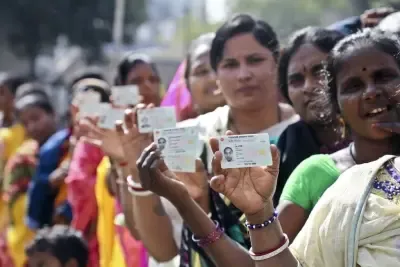
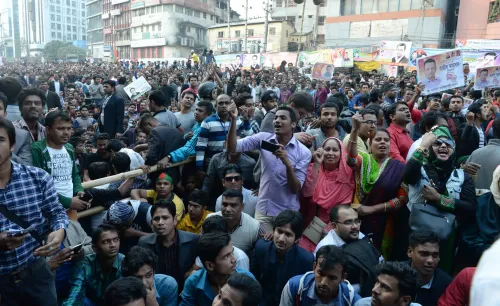
Dhaka, Feb 11 (NationPress) As Bangladesh approaches its elections on Thursday, regulations explicitly forbid leveraging religious sentiments for electoral gain. Nevertheless, political factions and candidates have been disseminating both paid advertisements and organic social media posts that depict opposing parties as “bad Muslims,” according to local news reports on Wednesday.
Reviewing 50 promotional ads from December 23, 2025, to February 6, 2026, it is evident that members of both the Bangladesh Nationalist Party (BNP) and Jamaat-e-Islami have exchanged derogatory terms, with each side labeling the other a “munafeq”—an Islamic term referring to someone who outwardly claims faith while being insincere.
The Daily Star, a leading newspaper in Bangladesh, identified 55 similarly inflammatory religious posts across 33 social media pages, groups, and profiles, with 30 of them seemingly supporting both the BNP and Jamaat.
Supporters of the BNP and anti-Jamaat activists have alleged that Jamaat leaders are enticing voters with “tickets to Jannah (paradise)” in exchange for their votes.
Conversely, Jamaat and its coalition partners accuse their rivals of being “seasonal Muslims,” who adopt Islamic garb, including beards and skullcaps, solely during elections to “mislead voters.”
Reports indicate that on January 28, the official social media page for Sharif Uddin, the BNP-nominated candidate for Rajshahi-1 and former defense advisor to ex-BNP chairperson Khaleda Zia, shared a political advertisement criticizing Jamaat’s methods as duplicitous.
“Soliciting votes under the guise of religion or promising tickets to Jannah is blatant hypocrisy (Munafiqi); Allah has instructed us to avoid such deceit,” the Daily Star quoted Sharif as stating.
Just a few days later, on February 3, the social media page “Kazipur Daripalla Supporters,” which appeared to endorse Jamaat Sirajganj-1 candidate Maolana Shahinur Alam, published an advertisement where Alam labeled those accusing Jamaat of “selling Jannah tickets” as “seasonal Muslims.”
“Bangladeshi politics has taken a rightward shift. The demand-side factor has driven Jamaat further right to appeal to voters. With no strong left or center-left alternative, the BNP had an opportunity to lean left, but it chose the opposite route. To attract right-wing votes, it has mobilized religiosity against Jamaat,”
said Asif Shahan, a lecturer in Development Studies at the University of Dhaka.
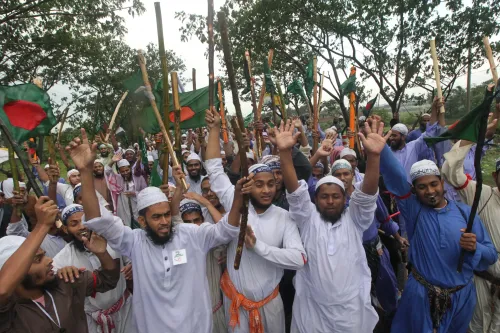
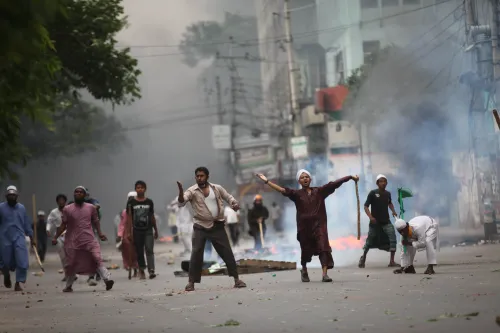
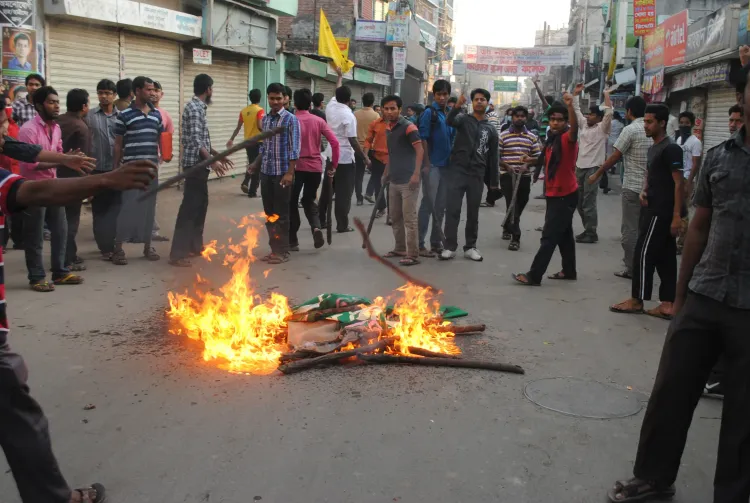
As the elections in Bangladesh unfold, they occur amid rising political tensions, with critics warning that a change in power may incite Islamist extremism.
Point of View
It is crucial to present an unbiased view of the ongoing political climate in Bangladesh. The increasing use of religious rhetoric by political parties raises significant concerns about the potential for heightened conflict and extremism. Our role is to inform the public while fostering dialogue and understanding among diverse political views.
NationPress
3 Oct 2026
Frequently Asked Questions
Why are the BNP and Jamaat-e-Islami using religious rhetoric?
Both parties aim to sway voters by appealing to their religious sentiments, despite regulations against such tactics.
What does 'munafeq' mean?
'Munafeq' is an Islamic term for someone who outwardly professes faith but is actually insincere.
What are the implications of using religious sentiments in politics?
Exploiting religious sentiments can polarize communities and potentially incite conflict, raising concerns about the rise of extremism.
How has political strategy changed in Bangladesh?
There has been a rightward shift in Bangladeshi politics, with parties appealing to religious voters to gain electoral advantage.
What is the significance of the upcoming elections?
The elections are pivotal as they may influence the political landscape and stability of the region amid rising tensions.