Will Bangladesh Voters Cast Two Mandates in Upcoming Elections?
Synopsis
As Bangladesh gears up for its elections on February 12, voters face a dual mandate: choosing their government and deciding on a significant constitutional reform. This pivotal moment could reshape the nation's political landscape and governance.
Key Takeaways
Bangladesh's elections on February 12 will have significant implications for governance.
Voters will receive two ballots —one for Parliament and another for the July Charter referendum.
The July National Charter 2025 aims to reform democratic governance.
Approval of the Charter could reshape the political landscape.
The referendum represents a chance for citizens to influence constitutional reforms.
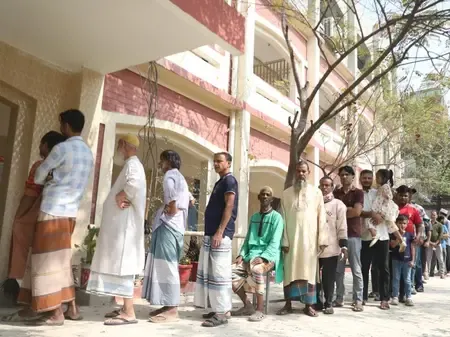
New Delhi, Feb 10 (NationPress) Bangladesh is preparing for one of its most significant and contentious elections since its independence in 1971. The 13th general election is scheduled for February 12, where citizens will have the opportunity to select a new government and a Prime Minister.
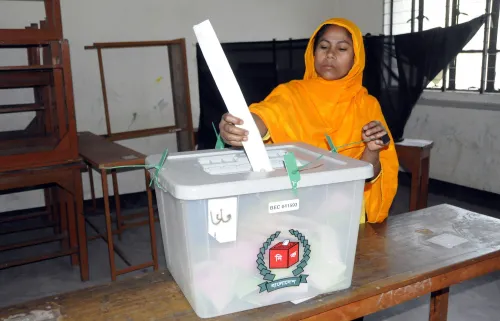
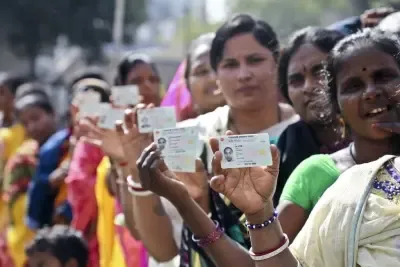
This election marks a unique occasion as voters will receive two ballots: one for electing Members of Parliament and another for a referendum regarding the "July Charter".
Citizens will be asked to vote "yes" or "no" on the proposed implementation of the "July National Charter 2025", as reported by Dhaka Tribune.
The Charter is a comprehensive political and constitutional reform framework intended to institutionalize democratic governance and curb authoritarian power following the political unrest of 2024.
Its primary goals include solidifying democratic reforms and preventing the accumulation of executive power.
Furthermore, it aims to protect individuals involved in the uprising, known as "July Fighters"; reform governance and judiciary structures; and enhance electoral systems, which includes reinstating a neutral caretaker government for elections. It also seeks to bolster fundamental rights and promote inclusivity in national governance.
According to reports from Bangladesh's Business Standard, 47 out of the 84 proposals necessitate constitutional amendments, while the other 37 will be enacted via laws or executive orders.
Should the "yes" vote prevail, the Constitution Reform Council of the next Parliament is required to finalize the necessary constitutional amendments within 270 days, or nine months.
If the Council fails to meet this deadline, a Constitution Amendment Bill from the interim government will automatically be deemed passed.
The Charter represents a draft of reforms introduced in the wake of the political uprising that resulted in the ousting of the Sheikh Hasina-led Awami League government in August 2024, a move acknowledged by most political factions last year.
Proposed changes encompass term limits for Prime Ministers, the establishment of a bicameral legislature, enhanced judicial independence, and greater authority for electoral oversight bodies, among others.
Upon approval, the upcoming Parliament will assume the role of the Constitutional Reform Council, responsible for enacting the ratified constitutional amendments within 270 days, as reported by the Bengali newspaper Prothom Alo.
Approval of the Charter guarantees automatic enactment if the Council fails to implement reforms in the allotted time.
This marks the third instance in Bangladesh's history where a charter of reforms has been proposed, with reports indicating that the first was introduced following the exit of President Hussain Muhammad Ershad from power after a bloodless coup that deposed President Abdus Sattar of the Bangladesh Nationalist Party (BNP) in 1990, and the second in 2007 during the caretaker government period following Khaleda Zia's term as Prime Minister.
A Daily Star report highlights that there are currently 84 reform proposals, with half requiring constitutional amendments.
Furthermore, it notes that the "Charter has sparked a national debate concerning the mechanisms of popular sovereignty. Central to this discussion is the crucial inquiry: should Bangladesh conduct a referendum to ratify these significant changes?
Proponents argue that a referendum is both legally permissible and constitutionally beneficial, presenting a rare opportunity to re-establish the state's legitimacy in the direct will of the people, invoking foundational principles of constitutionalism and democratic theory.
Given the current fractured political landscape, a referendum could serve as a legally viable and constitutionally advantageous avenue, providing a direct means for the populace to endorse reforms and safeguard them from partisan disputes.
However, one key critique is that the Constitution of Bangladesh does not explicitly allow for referenda. Yet, it is important to note that it does not prohibit them either, leaving room for legal interpretation.
With Parliament dissolved and the interim authority limited by Supreme Court rulings against the doctrine of necessity, traditional avenues for reform are unavailable.
Consequently, a referendum emerges as the sole legitimate method to ground the new constitutional order in the sovereign will of the people.
Point of View
I see the upcoming elections in Bangladesh as a pivotal moment for the nation. The dual mandate presents an opportunity for citizens to directly engage in shaping their political future. While contentious, this election could be a defining moment for democratic values in the country, allowing the people to voice their opinions on significant reforms.
NationPress
3 Oct 2026
Frequently Asked Questions
What is the July Charter?
The July Charter is a proposed political and constitutional reform framework in Bangladesh aimed at institutionalizing democratic governance and limiting authoritarian power.
When is the general election in Bangladesh?
The general election in Bangladesh is scheduled for February 12.
What will voters be asked to decide in the referendum?
Voters will decide whether to implement the July National Charter 2025 by voting 'yes' or 'no' in the referendum.
What are some key proposals in the July Charter?
Key proposals include term limits for Prime Ministers, establishment of a bicameral legislature, and enhanced judicial independence.
What happens if the referendum passes?
If the referendum passes, the next Parliament must complete the necessary constitutional amendments within 270 days.