Will Bangladesh's National Election and Referendum Take Place on February 12?
Synopsis
Bangladesh is gearing up for a significant political event as the Election Commission announces the date for the country's 13th national parliamentary election and a simultaneous referendum on February 12, 2026. This unprecedented move has sparked controversy and raised questions about the electoral process in the nation.
Key Takeaways
Bangladesh's national election and referendum are set for February 12, 2026.
December 29 is the final date for nomination submissions.
This election marks a historic first for Bangladesh.
The Awami League party claims disenfranchisement of voters.
The EC faces challenges in managing both electoral events.
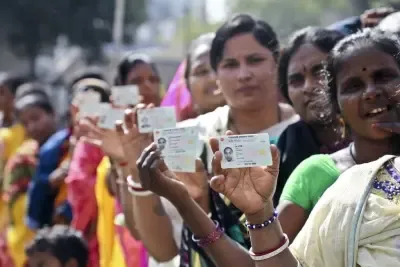
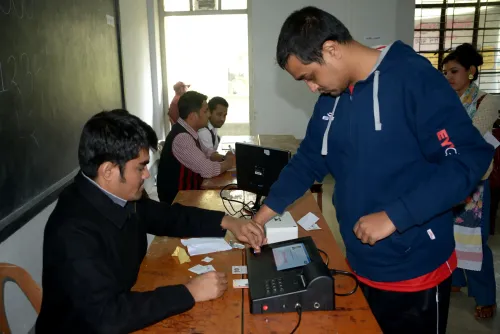
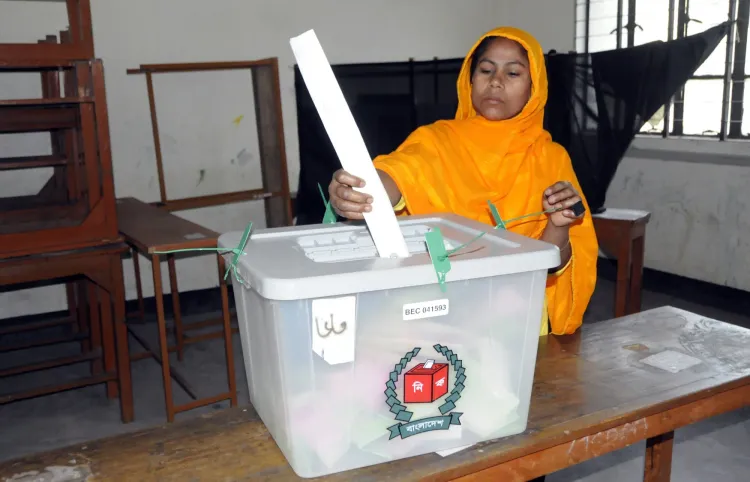
Dhaka, Dec 11 (NationPress) The Election Commission (EC) of Bangladesh officially declared that the nation’s 13th national parliamentary election, alongside the July Charter referendum, is scheduled for February 12 next year, as reported by local news outlets.
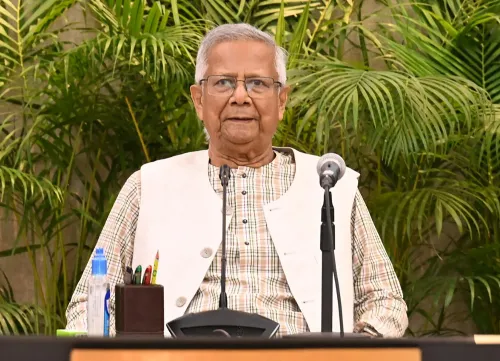
Chief Election Commissioner (CEC) A M M Nasir Uddin made the announcement during a pre-recorded speech aired on state-run Bangladesh Television and Bangladesh Betar on Thursday evening.
The electoral timetable outlines December 29 as the final day for submission of nomination papers, with the scrutiny period occurring from December 30 to January 4. Candidates can withdraw their nominations until January 26, while the campaign period is set to commence on January 22, as detailed by renowned Bangladeshi news outlet UNB.
This upcoming election marks a historic moment as Bangladesh prepares to conduct the February 2026 elections and a referendum on the same day for the very first time.
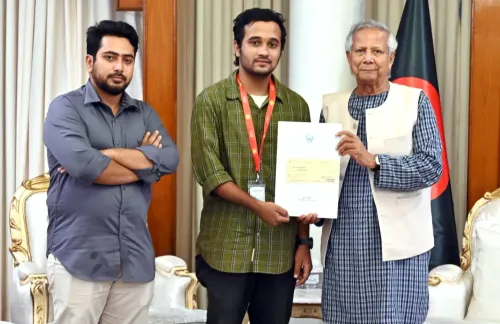
Last month, the interim government led by Muhammad Yunus instructed the EC to organize a referendum concurrently with the February 2026 elections, as confirmed by EC Secretary Akhtar Ahmed.
“The Cabinet Division has issued a letter to the commission, mandating the initiation of necessary arrangements for the referendum,” quoted an EC official by Bangladesh’s The Business Standard.
Previously, CEC Nasir Uddin expressed that conducting both the referendum and national elections on the same day poses significant challenges for the EC.
"Preparations for the election are already in full swing, but managing both the national polls and a referendum simultaneously will be a daunting task. Only after the law is enacted will we understand the preparations needed for the referendum. Once the law is passed, the commission will be fully equipped for it,” stated the CEC.
He added, “Regardless of the challenges, the EC is committed to holding both the referendum and the national election simultaneously. We must persevere.”
In a recent development, the Awami League party of Bangladesh criticized Yunus for halting all party activities, a decision that they claim effectively disenfranchises nearly 40% of the electorate from participating in the February 2026 elections.
The party asserted that this directive transformed the forthcoming election from a genuine national election into a “carefully orchestrated event” designed to eliminate real competition.
“Yunus’s suspension of all Awami League activities was not merely an administrative move; it represents an unprecedented political blackout in Bangladesh’s history. With one executive order, he silenced the largest political force in the country and stifled the voices of approximately 40% of the voters. There was no debate, no due process, and no public mandate—just unrestrained power,” stated the Awami League.
scor/as
Point of View
It is crucial to emphasize that while the upcoming elections and referendum in Bangladesh hold significant political weight, it is essential to remain committed to an unbiased perspective. The electoral process should reflect the will of the people, and any measures that undermine this principle must be scrutinized to ensure a fair and democratic outcome.
NationPress
19 Sept 2026
Frequently Asked Questions
When will the national election and referendum take place in Bangladesh?
The national election and the referendum are scheduled for February 12, 2026.
What is the significance of the February 2026 elections?
This election will be the first time in Bangladesh's history that a parliamentary election and a referendum will be held on the same day.
What challenges is the Election Commission facing?
The Election Commission has stated that managing both the election and referendum simultaneously presents significant challenges.
How has the political landscape changed leading up to the elections?
The Awami League party has criticized the interim government's actions, claiming it disenfranchises a large portion of the electorate.
What is the deadline for submitting nomination papers?
The deadline for submitting nomination papers is December 29, 2025.