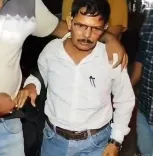
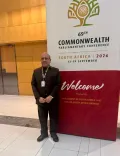
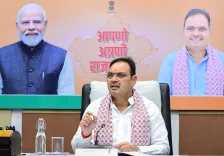
Bangladesh ICT sentences 7 Awami League leaders to death for 2024 uprising crimes
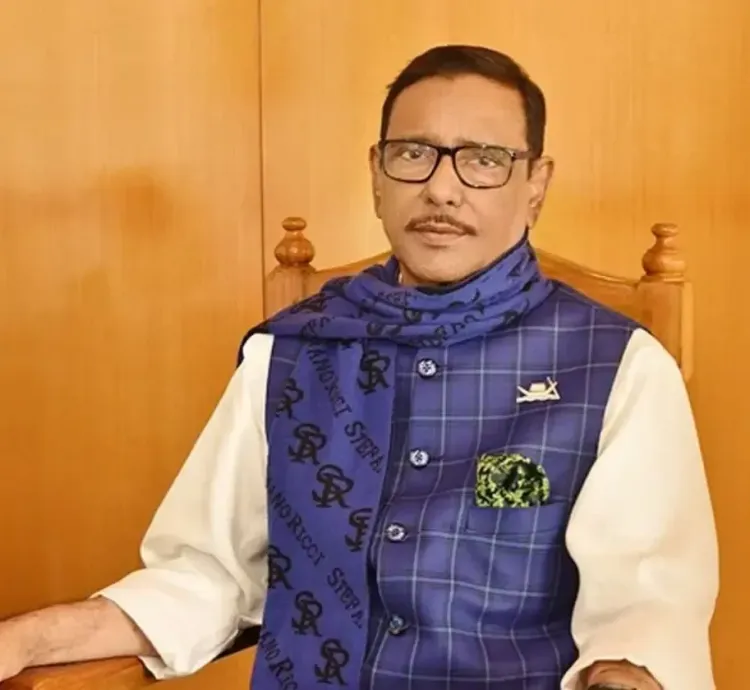
Synopsis
Bangladesh's ICT-2 has handed death sentences to seven senior Awami League leaders — including party General Secretary Obaidul Quader — for crimes against humanity during the July 2024 uprising. All seven are fugitives. With Human Rights Watch flagging serious due process failures at the tribunal, the verdicts deepen questions about whether Bangladesh is pursuing justice or settling political scores.
Key Takeaways
Bangladesh's ICT-2 sentenced seven Awami League leaders to death on 15 September 2026 for crimes against humanity linked to the July 2024 mass uprising .
Those convicted include Awami League General Secretary Obaidul Quader , former minister Mohammad Ali Arafat , and leaders of the party's student and youth wings.
All seven convicts are fugitives ; enforcement depends on extradition or surrender.
Human Rights Watch has warned that ICT proceedings fall short of international fair-trial standards, including arrests without evidential thresholds and restricted defence cross-examination.
The BNP government of Prime Minister Tarique Rahman , in office since February 2026 , has not amended tribunal procedures despite HRW's concerns.
Bangladesh's International Crimes Tribunal-2 (ICT-2) on Tuesday, 15 September 2026, sentenced seven senior Awami League leaders to death for 'crimes against humanity' stemming from the July 2024 mass uprising in Dhaka. The three-member bench, led by Justice Nazrul Islam Chowdhury, delivered the verdict against all seven accused, who are currently fugitives, according to local media reports.
Who Was Sentenced
The seven leaders handed death sentences include Awami League General Secretary Obaidul Quader; former state minister for information and broadcasting Mohammad Ali Arafat; Awami League Joint General Secretary AFM Bahauddin Nasim; Chhatra League President Saddam Hussain; Chhatra League General Secretary Sheikh Wali Asif Inan; Jubo League President Sheikh Fazle Shams Parash; and Jubo League General Secretary Mainul Hossain Khan Nikhil. The Chhatra League is the student wing and the Jubo League is the youth wing of the Awami League.
What the Prosecution Alleged
Prosecutors alleged that law enforcement agencies and armed cadres of the Awami League and its affiliated organisations carried out systematic attacks, killings, and torture against students and civilians during the July 2024 uprising. The accused were charged under the International Crimes (Tribunals) Act, 1973, with offences including murder, attempted murder, torture, other inhumane acts, abetment, incitement, conspiracy, and involvement in the commission of crimes. Prosecutors further alleged that the seven leaders exercised 'control and command' over these activities or were directly involved in ordering, inciting, or assisting the alleged crimes, according to leading Bangladeshi daily Dhaka Tribune.
Human Rights Watch Raises Due Process Concerns
The verdicts arrive against a backdrop of sustained international scrutiny. In July 2026, Human Rights Watch (HRW), a leading US-based advocacy group, accused Bangladeshi authorities of failing to uphold international legal standards at the ICT, warning that the failures risk denying justice to victims, undermining the rule of law, and resulting in the unjust imprisonment of political opponents.
Meenakshi Ganguly, Deputy Asia Director at HRW, stated: 'Those responsible for the many abuses committed under the Sheikh Hasina government should be appropriately held to account, but many prosecutions are falling short of international fair trial standards. Bangladesh needs to urgently reform its criminal justice system, and the new government should ensure that there is no room for political vendettas through shoddy investigations and arbitrary allegations.'
HRW noted specific procedural shortcomings: the law permits prosecutors to seek arrests without meeting any evidential threshold; detainees can be held for months without written reasons, with no right of interlocutory appeal; trials can begin as soon as three weeks after the prosecution discloses evidence; trials in absentia are held without guarantees allowing defendants to choose their own legal representation; and the tribunal restricts defence lawyers' ability to cross-examine witnesses.
Background: The Tribunal's Origins and Amendments
The ICT was originally established in March 2010 by the then-Hasina-led Awami League government to prosecute individuals accused of crimes against humanity committed in support of the Pakistan military during Bangladesh's 1971 war of independence. After the Awami League government was toppled by protesters in 2024, the interim government led by Muhammad Yunus amended the law governing the tribunal, including revisions to the definition of offences. However, HRW noted that these amendments fell short of ensuring due process and procedural standards equivalent to those of international courts handling similar offences.
The current Bangladesh Nationalist Party (BNP) administration led by Prime Minister Tarique Rahman, which assumed office in February 2026, has not introduced any further changes to those amendments. Separately, charges against former Prime Minister Sheikh Hasina and 40 others have already been filed in a crimes against humanity case linked to the 2013 crackdown on a Hefazat-e-Islam rally at Shapla Chattar in Dhaka.
What Happens Next
Since all seven convicts are reportedly at large, enforcement of the death sentences depends on extradition processes or their surrender — neither of which appears imminent. International pressure on Bangladesh to align ICT proceedings with global fair-trial standards is likely to intensify following the verdicts, particularly given the BNP government's silence on procedural reforms.
Point of View
But the legitimacy of these sentences is already contested ground. Human Rights Watch's July warning was not abstract — the tribunal's procedural gaps, from arrests without evidential thresholds to trials in absentia without guaranteed defence representation, are structural, not incidental. The BNP government's refusal to reform the tribunal since assuming office in February 2026 suggests a political calculation: the ICT's findings serve the new administration's narrative, making reform inconvenient. The risk is that internationally unrecognised verdicts against fugitives neither deliver justice to victims nor resolve Bangladesh's deep political polarisation — they simply preserve it under a different flag.
NationPress
15 Sept 2026
Frequently Asked Questions
Who were sentenced to death by Bangladesh's ICT-2 on 15 September 2026?
Seven Awami League leaders were sentenced to death: General Secretary Obaidul Quader, former state minister Mohammad Ali Arafat, Joint General Secretary AFM Bahauddin Nasim, Chhatra League President Saddam Hussain, Chhatra League General Secretary Sheikh Wali Asif Inan, Jubo League President Sheikh Fazle Shams Parash, and Jubo League General Secretary Mainul Hossain Khan Nikhil. All seven are reportedly fugitives.
What crimes were the Awami League leaders convicted of?
They were convicted of crimes against humanity under the International Crimes (Tribunals) Act, 1973, in connection with the July 2024 mass uprising in Bangladesh. Specific charges included murder, attempted murder, torture, inhumane acts, abetment, incitement, and conspiracy.
Why has Human Rights Watch criticised the Bangladesh ICT?
Human Rights Watch has warned that the ICT fails to meet international fair-trial standards. Key concerns include allowing arrests without evidential thresholds, detaining individuals for months without written reasons, permitting trials to begin just three weeks after evidence disclosure, holding trials in absentia without defendants' right to choose their own lawyers, and restricting defence lawyers from cross-examining witnesses.
What is the political context of these verdicts?
The ICT was originally set up in 2010 to try crimes from the 1971 war of independence, but was repurposed after the Awami League government was ousted in 2024. The current BNP government of Prime Minister Tarique Rahman, in power since February 2026, has not reformed the tribunal's procedural rules despite international pressure.
Will the death sentences be enforced?
Enforcement is uncertain because all seven convicts are reportedly at large. Carrying out the sentences would require extradition from whichever countries they are in, or their voluntary surrender — neither of which appears imminent at this stage.