Why Bangladesh PM's Flag Choice on National Day Matters

Synopsis
Bangladesh Prime Minister Tarique Rahman's historic decision to fly the national flag on his car during National Day commemorations highlights the significance of March 26. This act serves as a poignant reminder of the nation's past struggles and the ongoing dialogue about its history.
Key Takeaways
Tarique Rahman chose National Day to fly the national flag on his car, marking a significant gesture.
The day commemorates Bangladesh's independence declaration in 1971.
Operation Searchlight initiated a violent crackdown on Bengali civilians.
Political controversies surround the recent declarations of new significant dates.
Rahman's act emphasizes the importance of preserving historical legacy.
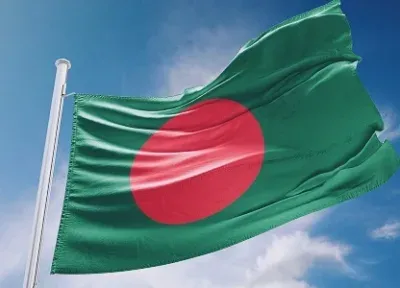
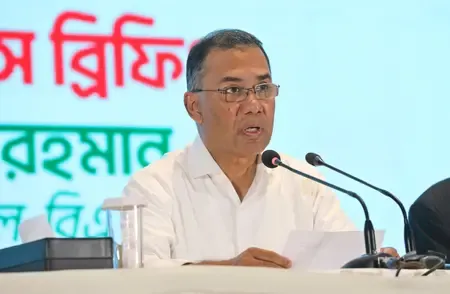
New Delhi, March 26 (NationPress) In a historic gesture, Bangladesh's Prime Minister Tarique Rahman selected the nation’s National Day to adorn his official vehicle with the national flag for the first time since taking office, as reported from Dhaka.
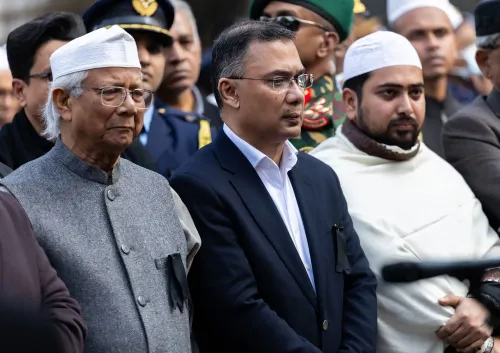
This symbolic act, captured during his journey to honor the Liberation War martyrs at the National Memorial in Savar on Thursday morning, serves as a reminder to those who have shown a subtle desire to distort the nation’s history and legacy.
Rahman also attended the Independence and National Day Parade 2026 at the National Parade Ground in Dhaka, traveling in his flag-bearing car to commemorate the 56th Independence Day, according to reports from The Daily Star, citing the Prime Minister's Office.
Bangladesh National Day commemorates the pivotal moment when the country’s founder, Sheikh Mujibur Rahman, proclaimed the independence of East Pakistan, now known as Bangladesh, on the morning of March 26, 1971.
This declaration was a response to the Pakistan Army's initiation of 'Operation Searchlight' a day earlier, which brutalized Bengali-speaking civilians, students, and military personnel, leading to numerous atrocities.
The operation was characterized by West Pakistani authorities as a necessary security measure aimed at restoring order following the tumultuous 1970 elections and the escalating Bengali nationalist movement.
The Awami League, under the leadership of Mujibur Rahman, emerged as the principal political force representing the then East Pakistan.
Consequently, this day symbolizes the struggle for sovereignty and the sacrifices made during the Bangladesh Liberation War.
It marked the beginning of a campaign that led to a nine-month Liberation War and is widely recognized in Bangladesh as the onset of the 1971 genocide.
This crackdown unfolded against a backdrop of Cold War geopolitics that complicated international reactions; global powers were divided in their responses, and early global efforts to halt the violence were limited.
Operation Searchlight ignited armed resistance in East Pakistan, ultimately culminating in full-scale war and Pakistan’s surrender in December 1971.
The operation comprised coordinated assaults across Dhaka and other urban centers, with the Pakistan Army employing tanks, mortars, and firearms to attack dormitories, police stations, paramilitary installations, Dhaka University, and predominantly Hindu neighborhoods.
The arrest of Awami League leader Mujibur Rahman was part of this campaign.
In June of the previous year, the interim government led by Chief Advisor Muhammad Yunus designated August 5 as “Uprising Day” and August 8 as “New Bangladesh Day.”
Furthermore, July 16 was recognized as Martyr Abu Sayeed Day, honoring the student killed by police fire in Rangpur during the mass movement.
August 8 signifies the day when the preceding Yunus-led interim government was established following the ousting of the Sheikh Hasina-led government amidst a public uprising.
This Cabinet decision arose a year post the Hasina government's fall.
A political controversy ensued regarding the government’s designation of August 8 as “New Bangladesh Day,” with several political factions and civic organizations advocating for the date to be reverted to August 5.
Among the dissenters were the Bangladesh Jamaat-e-Islami and the National Citizen Party (NCP), among others.
Meanwhile, the Inqilab Manch, a coalition of July uprising participants, threatened to escalate demonstrations throughout Bangladesh.
This move was perceived as an attempt to shift the symbolic significance of the March 26, 1971, declaration of independence from Pakistan to more recent dates linked to political upheavals.
The images of vandalism and destruction of statues, photographs, and representations associated with Mujibur Rahman and his legacy remain vivid in public memory.
This period also witnessed Dhaka, under the Yunus-led interim government, fostering closer relations with Islamabad, commencing direct flights and hosting military generals, even as warnings emerged concerning renewed threats from elements gaining easy access to Bangladesh.
However, reports from Thursday indicate that pragmatic politics triumphed over emotional reactions and vengeful intentions that could have ultimately harmed the nation.
Point of View
Prime Minister Tarique Rahman's decision to fly the national flag on his vehicle during the National Day celebrations is a significant act that underscores the importance of honoring the legacy of Bangladesh’s struggle for independence. It reflects a commitment to preserving the nation's history while navigating contemporary political challenges.
NationPress
25 Sept 2026
Frequently Asked Questions
What is the significance of March 26 in Bangladesh?
March 26 marks the declaration of independence by Sheikh Mujibur Rahman in 1971, symbolizing the start of the Liberation War and the fight for sovereignty.
Who is Tarique Rahman?
Tarique Rahman is the current Prime Minister of Bangladesh, known for his leadership and political influence in the country.
What was Operation Searchlight?
Operation Searchlight was a military operation conducted by the Pakistan Army against Bengali civilians in March 1971, leading to widespread atrocities and the start of the Liberation War.
What does flying the national flag represent?
Flying the national flag is a symbol of national pride, sovereignty, and respect for the sacrifices made during the Liberation War.
What political significance does August 8 hold?
August 8 was declared 'New Bangladesh Day' by the interim government, following the political upheaval that led to the fall of the previous government.