How Did B'desh Commemorate Language Martyrs’ Day with New Stamps?
Synopsis
Bangladesh's Prime Minister Tarique Rahman unveiled commemorative stamps on Language Martyrs’ Day, paying tribute to those who sacrificed their lives for the recognition of Bangla. The day saw political tributes and a significant incident of protest, highlighting the ongoing impact of the Language Movement. Discover the powerful legacy of this historic day.
Key Takeaways
Language Martyrs’ Day is observed annually on February 21 in Bangladesh.
Prime Minister Tarique Rahman unveiled commemorative stamps to honor the martyrs.
The day includes tributes at the Shaheed Minar in Dhaka .
Political tensions were highlighted by incidents preventing tributes from some leaders.
The Language Movement played a crucial role in shaping Bangladesh's identity.
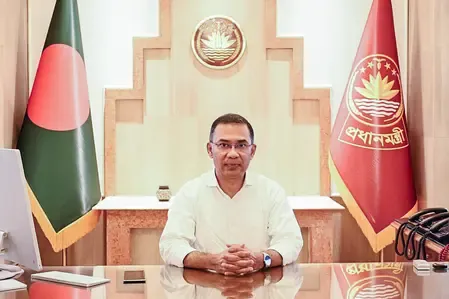
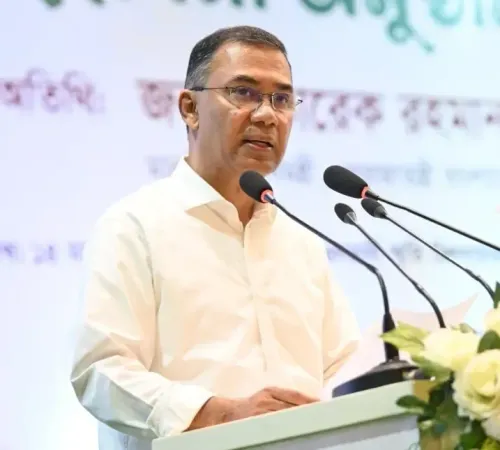
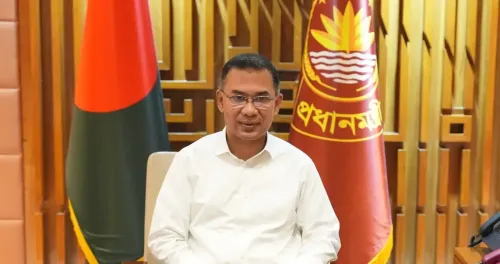
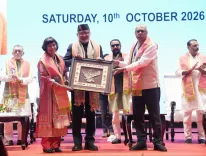
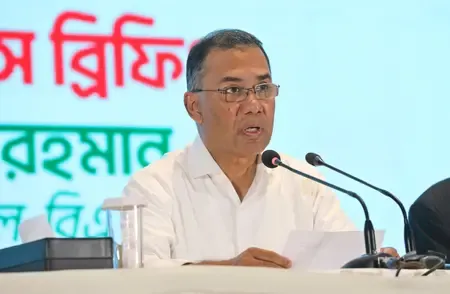
Dhaka, Feb 21 (NationPress) On Saturday, Bangladesh’s Prime Minister Tarique Rahman launched special commemorative postage stamps to honor Language Martyrs’ Day and International Mother Language Day, as reported by local media.
The unveiling took place in the morning at the Prime Minister’s Office (PMO) in Tejgaon, attended by various ministers and senior officials.
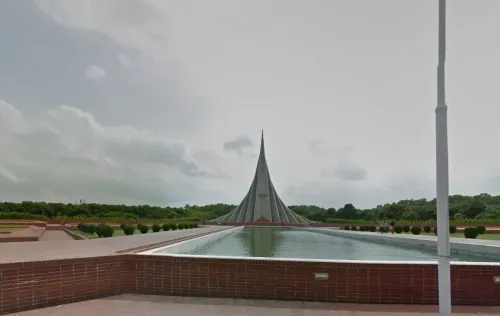
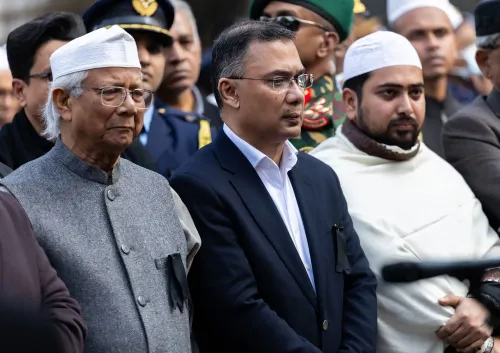
Prime Minister Rahman paid homage to the language martyrs by laying a wreath at the Shaheed Minar in Dhaka, commemorating those who sacrificed their lives during the Language Movement.
Prior to the Prime Minister's homage, President Mohammed Shahabuddin placed a wreath at the Shaheed Minar and observed a moment of silence to honor the martyrs.
Following this solemn act, cabinet members and other dignitaries laid floral wreaths after the President and the Prime Minister, as reported by Dhaka Tribune.
In a remarkable gesture, Shafiqur Rahman, the leader of the Opposition and head of Bangladesh Jamaat-e-Islami, honored the 1952 language martyrs by placing wreaths at the Shaheed Minar.
Conversely, Rumeen Farhana, the newly elected independent MP from Brahmanbaria-2 and former BNP leader, faced obstruction from offering her tribute at the memorial.
According to local sources, Dhaka Tribune reported that BNP leaders and activists prevented her from paying floral tributes, resulting in her departure without honoring the language martyrs.
In response to this incident, her supporters set fire to tree trunks and bamboo to block the Dhaka–Sylhet highway in Shahbazpur under Sarail upazila. This blockade caused a traffic jam stretching nearly 10 kilometers on both sides until police intervened to restore order.
On this day, Bangladesh commemorates Language Martyrs’ Day, recognizing the heroes of the 1952 Language Movement who sacrificed their lives to affirm the significance of Bangla as the mother tongue.
On February 21, 1952, a police crackdown at Dhaka Medical College resulted in the deaths of Salam, Rafique, Shafique, Jabbar, and Barkat while they were advocating for the recognition of Bangla as a state language of then-West Pakistan.
Their deaths sparked a broader movement that ultimately culminated in Bangladesh's independence.
On February 29, 1956, the Pakistani government officially recognized Bangla as a state language alongside Urdu. Nevertheless, the language movement continued to inspire demands for political and cultural rights, leading to the 1971 Liberation War and the establishment of Bangladesh as an independent nation.
Point of View
It is crucial to recognize the importance of Language Martyrs' Day in Bangladesh's history. This day is a reminder of the sacrifices made for linguistic rights and cultural identity. The events surrounding the day, including political tributes and protests, reflect the ongoing struggle for unity and recognition within the nation.
NationPress
10 Oct 2026
Frequently Asked Questions
What is Language Martyrs’ Day?
Language Martyrs’ Day commemorates the heroes of the 1952 Language Movement in Bangladesh who sacrificed their lives for the recognition of Bangla as a state language.
Why are commemorative stamps issued?
Commemorative stamps are issued to honor significant events and figures, raising awareness and preserving the memory of important historical moments.
What happened during the 1952 Language Movement?
The 1952 Language Movement involved protests demanding the recognition of Bangla as a state language, which resulted in a police crackdown and the deaths of several activists.
What impact did the Language Movement have on Bangladesh?
The Language Movement ignited broader demands for political and cultural rights, ultimately leading to Bangladesh's independence in 1971.
Who were the key figures of the Language Movement?
Key figures of the Language Movement included Salam, Rafique, Shafique, Jabbar, and Barkat, who are commemorated for their sacrifices.