Bangladesh drug rehab centres fail women, adolescents amid 8.2 mn crisis
Synopsis
Bangladesh has 199 government rehab beds for 8.2 million drug-dependent people — and most of those beds are reserved for men. With a 65% relapse rate, a four-doctor facility running against 18 sanctioned posts, and 80% of users aged 15–30, the country's addiction crisis is as much a structural failure as a public health one.
Key Takeaways
Bangladesh's government drug rehab centres have just 199 beds for an estimated 8.2 million drug-dependent people.
The Central Drug Addiction Treatment Centre in Tejgaon allocates only 24 beds for women and 10 for children out of its 124-bed total; current treatment is restricted to 28 adult male patients .
Private facilities hold 6,190 beds — more than 31 times the government capacity — pricing out most vulnerable patients.
Around 80 per cent of drug users are aged 15 to 30 , according to DNC data, with peer pressure cited as the primary trigger.
Approximately 65 per cent of treated patients relapse, according to the Tejgaon centre's chief consultant.
The Tejgaon facility has only 4 doctors against 18 sanctioned posts , reflecting a severe staffing crisis.
Bangladesh's drug rehabilitation system is critically under-equipped to serve women and adolescents, with government-run centres offering just 199 beds for an estimated 8.2 million drug-dependent people across the country, according to local media reports published on Wednesday, 26 August. The shortfall is sharpest for vulnerable groups — women and children — who have historically been sidelined in a system built around male patients.
Scale of the Crisis
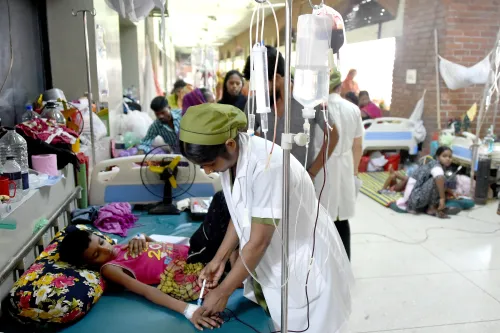
At the Central Drug Addiction Treatment Centre in Tejgaon, Bangladesh's primary government-run facility, the 124-bed capacity is divided into 90 beds for men, 24 for women, and just 10 for children. Despite an ongoing expansion that will eventually convert the facility into a 250-bed hospital, treatment is currently restricted to 28 adult male patients, leaving women and adolescents with even fewer options in the interim.
In contrast, private facilities across the country hold 6,190 beds — more than 31 times the government capacity — placing quality care out of reach for those who cannot afford it.
Who Is Most at Risk
According to the Department of Narcotics Control (DNC) annual findings, approximately 80 per cent of drug users in Bangladesh fall within the 15 to 30 year age group, making adolescents and young adults disproportionately exposed to addiction and its consequences.
Ariful Haque, a psychologist at Oasis De-addiction and Mental Health Counselling Centre, said peer pressure is the dominant trigger. 'When we ask them why they started, many say friends, seniors or peer groups influenced them,' he said, adding that stress, family crises, curiosity, and weak parental supervision also play significant roles.
What Officials Said
Mohammad Zakir Hossain, Assistant Director for rehabilitation and treatment at the DNC, described the existing government capacity as 'very insufficient' to meet national demand. He noted that the gap between public and private bed availability reflects a structural failure in how addiction care has been prioritised.
Quazi Lutful Kabir, chief consultant at the Tejgaon centre, revealed that the facility operates with just four doctors against 18 sanctioned posts, compounded by shortages of nurses and support staff — a staffing crisis that directly limits the quality and volume of care that can be delivered.
The Relapse Challenge
Even for those who do access treatment, long-term outcomes remain troubling. According to Kabir, approximately 65 per cent of patients relapse after returning to their original environment or peer networks. Only around 35 per cent are able to remain drug-free following treatment.
The DNC annual report has called for addiction to be formally recognised and treated as a chronic disease, with stronger follow-up support systems put in place. Rehabilitation services, it noted, remain inadequate and unevenly distributed, with communities outside major urban centres particularly underserved.
What Needs to Change
Experts and officials alike point to the need for gender-sensitive, age-appropriate rehabilitation infrastructure — a model that currently does not exist at scale in Bangladesh's public health system. The waiting lists, staff shortages, and geographic disparities collectively mean that for most women and adolescents seeking help, treatment remains more aspiration than reality. Whether the Tejgaon expansion and any broader policy reform can close this gap will be closely watched in the months ahead.
Point of View
Bangladesh's public rehab infrastructure is solving for the wrong demographic. A 65 per cent relapse rate is not a patient failure — it is a policy failure, rooted in the absence of follow-up care and community reintegration support. The Tejgaon expansion is welcome, but expanding a male-first model does not fix a gender-blind one. Until addiction is treated as a chronic disease with sustained state investment, the gap between 199 government beds and 8.2 million people in need will remain a national emergency hiding in plain sight.
NationPress
11 Oct 2026
Frequently Asked Questions
How many drug rehabilitation beds does the Bangladesh government provide?
The Bangladesh government operates just 199 rehabilitation beds nationwide for an estimated 8.2 million drug-dependent people, according to the Department of Narcotics Control. In contrast, private facilities offer 6,190 beds, making public care severely insufficient.
Why do women and adolescents struggle to access drug treatment in Bangladesh?
Government rehab centres in Bangladesh are predominantly structured around male patients. At the main Tejgaon facility, only 24 of 124 beds are allocated for women and 10 for children, while current active treatment is restricted to 28 adult male patients. This leaves women and adolescents with very limited options in the public system.
What is the relapse rate for drug treatment in Bangladesh?
Approximately 65 per cent of patients relapse after completing treatment, according to Quazi Lutful Kabir, chief consultant at the Tejgaon centre. He attributed relapses primarily to patients returning to the same environment and peer groups that initially drove their addiction.
Which age group is most affected by drug addiction in Bangladesh?
Around 80 per cent of drug users in Bangladesh are between 15 and 30 years of age, according to DNC annual data. Adolescents are particularly vulnerable, with psychologists citing peer pressure, stress, family crises, and weak parental supervision as key contributing factors.
What reforms have experts recommended for Bangladesh's drug rehabilitation system?
The DNC annual report has called for addiction to be formally treated as a chronic disease, with stronger follow-up and community reintegration support. Experts have also highlighted the need for gender-sensitive and age-appropriate rehabilitation infrastructure, as well as more equitable distribution of services beyond major urban centres.