Drug abuse and moral decline driving crime surge in Bangladesh
Synopsis
A new report links Bangladesh's rising tide of child abuse, rape, and domestic violence directly to unchecked drug networks, institutional moral failure, and a culture of impunity that shields perpetrators behind power. Analysts warn that without sustained political will to dismantle narcotics syndicates and hold institutions accountable, the crisis will deepen.
Key Takeaways
A report by Pressenza International Press Agency identifies four drivers of Bangladesh's crime surge: drug abuse , declining moral values, weak social oversight, and impunity .
Narcotics including Yaba , marijuana , Phensedyl , and crystal meth ('Ice') have spread from cities to rural villages, heavily affecting youth.
Crime data cited in the report links most cases of sexual violence and street crime in Bangladesh to substance abuse.
Child sexual abuse cases are reportedly emerging inside madrasas , orphanages , and religious institutions — spaces traditionally considered safe.
Experts warn that repeated law enforcement crackdowns have failed due to a powerful, well-organised narcotics syndicate with cross-sector complicity.
The report calls on the government, families, and religious institutions to unite in a collective response to protect children and restore social safety.
Bangladesh is grappling with a deepening crisis in social safety, with incidents of child abuse, rape, domestic violence, and sexual harassment in educational institutions surfacing with alarming frequency, according to a report by Pressenza International Press Agency. Social analysts and psychologists cited in the report point to four interconnected drivers: widespread drug abuse, eroding moral values, weakened community oversight, and a persistent culture of impunity.
The Drug Epidemic Fuelling Violence
The availability of narcotics across Bangladesh has, according to the report, reached unprecedented levels — no longer confined to cities but now penetrating the most remote rural communities. Substances including Yaba, marijuana, Phensedyl, and crystal methamphetamine (locally known as 'Ice') are reportedly engulfing a significant share of the country's youth population.
Experts cited in the report warn that drug addiction severely impairs judgement and self-control, fostering what they describe as a 'distorted and violent mindset' within society — one in which women and children become the most vulnerable targets. According to the report, crime data from Bangladesh indicate that most cases of sexual violence and street crime carry a direct or indirect link to substance abuse.
A Powerful Syndicate Behind the Supply Chain
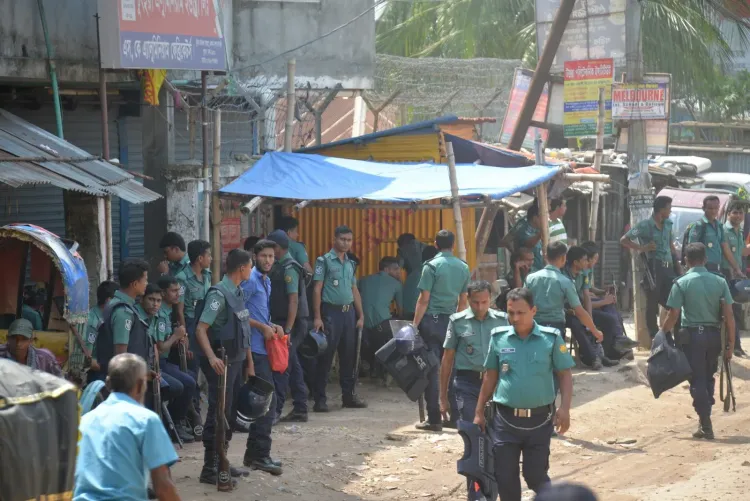
Despite repeated crackdowns by law enforcement, narcotics networks have proven resilient. The report attributes this to the presence of a highly organised syndicate with reported complicity across influential sections of society. 'When a criminal enterprise becomes immensely lucrative, temporary crackdowns are insufficient to suppress it,' the report noted. 'Breaking this cycle is impossible without deep-rooted, long-term political will capable of uprooting the network entirely.'
Moral Decline and Abuse in Trusted Institutions
The report identifies a collapse of moral guardrails as equally alarming. Incidents of child sexual abuse are reportedly emerging even within spaces traditionally regarded as safe — including madrasas, orphanages, residential schools, and religious institutions. The report is unequivocal on accountability: 'Whether the perpetrator is a teacher, an imam, a politician, a physician, or an ordinary citizen, they are solely a criminal in the eyes of the law.'
This framing directly challenges what analysts describe as a culture of shielding offenders behind institutional authority or social standing — a pattern critics argue has allowed abuse to go unreported and unpunished across multiple sectors.
A Call for Collective Accountability
The report frames child safety as a shared national obligation rather than the mandate of any single institution. 'To sustain Bangladesh as a safe and humane state, the government, society, families, and religious institutions must unite on a single platform,' it states. 'Action must be taken to stand against this social degradation before time runs out.'
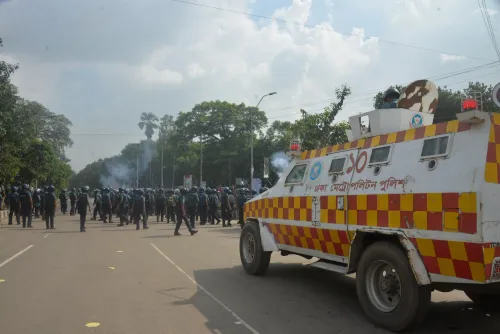
The findings arrive at a moment of heightened scrutiny of law enforcement and governance capacity in Dhaka, with civil society groups increasingly pressing for structural reforms rather than reactive policing. Whether the political establishment can summon the sustained will the report demands remains the central unanswered question.
Point of View
If anything, is the explicit indictment of institutional complicity: madrasas, orphanages, and political networks named in the same breath as the crisis. The harder question the report stops short of answering is why successive governments have lacked the political will to dismantle syndicates that are, by the report's own account, deeply embedded in influential strata of society. Crackdowns without accountability for enablers are, as the data repeatedly shows, theatre.
NationPress
24 Sept 2026
Frequently Asked Questions
What is driving the rise in crime in Bangladesh?
According to a report by Pressenza International Press Agency, four factors are fuelling the surge: widespread drug abuse, declining moral values, weak community oversight, and a culture of impunity. Social analysts and psychologists cited in the report say drug addiction in particular impairs judgement and fosters violent behaviour, making women and children primary targets.
Which drugs are most prevalent in Bangladesh's narcotics crisis?
The report identifies Yaba, marijuana, Phensedyl, and crystal methamphetamine — known locally as 'Ice' — as the substances most widely affecting Bangladesh's youth. These are reportedly available not just in cities but in remote rural areas, indicating a well-organised supply network.
Why have law enforcement crackdowns failed to curb drug abuse in Bangladesh?
The report attributes the failure to a powerful, well-organised narcotics syndicate with reported complicity across influential sections of society. It argues that temporary crackdowns cannot break this cycle without sustained, long-term political will aimed at dismantling the network entirely.
Where are child abuse cases in Bangladesh being reported?
The report highlights that child sexual abuse cases are emerging in spaces traditionally considered safe, including madrasas, orphanages, residential schools, and religious institutions. Experts cited describe this as among the most alarming dimensions of Bangladesh's moral and social decline.
What does the report recommend to address Bangladesh's crime crisis?
The report calls for a unified response involving the government, civil society, families, and religious institutions. It stresses that child safety is a collective moral obligation and urges immediate action against what it terms 'social degradation', warning that delay will worsen the crisis.