Have Self-serving, Unelected Politicians Seized Control in Bangladesh? Insights from Ex-PM Sheikh Hasina
Synopsis
In an exclusive interview, former Bangladesh PM Sheikh Hasina reveals how a faction of **unelected politicians** is manipulating the judiciary to eliminate political rivals. She expresses her gratitude towards PM Modi for his support during her crisis and raises alarms about electoral integrity in the upcoming elections.
Key Takeaways
Sheikh Hasina accuses a faction of **unelected politicians** of manipulating the judiciary.
She expresses gratitude to PM Modi for support during her crisis.
Concerns raised over the integrity of upcoming elections and foreign interference.
Calls for transparent investigations into allegations of persecution.
Highlights the need for restoring stability in Bangladesh’s economy.
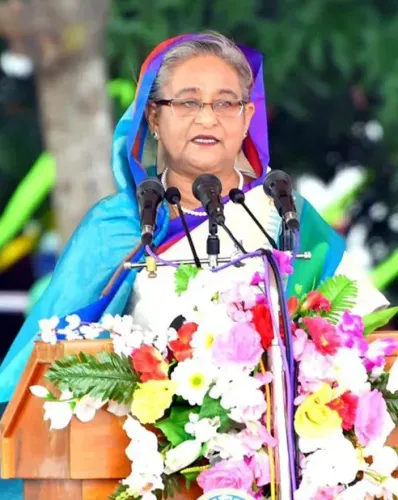
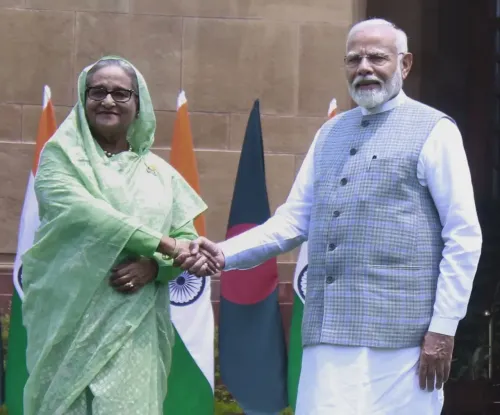
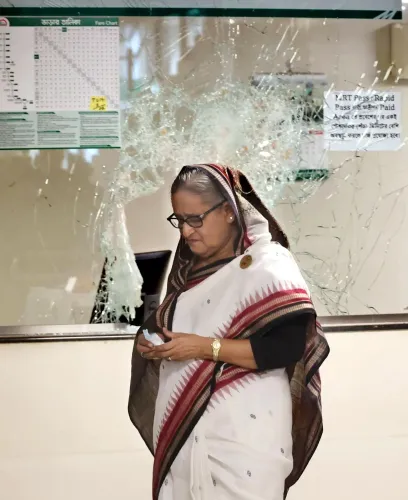
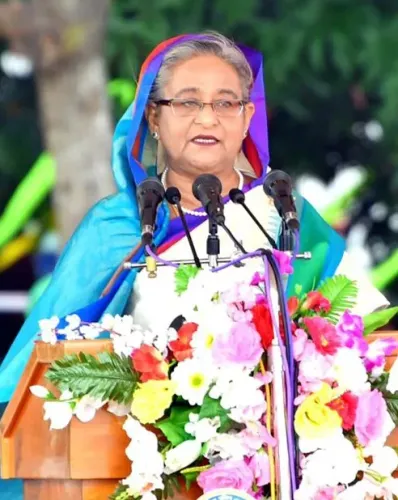
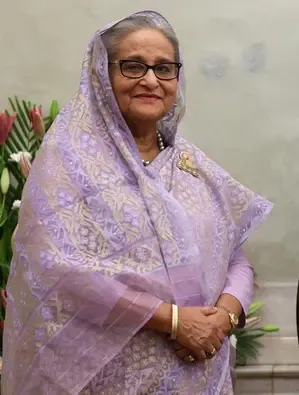
New Delhi, Dec 9 (NationPress) Former Prime Minister of Bangladesh, Sheikh Hasina, has pointed out that a faction of small, self-serving, and unelected politicians have taken control of the state apparatus, utilizing the court system to eliminate political adversaries. She conveyed her gratitude towards PM Modi, stating, “grateful to Prime Minister Narendra Modi” and the citizens of India for their unwavering support during her challenging times.
In an email interview with IANS, Hasina condemned the interim government in Dhaka, labeling the ruling against her as “biased and politically motivated,” while also voicing concerns regarding electoral reforms, foreign interference, and the prohibition of the Awami League.
Below is the complete interview:
IANS: What is your perspective on Prime Minister Modi’s involvement in the current situation in Bangladesh?
Sheikh Hasina: India is an essential neighbor and ally. I appreciate Prime Minister Modi’s support and the enduring relationship between our nations. On both a personal and diplomatic level, I am thankful for the safety I have found during perilous times. Strong bilateral ties with India serve Bangladesh’s interests and foster regional stability.
IANS: In what ways has Prime Minister Modi assisted you during your crisis?
Sheikh Hasina: I prefer not to discuss private discussions; however, I must express my gratitude for the continued support from the people of India.
IANS: You have described the verdict from the ICT as “biased and politically motivated.” What leads you to this conclusion?
Sheikh Hasina: The accusations have been made by a kangaroo court controlled by my political rivals, who have taken power unlawfully. A small clique of self-serving, unelected individuals has usurped state control and is manipulating the judiciary to eliminate a political competitor.
Many respected and impartial legal experts worldwide have echoed this sentiment. I was not afforded proper legal representation at the trial nor given the opportunity to challenge the weak and unconvincing evidence presented against me. The entire process was a judicial farce designed to produce a predetermined outcome.
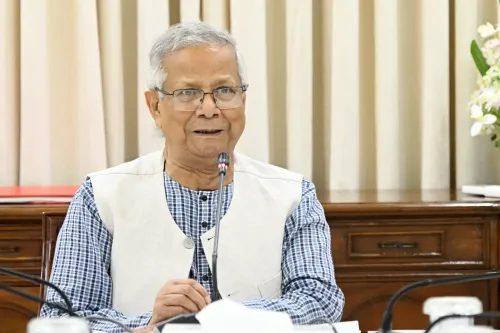
IANS: Do you believe the interim government led by Mohammed Yunus is collaborating with foreign entities that are detrimental to Bangladesh’s interests?
Sheikh Hasina: I am cautious about making speculative statements, but there are concerning indications of external interference in our domestic affairs. I have consistently warned against foreign meddling that takes advantage of internal divisions. Any credible allegations must be transparently investigated. Bangladesh must be allowed to resolve its issues through its own institutions and sovereignty, free from outside influence.
IANS: Are you of the opinion that the upcoming elections in Bangladesh have already been manipulated by the current administration?
Sheikh Hasina: Free, fair, and inclusive elections are the cornerstone of legitimate governance. If the interim government aims to manipulate results rather than facilitate a fair playing field, it would constitute an assault on our democracy. I urge for independent international monitors, clear electoral schedules, and assurances that all parties and candidates can campaign without fear.
However, banning the Awami League renders all those recommendations irrelevant, as millions of our supporters may choose to abstain from voting. You cannot prohibit the most popular party in the nation and still claim the elections to be free and fair.
IANS: Will your party participate in the elections or opt for a boycott?
Sheikh Hasina: Currently, my party is prohibited from participating in the elections next year. This is not a boycott; it amounts to disenfranchising millions of voters. If this situation persists when the elections occur, our supporters will likely opt to stay home rather than engage in a flawed electoral process.
IANS: Has there been a crossing of limits regarding religious and political persecution in Bangladesh, as some assert?
Sheikh Hasina: Any form of persecution based on religion or politics is intolerable. I denounce violence and oppression in all its forms. Under my leadership, we have aimed for law and order while safeguarding civil rights. If abuses have taken place, they must be thoroughly investigated, and accountability must be established through fair legal channels. Generalized accusations cannot replace appropriate, impartial investigation.
IANS: Khaleda Zia is reportedly in critical condition, and Bangladesh has deployed a security force to guard her at the hospital. How do you wish to remember her?
Sheikh Hasina: I am deeply worried to learn of Begum Khaleda Zia’s illness and will pray for her recovery.
IANS: Your niece, UK lawmaker Tulip Siddiq, was convicted in absentia in a land deal case. What is your response?
Sheikh Hasina: Trials in absentia and the conviction of a British lawmaker raise significant concerns regarding due process and fairness. My family members have consistently denied any wrongdoing. I believe justice must be conducted openly, transparently, and in line with international standards. Yunus is utilizing these prosecutions as a distraction from his own governance failures and to suppress a political party that has been elected nine times since independence. This verdict exclusively serves the political interests of Yunus and his coalition of extremists and opportunists.
It certainly does not benefit Bangladesh, especially since it exacerbates our diplomatic relations with the UK, a crucial trading and development partner. The manner in which these proceedings have been handled has undermined confidence in Bangladesh and will raise concerns within the international community.
IANS: Bangladesh is currently experiencing significant economic challenges. In your opinion, what are the causes?
Sheikh Hasina: The long-term fundamentals of Bangladesh remain robust, but short-term challenges have evidently affected growth, investor confidence, and reserves. Even my staunchest critics would acknowledge that we have led an economic miracle in Bangladesh, a feat I take immense pride in. Restoring stability, rebuilding investor confidence, and swiftly implementing credible fiscal and structural reforms must be our priorities to ensure that our progress is not undone. The IMF and independent analysts have already highlighted slowing growth and rising inflation, which will inevitably impact the most vulnerable in our society.
IANS: Is Pakistan acquiring Bangladesh's institutions and critical resources following your departure?
Sheikh Hasina: It is in Bangladesh's national interest to maintain a constructive relationship with Pakistan, but it must be approached with caution and balance. We cannot permit this unelected government to recklessly deepen ties with Pakistan. Bangladesh must safeguard its sovereignty and remember its essential role in the region to ensure ongoing stability.
IANS: There are speculations that a foreign influence—particularly from the United States—was responsible for your ouster. What is your response?
Sheikh Hasina: The United States has publicly denied any involvement, and to date, no conclusive evidence has been made available to contradict this. Accusations without substantiation could detract from the vital work of restoring stability, accountability, and national unity.
Point of View
It is paramount to approach Sheikh Hasina's statements with a balanced lens, recognizing the complexities of Bangladesh's political landscape. The issues raised about judicial integrity and electoral fairness are crucial for fostering democratic values and should be addressed with utmost seriousness. Ensuring that the voices of all citizens are heard is vital for a stable and prosperous Bangladesh.
NationPress
21 Sept 2026
Frequently Asked Questions
What did Sheikh Hasina say about the current government?
Sheikh Hasina criticized the interim government in Dhaka, stating it is composed of **self-serving** and **unelected politicians** who are manipulating the judiciary to eliminate political rivals.
How does Hasina view PM Modi's support?
Sheikh Hasina expressed her gratitude towards PM Modi, emphasizing the importance of India's support during her challenging times.
What concerns did Hasina raise about the upcoming elections?
Hasina warned that the banning of her party, the Awami League, undermines electoral integrity and called for independent international observers to ensure fair elections.
What did she say about foreign interference?
Hasina raised concerns about external influences in Bangladesh's affairs and emphasized the need for the country to resolve its issues independently.
What is Hasina's stance on persecution in Bangladesh?
She condemned any form of persecution based on religion or politics and stressed the importance of investigating abuses through fair legal processes.