Beijing seminar exposes China's push to recast Islam through CCP ideology
Synopsis
A seven-day Beijing seminar for 45 imams, framed as a Sinicisation of Islam programme, was in practice a course in Xi Jinping's political thought — with the Quran reduced to a 'distant backdrop.' The episode illustrates how China's campaign to reshape Islam has crossed from cultural adaptation into explicit ideological indoctrination, with religious leaders now trained to steer believers toward loyalty to the Party, not the faith.
Key Takeaways
A seven-day seminar held from 10 to 16 May 2025 at the Central Institute of Socialism, Beijing trained 45 imams and Islamic educators from across China.
The curriculum centred on Xi Jinping Thought and CCP religious governance — with minimal reference to Islamic theology or the Quran, according to Bitter Winter .
Participants were instructed to guide believers toward 'loyalty to the state' and identification with the CCP 's narrative of national rejuvenation.
The seminar reflects a broader CCP effort to reshape all officially recognised religions into vehicles for state-approved cultural identity.
China's Sinicisation of Islam campaign has evolved from cultural adaptation into a political indoctrination programme, the report argues.
A May 2025 training programme for imams and Islamic educators in Beijing has laid bare the deepening political character of China's Sinicisation of Islam campaign — a state-driven initiative that now goes well beyond cultural alignment to demand that religious leaders actively internalise and propagate Chinese Communist Party (CCP) doctrine, according to a detailed report by Bitter Winter, an Italy-based online magazine that monitors religious freedom in China.
What the Beijing Seminar Involved
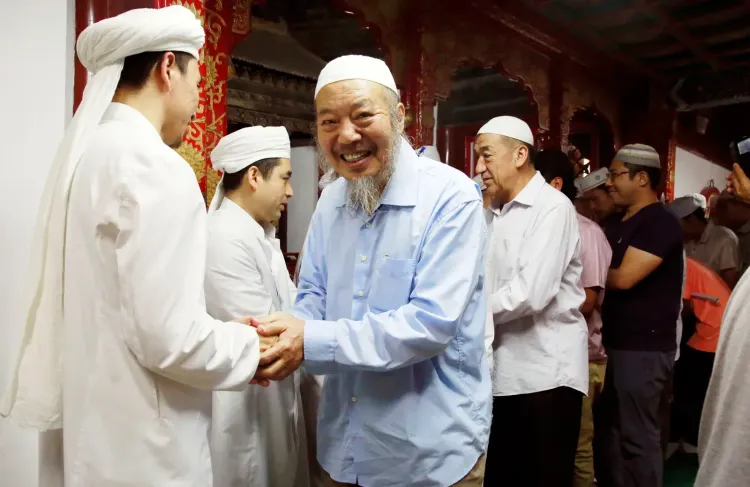
The seven-day programme, held from 10 to 16 May at the Central Institute of Socialism in Beijing, was billed as a seminar on the Sinicisation of Islam. In practice, according to Bitter Winter, its curriculum was dominated almost entirely by Xi Jinping's political thought. Forty-five imams and Islamic educators drawn from across China attended the event.
'The Quran appeared only as a distant backdrop, while the real focus was on consolidating ideological loyalty,' the report stated. Participants were instructed to study Xi Jinping's views on religion, absorb 'Xi Jinping Thought on Socialism with Chinese Characteristics for a New Era', and develop what officials described as the 'correct understanding' of the nation, ethnicity, history, culture, and religion.
Curriculum: Politics Over Theology
The programme featured lectures on Xi Jinping Cultural Thought, the CCP's approach to religious governance, and the construction of a unified national identity. Notably, references to Islamic jurisprudence were reportedly absent. When officials invoked 'governance according to law,' the report clarified, they were referring not to Islamic legal tradition but to the regulatory framework that places all religious activity under state supervision.
Opening speeches set an unambiguous tone: religious leaders were told their role is to 'guide believers toward identification with the state, the Party, and the narrative of national rejuvenation' — language that, according to Bitter Winter, is now applied uniformly across all officially recognised faiths in China.
Closing Message: Loyalty to the State
The closing ceremony reinforced the same directive. Islamic clergy were told they 'must contribute to China's modernisation and to the project of national unity.' Participation was framed as a patriotic duty, with attendees reminded that their primary responsibility is to 'guide believers toward loyalty to the state,' the report noted.
Broader Pattern of Religious Reshaping
The Beijing seminar is not an isolated event. According to Bitter Winter, it reflects a wider, systematic effort by Chinese authorities to reshape all recognised religions — Islam, Christianity, Buddhism, and others — into vehicles for state-approved cultural identity. The prominence of Xi Jinping's thought throughout such training programmes signals how far the Sinicisation campaign has evolved: from a cultural adaptation exercise into an explicit political indoctrination programme.
This comes amid sustained international scrutiny of China's treatment of Muslim minorities, particularly Uyghurs in Xinjiang, where separate policies involving mass surveillance and detention have drawn widespread condemnation from rights groups and Western governments. The Beijing seminar, targeting imams from across the country, suggests the ideological reorientation effort extends well beyond any single region.
How religious communities across China respond — and whether international pressure alters the trajectory of these programmes — will be closely watched in the months ahead.
Point of View
But because it is routine — the normalisation of ideological conditioning as religious education. What stands out is the near-total displacement of Islamic content: when a seminar on Islam spends seven days on Xi Jinping Thought and barely references the Quran, the Sinicisation label becomes a euphemism for substitution. The CCP has long argued that religion must 'adapt to socialist society,' but the operational definition of that phrase is now explicit: clergy are state-trained political communicators first, religious guides second. International coverage has tended to focus on Xinjiang's detention infrastructure; the Beijing seminar is a reminder that the ideological project runs nationwide and targets the mainstream clergy, not just minority communities. The long-term risk is a generation of religious leaders whose institutional formation is inseparable from party loyalty.
NationPress
30 Sept 2026
Frequently Asked Questions
What is China's Sinicisation of Islam campaign?
The Sinicisation of Islam is a Chinese government policy that requires Islamic religious groups to align their doctrines, customs, and moral values with Chinese culture and, increasingly, with Chinese Communist Party ideology. It involves state-supervised training of imams, reinterpretation of Islamic texts through a political lens, and the expectation that clergy guide believers toward loyalty to the state.
What happened at the Beijing seminar in May 2025?
A seven-day training programme for 45 imams and Islamic educators was held from 10 to 16 May 2025 at the Central Institute of Socialism in Beijing. According to Bitter Winter, the curriculum focused almost entirely on Xi Jinping's political thought rather than Islamic theology, with participants instructed to promote CCP ideology among their congregations.
Who reported on the Beijing imam seminar?
The seminar was reported by Bitter Winter, an Italy-based online magazine that monitors religious freedom and persecution in China. The publication detailed the curriculum, opening speeches, and closing ceremony of the seven-day programme.
How does this seminar fit into China's broader religious policies?
The seminar is part of a wider CCP effort to reshape all officially recognised religions — including Christianity, Buddhism, and Taoism — into vehicles for state-approved cultural identity. It sits alongside separate policies in Xinjiang targeting Uyghur Muslims, suggesting the ideological reorientation effort extends across the entire country, not just specific regions.
Why does this matter internationally?
The seminar illustrates that China's campaign to control religious practice has moved beyond cultural adaptation to explicit political indoctrination of clergy. Rights groups and Western governments have already raised concerns about China's treatment of Muslim minorities; the Beijing programme signals that ideological conditioning of mainstream Islamic leadership is now a formalised, nationwide practice.