West Bengal BJP splits education portfolio under Suvendu Adhikari govt
Synopsis
The Suvendu Adhikari government has revived a Left Front-era model by splitting West Bengal's education portfolio between two ministers — a quiet but pointed departure from the TMC's single-minister approach that presided over the school jobs scam. The BJP frames it as administrative reform; the political subtext is accountability.
Key Takeaways
The Suvendu Adhikari government appointed two separate education ministers in West Bengal on 11 June .
Jagannath Chattopadhyay is the new higher education minister ; Deepak Burman takes charge of school education .
The split model reverses the TMC 's single-minister approach and revives the structure used by the Left Front until 2011 .
The BJP cites four goals: specialised attention, better budgetary planning, target-based policy, and faster decision-making.
The restructuring follows years of controversy over West Bengal 's education department, including the school jobs scam under the previous regime.
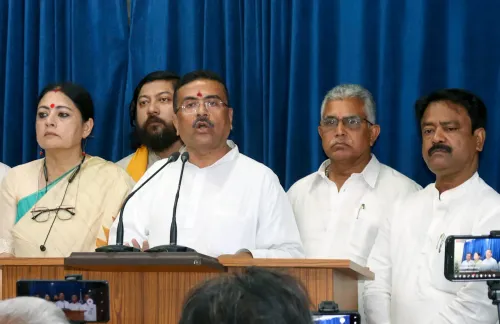
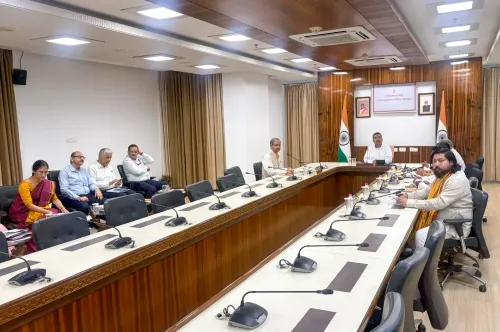
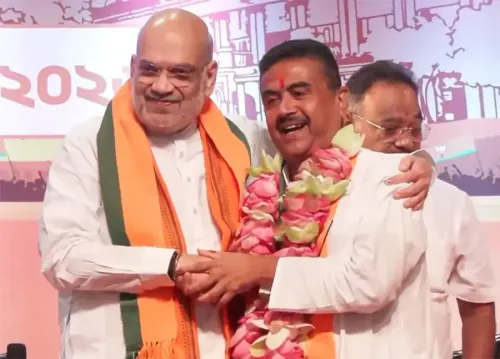
The Suvendu Adhikari-led government in West Bengal has appointed two separate ministers for the school education and higher education departments in its recent portfolio allocation, a structural decision driven by four distinct administrative goals, according to insiders from the state unit of the Bharatiya Janata Party (BJP).
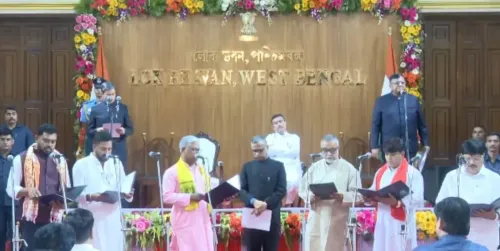
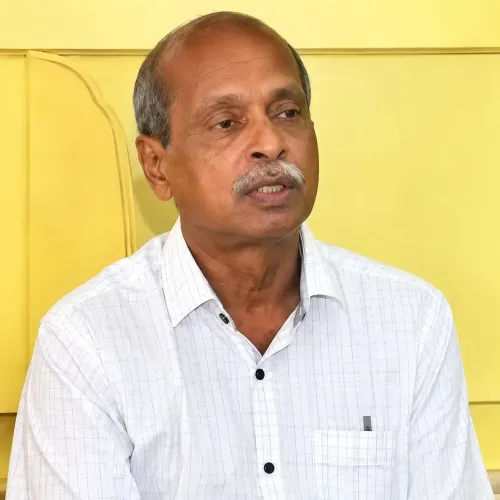
Journalist-turned-politician Jagannath Chattopadhyay has been named the state's higher education minister, while veteran BJP legislator Deepak Burman takes charge as school education minister. The appointments were announced on 11 June.
A Break from the TMC Model
The move marks a deliberate departure from the practice followed during the 15-year Trinamool Congress (TMC) regime under Mamata Banerjee, when a single minister held overall charge of the entire education portfolio. During that period, the department was handled in turns by Bratya Basu and Partha Chatterjee, with Basu serving two stints.
Notably, the split-portfolio model is not new to West Bengal — it mirrors the approach of the previous Left Front government. In 2011, the final year of Left Front rule, Partha De served as school education minister while Dr Sudarshan Roy Choudhury held the higher education brief. The BJP's decision effectively revives that older administrative structure.
The Four Goals Behind the Split
A member of the BJP's state committee outlined four specific objectives driving the decision. The first is specialised attention: school education focuses on building foundational skills in students, while higher education is oriented toward research and professional development. 'Since the natures of the two levels are completely different, individual ministers would be able to focus more minutely on their respective fields,' the state committee member said.
The second goal concerns budgetary planning. Each level of education demands distinct financial allocations and strategic frameworks. According to the party insider, a dedicated minister per department is expected to ensure more effective utilisation of education funds and better oversight of infrastructure development at each level.
The third aim is target-based policy formulation. The BJP insider argued that the specific requirements of school education and higher education are too divergent to be addressed by a single policy lens. 'Having separate ministers in the two departments makes it easier to adopt specific and effective policies suitable for each level,' the state committee member said.
The fourth objective is faster administrative decision-making. Managing the varied complexities of both departments under one minister, the party argued, often slows down approvals and documentation. 'Having two ministers separately for the two departments will automatically simplify the documentation and approval process, reducing administrative complexities and ensuring speedy decision-making,' a state committee member added.
What This Signals for West Bengal's Education Sector
The structural reorganisation comes at a politically significant moment: the BJP is now in power in a state where education administration became a flashpoint during the TMC years, most notably with the school jobs scam that led to the arrest of former education minister Partha Chatterjee. Restoring a bifurcated model could be read as both an administrative reform and a political signal — that the new government intends to bring greater accountability and focus to a department long mired in controversy.
How effectively the two new ministers translate the stated goals into ground-level reform will be closely watched in the months ahead.
Point of View
The Adhikari government is implicitly distancing itself from that legacy while signalling institutional seriousness. The real test, however, is whether splitting the portfolio produces measurable improvements in learning outcomes and hiring transparency, or whether it simply redistributes patronage across two desks instead of one.
NationPress
26 Oct 2026
Frequently Asked Questions
Who are the new education ministers in West Bengal under Suvendu Adhikari?
Jagannath Chattopadhyay has been appointed West Bengal's higher education minister, while Deepak Burman is the new school education minister. Both appointments were made during the BJP government's recent portfolio distribution on 11 June.
Why did the Suvendu Adhikari government split the education portfolio?
The BJP government cited four reasons: specialised focus on different education levels, better budgetary planning, target-based policy formulation, and faster administrative decision-making. Party insiders said the divergent nature of school and higher education requires dedicated ministerial attention.
How does this differ from how TMC handled education in West Bengal?
Under the Mamata Banerjee-led TMC government, a single minister held overall charge of the entire education department for 15 years. The BJP's split model reverses that approach and revives the structure used by the Left Front, which had separate ministers for school and higher education until 2011.
Who handled education under the Left Front before 2011?
In 2011, the final year of Left Front rule in West Bengal, Partha De served as school education minister while Dr Sudarshan Roy Choudhury was the higher education minister — the same bifurcated model the BJP has now reinstated.
What is the significance of this change for West Bengal's education sector?
The restructuring comes after years of controversy, including the school jobs scam under the TMC that led to the arrest of former education minister Partha Chatterjee. The BJP's move is seen as both an administrative reform and a signal of greater accountability in a department long mired in controversy.