Bengal Phase 2 Polls: Trinamool Holds Edge in 142 Seats
Synopsis
With 142 seats across seven Trinamool-dominated districts going to polls on April 29, the BJP faces a structural disadvantage in Bengal's Phase 2. The Matua community's anger over deleted voter names and unfulfilled CAA promises adds a volatile wildcard — one that could upend BJP's already fragile position in North 24 Parganas.
Key Takeaways
142 Assembly seats across seven districts of West Bengal go to polls on April 29, 2025 in Phase 2 of the state elections.
The BJP won only 3 of 33 seats in North 24 Parganas and zero of 31 seats in South 24 Parganas during the 2021 Assembly elections .
The Election Commission's SIR deleted over 12.3 lakh voter names statewide, with Gaighata losing more than 16,000 voters — heavily impacting Matua-dominated constituencies .
Trinamool Congress holds 11 of 11 Kolkata Assembly seats and swept all five Parliamentary seats in Howrah and Hooghly in the 2024 Lok Sabha polls .
By-elections after 2021 saw Trinamool reclaim Santipur and Ranaghat Dakshin from the BJP in Nadia district , further weakening the saffron party's foothold.
The Matua community 's demand for CAA citizenship rights remains unresolved, creating a politically volatile flashpoint for the BJP in multiple Phase 2 seats it currently holds.
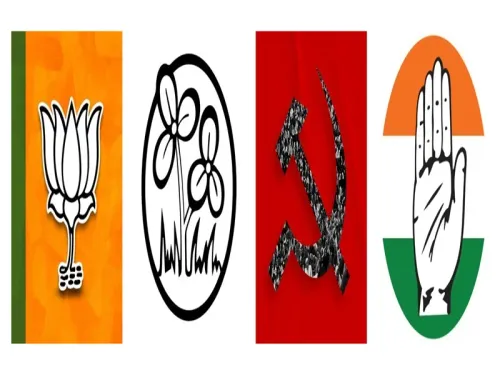
West Bengal's Phase 2 Assembly elections, scheduled for Wednesday, April 29, will test the Bharatiya Janata Party (BJP)'s ability to claw back ground in 142 constituencies spread across seven districts — territory where the ruling Trinamool Congress (TMC) has historically commanded overwhelming dominance. Unlike Phase 1, where the BJP entered with a strong 2021 baseline of 59 seats out of 77, Phase 2 presents a far steeper climb for the saffron party.
BJP's Uphill Battle in Phase 2 Districts
In Phase 1 on April 23, the BJP contested across 152 constituencies where it had performed strongly in the 2021 Assembly elections, providing a degree of incumbency advantage. Phase 2 is a different story. Across districts like North 24 Parganas, South 24 Parganas, Howrah, Hooghly, Purba Bardhaman, Nadia, and Kolkata, the Trinamool has historically swept the board.
In South 24 Parganas, the TMC made a clean sweep of all 31 Assembly segments in 2021, with only Bhangar going to the Indian Secular Front (ISF). The party then replicated this dominance in all five Lok Sabha seats in the 2024 general elections.
In North 24 Parganas, among 33 Assembly constituencies, the BJP managed to win only three seats in the 2021 state polls — a stark contrast to its performance in adjacent Phase 1 zones.
Nadia and the Krishnanagar Factor
Nadia district, which has 17 Assembly constituencies in total, is a microcosm of the BJP's challenge. Of the seven Assembly segments under the Krishnanagar Parliamentary seat — held by Trinamool's Mahua Moitra — the BJP could win only one, Krishnanagar Uttar, in 2021.
BJP MP Jagannath Sarkar retained the Ranaghat Lok Sabha seat in 2024, and his party had won four of the seven Assembly segments under it in 2021. However, subsequent by-elections dealt the BJP further blows — Trinamool edged out BJP in both Santipur and Ranaghat Dakshin Assembly seats, both falling under the Ranaghat Lok Sabha constituency.
Kolkata, Howrah, Hooghly: Trinamool's Urban Fortress
Kolkata remains firmly in Trinamool's grip, with the party holding two Lok Sabha seats and 11 Assembly constituencies in the city. The BJP is attempting to make inroads this time, but without a clear entry point.
In Howrah and Hooghly, the Trinamool's juggernaut rolled unchallenged through all five Parliamentary seats in the 2024 Lok Sabha elections. Among the 34 Assembly constituencies in these two districts, the BJP could manage only four seats in 2021 — all under the Arambagh Lok Sabha seat in Hooghly. In Purba Bardhaman, the Trinamool swept all 16 Assembly segments in 2021 and claimed all three Parliamentary seats in 2024.
Matua Community: The Electoral Flashpoint
Among the most politically charged issues heading into Phase 2 is the fate of the Matua community, a socio-religious group concentrated in North 24 Parganas and Nadia, with roots in the Namasudra movement led by Harichand Thakur in the 19th century. Originally mobilised to challenge caste-based discrimination, the Matuas became a decisive electoral bloc, particularly among Hindu migrants from Bangladesh who arrived during Partition.
Their demand for citizenship rights under the Citizenship Amendment Act (CAA) has turned into a central political battleground, with both the BJP and Trinamool aggressively courting their votes. The BJP has long promised CAA implementation as a lifeline for the community — a promise critics say remains unfulfilled.
Compounding the tension is the Election Commission's Special Intensive Revision (SIR) of electoral rolls, which deleted more than 12.3 lakh names across three phases. The Bongaon subdivision — home to four Matua-dominated Assembly segments — bore the heaviest brunt. Gaighata lost over 16,000 voters, while Bagdah, Bongaon North, and Bongaon South also saw thousands of deletions.
Three of these four seats are currently held by the BJP, which had led in all four during the 2024 Lok Sabha polls. Many Matua voters allege targeted exclusion, linking it to unfulfilled citizenship promises. Local leaders say delays in processing CAA applications left thousands effectively disenfranchised.
Blame Game and Broader Implications
The SIR fallout has triggered a fierce political blame game. Trinamool leaders have accused the BJP of betraying the Matua community by failing to deliver on citizenship assurances despite being in power at the Centre. BJP functionaries, in turn, urged affected voters to seek redress through electoral tribunals — a response critics called inadequate and tone-deaf.
The voter deletion controversy has also extended to urban constituencies like Bidhannagar and Rajarhat, where tens of thousands of names were struck off the rolls. With the Matua vote seen as pivotal in multiple Phase 2 constituencies, the issue has become a flashpoint that could decisively shift outcomes.
Notably, this controversy arrives at a moment when the BJP is already under pressure to justify its national-level CAA rollout — a policy announced with significant fanfare but whose on-ground implementation for communities like the Matuas remains incomplete. The contradiction between political promise and administrative delivery could cost the party dearly in seats it cannot afford to lose.
As polling day on April 29 approaches, all eyes will be on voter turnout in Matua-dominated segments, the TMC's ground machinery in its strongholds, and whether the BJP can convert Lok Sabha momentum into Assembly-level gains — a challenge it has consistently struggled with across these districts.
Point of View
But five years of Central government control have yielded no citizenship certificates and, now, mass voter deletions in their strongholds. The SIR controversy is not a bureaucratic footnote — it is a political indictment of the gap between BJP's electoral rhetoric and administrative delivery. Trinamool, meanwhile, enters Phase 2 not just with incumbency but with a structural map advantage that wire reports consistently underplay. The real story here is whether the BJP can survive its own credibility deficit in the communities it once called its votebank.
NationPress
15 Sept 2026
Frequently Asked Questions
How many seats are going to polls in Bengal Phase 2 on April 29?
A total of 142 Assembly seats spread across seven districts of West Bengal are scheduled to go to polls in Phase 2 on April 29, 2025. These constituencies have historically been strongholds of the ruling Trinamool Congress.
How did BJP perform in these Phase 2 districts in the 2021 Bengal elections?
The BJP performed poorly in most Phase 2 districts in 2021 — winning only 3 of 33 seats in North 24 Parganas, none of the 31 seats in South 24 Parganas, and just 4 of 34 seats in Howrah and Hooghly combined. Trinamool dominated across all these districts.
What is the Matua community controversy in Bengal elections 2025?
The Election Commission's Special Intensive Revision (SIR) deleted over 12.3 lakh names from electoral rolls, with heavy deletions in Matua-dominated areas of North 24 Parganas like Gaighata, Bagdah, Bongaon North, and Bongaon South. Many Matua voters allege targeted exclusion linked to unfulfilled CAA citizenship promises by the BJP.
Which Lok Sabha seats fall under the Phase 2 Assembly constituencies?
Key Lok Sabha seats whose Assembly segments fall under Phase 2 include Krishnanagar and Ranaghat in Nadia, Bongaon and Barasat in North 24 Parganas, and seats in Kolkata, Howrah, Hooghly, and Purba Bardhaman. Trinamool holds most of these Parliamentary seats.
What is the significance of the Matua community in West Bengal politics?
The Matua community is a socio-religious group rooted in the 19th-century Namasudra movement and is concentrated in North 24 Parganas and Nadia districts. Their demand for citizenship rights under the CAA has made them a decisive electoral bloc, with both BJP and Trinamool Congress aggressively competing for their support.