Bengaluru Urban Mobility Mission Committee formed to fix city's traffic crisis
Synopsis
Karnataka has done something unusual: it has put Uber, Swiggy, IISc, Bengaluru Metro and the city police in the same room to fix Bengaluru's traffic. The Urban Mobility Mission Committee for Bengaluru — with seven task forces and a unified action plan — is the Shivakumar government's most ambitious structural bet yet on ending the city's decade-long gridlock.
Key Takeaways
The Karnataka government constituted the Urban Mobility Mission Committee for Bengaluru (UMMCB) on 8 August .
The committee is chaired by Home Minister Priyank Kharge and includes over 30 agencies spanning government, private mobility firms, tech hubs, logistics companies and academic institutions.
Seven task forces will cover traffic management, public transport, first- and last-mile connectivity, freight, digital mobility, corporate cluster mobility and infrastructure coordination.
Key deliverables include a Bengaluru Mobility Action Plan and a Bengaluru Mobility Dashboard .
The committee will meet every three months ; progress reports due quarterly and an annual report to the state government.
Private players including Uber , Ola , Namma Yatri , Swiggy , Zomato , Amazon Logistics and Flipkart have been formally included.
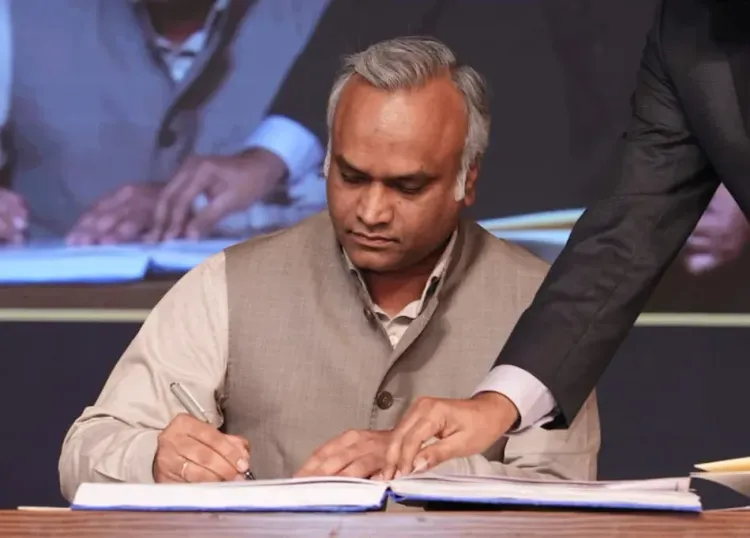
The Karnataka government on 8 August constituted the Urban Mobility Mission Committee for Bengaluru (UMMCB) to develop a comprehensive, technology-driven solution to the city's worsening traffic congestion. The committee, set up by an order of the Home Department, will be chaired by Home Minister Priyank Kharge and brings together government agencies, private firms, tech companies, academic institutions and citizen groups on a single platform.
Why Bengaluru Needs This Now
Bengaluru is grappling with a cascade of mobility failures: rising vehicular congestion, longer commute times, poor first- and last-mile connectivity, fragmented public transport coordination, parking shortages, and mounting pressure on road space. According to the government, these challenges are directly eroding the city's productivity, economic efficiency and quality of life — a particularly acute concern for a city that anchors India's technology economy.
Chief Minister D.K. Shivakumar's administration framed the UMMCB as a structural departure from piecemeal fixes. 'Instead of taking separate measures for Bengaluru's traffic problems, the key objective of this mission is to bring all relevant agencies, the private sector, technology companies, experts and citizens onto a single platform and develop comprehensive solutions,' Kharge said.
Who Sits on the Committee
The committee is chaired by the Minister for Home, Information Technology and Biotechnology and e-Governance, with the Additional Chief Secretary of the Urban Development Department serving as vice-chairperson. Senior officials from the Greater Bengaluru Authority (GBA), Bengaluru City Police, BBMP-related agencies, Directorate of Urban Land Transport (DULT), BMTC, Bengaluru Metro, BWSSB, K-RIDE, BESCOM, KPTCL, state road transport corporations and national highway agencies are all included.
Private mobility platforms — Namma Yatri, MoveInSync, Uber, Rapido and Ola — have seats alongside auto-rickshaw and taxi associations, employee transport services and parking technology companies. Logistics giants Swiggy, Zomato, Amazon Logistics and Flipkart will also participate, reflecting the scale of urban freight pressure on city roads.
Major tech and employment hubs — Outer Ring Road companies, Manyata Tech Park, Whitefield, Electronic City, ITPL/ITPB, Bagmane Tech Park and Embassy TechVillage — are represented. Academic institutions including the Indian Institute of Science (IISc), IIIT-Bangalore and IIM Bangalore, along with civil society organisations focused on road safety and sustainable transport, round out the membership.
Seven Task Forces, One Action Plan
The UMMCB will operate through seven task forces covering: traffic management and road safety; public transport coordination; first- and last-mile connectivity; corporate and technology cluster mobility; digital mobility and data; urban freight and delivery movement; and infrastructure and roadwork coordination.
The committee's deliverables include a Bengaluru Mobility Action Plan, a Bengaluru Mobility Dashboard, identification of major congestion-prone roads and junctions, data-sharing mechanisms between agencies, and improved connectivity around Metro, bus and suburban railway stations. Pedestrian and cycling infrastructure is also on the agenda.
Governance and Timelines
The full committee will convene every three months under Kharge's chairmanship. Task forces will hold their own quarterly meetings, with progress reports submitted every three months and an annual report presented to the Karnataka government. Kharge said priorities include data-driven traffic management, integration of public and private transport, and stronger pedestrian infrastructure.
Whether the UMMCB translates its broad mandate into measurable relief on Bengaluru's roads will depend heavily on execution — and on whether the city's notoriously siloed agencies can sustain coordination beyond the first few meetings.
Point of View
Master plans and metro phases without fundamental relief. What is different about the UMMCB is the explicit inclusion of private logistics and mobility platforms alongside government agencies, acknowledging that app-based delivery and ride-hailing fleets are now structural contributors to congestion, not peripheral actors. The real test is coordination: Bengaluru's agencies have historically operated in silos, and a quarterly meeting cadence alone will not break that pattern. If the Mobility Dashboard becomes a genuine real-time accountability tool — rather than a reporting formality — this could mark a shift. If not, it joins a familiar list of well-designed committees that dissolved into inaction.
NationPress
22 Sept 2026
Frequently Asked Questions
What is the Urban Mobility Mission Committee for Bengaluru (UMMCB)?
The UMMCB is a government-constituted body formed on 8 August by the Karnataka Home Department to develop integrated solutions to Bengaluru's traffic and mobility challenges. It brings together over 30 entities — government agencies, private mobility platforms, tech companies, logistics firms and academic institutions — under the chairmanship of Home Minister Priyank Kharge.
Why has Karnataka formed this committee now?
Bengaluru faces mounting mobility challenges including vehicular congestion, poor first- and last-mile connectivity, fragmented public transport and growing freight movement pressure, all of which are affecting the city's productivity and quality of life. The government said the committee aims to replace piecemeal fixes with a unified, data-driven approach.
Who are the key members of the UMMCB?
The committee includes senior officials from GBA, BBMP, Bengaluru Metro, BMTC, DULT, Bengaluru City Police, K-RIDE and national highway agencies, alongside private platforms such as Uber, Ola, Namma Yatri, Rapido and MoveInSync, logistics firms like Swiggy, Zomato, Amazon Logistics and Flipkart, and academic bodies including IISc, IIIT-Bangalore and IIM Bangalore.
What are the seven task forces under the UMMCB?
The seven task forces cover traffic management and road safety; public transport coordination; first- and last-mile connectivity; corporate and technology cluster mobility; digital mobility and data; urban freight and delivery movement; and infrastructure and roadwork coordination.
What will the committee actually deliver and when?
The UMMCB is mandated to produce a Bengaluru Mobility Action Plan, a Bengaluru Mobility Dashboard and data-sharing mechanisms between agencies. The full committee meets quarterly, with progress reports every three months and an annual report submitted to the Karnataka government.