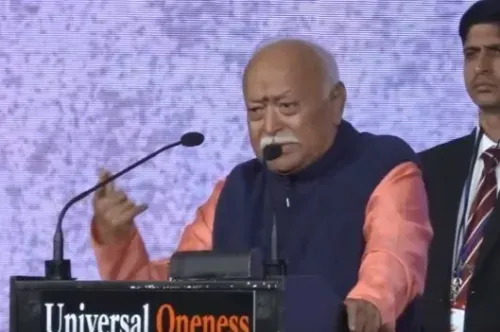
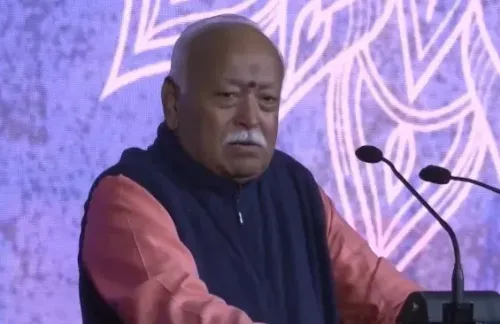
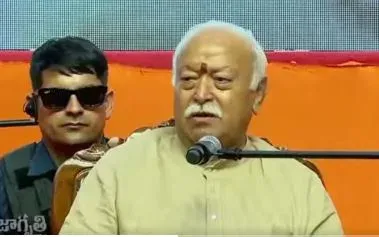
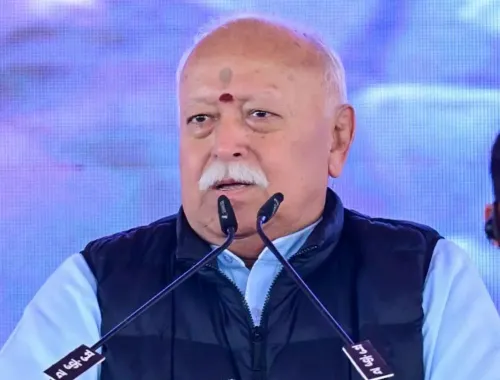
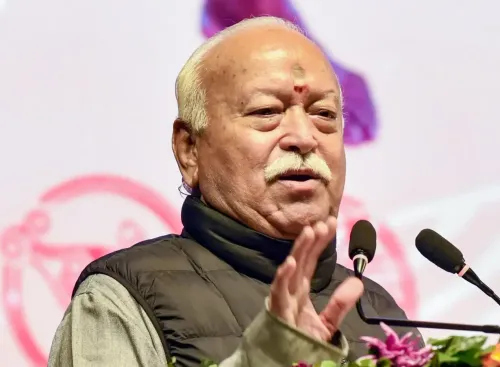
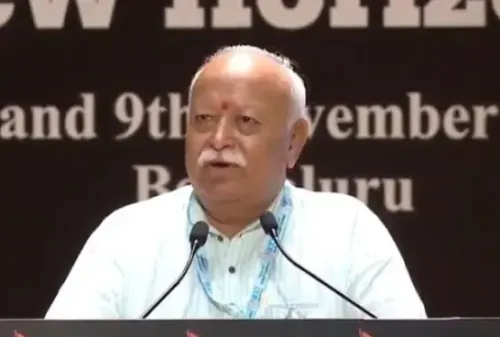
RSS chief Mohan Bhagwat explains Dharma vs religion at Ujjain Yuva Dharma Sansad
Synopsis
RSS Sarsanghchalak Mohan Bhagwat used the Yuva Dharma Sansad's second day in Ujjain to argue that Dharma — with no precise English equivalent — liberates rather than binds, unlike the Latin-rooted word 'religion'. With 1,700 youth and 300 scholars present, and AI on the agenda, this sixth-edition gathering signals a deliberate RSS push to reframe classical philosophy for a digitally immersed generation.
Key Takeaways
RSS Sarsanghchalak Mohan Bhagwat addressed the Yuva Dharma Sansad in Ujjain on 18 September 2026 , the second day of the three-day event.
He distinguished 'Dharma' from 'religion', noting the Latin root religio means 'to bind', whereas Dharma liberates.
Approximately 1,700 young students and more than 300 scholars, teachers, and religious leaders are participating.
The event is the sixth edition of the Yuva Dharma Sansad; previous editions were held in Kashi, Ayodhya, Mathura, Haridwar, and Kanchipuram.
Contemporary themes including Artificial Intelligence and the conflict between information and ideas feature in the programme.
The next edition of the Yuva Dharma Sansad is scheduled in Dwarka .
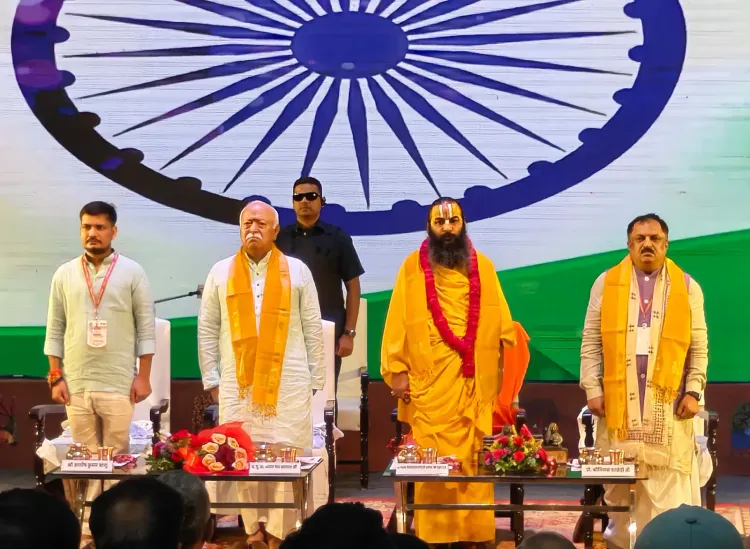
RSS Sarsanghchalak Mohan Bhagwat told approximately 1,700 young participants at the Yuva Dharma Sansad in Ujjain on 18 September 2026 that Dharma does not bind a person but liberates them — drawing a sharp philosophical distinction between 'Dharma' and the English word 'religion'. The address came on the second day of the three-day event held at Gita Bhawan.
Dharma and Religion: The Distinction Bhagwat Drew
Bhagwat clarified that the English word 'religion' is derived from the Latin religio, meaning to bind or tie, and is therefore not synonymous with Dharma. He noted that the English dictionary has no precise equivalent for the word, and argued that Western culture often strips away Dharma's ritualistic dimensions and reduces it to mere religion. 'Causing no pain to others is the highest form of righteousness, while inflicting pain is a grave sin,' he said.
He invoked Swami Vivekananda's thought to describe India as a civilisation deeply rooted in Dharma, and advised youth that absorbing new ideas requires first stilling and emptying the mind — clearing old notions before genuine learning can begin.
Key Messages for the Youth
Bhagwat stressed that Dharma is not the preserve of the elderly but a guiding force for younger generations navigating life's choices. He observed that the final five verses of the Mahabharata encapsulate the essence of the entire epic, and that it is through Dharma that one attains Kama (desire), Artha (prosperity), and Moksha (liberation). Rather than lamenting over matters of religion, he urged participants to embrace Dharma with true understanding to make life meaningful.
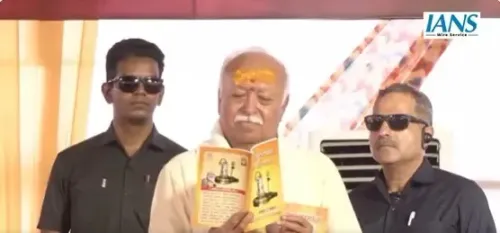
He inaugurated the day's proceedings by lighting a ceremonial lamp and leading the singing of 'Vande Mataram'.
Scale of the Event and Participants
The sixth edition of the Yuva Dharma Sansad has drawn more than 300 scholars, teachers, researchers, and religious leaders alongside the student delegates. Renowned screenwriter and lyricist Manoj Muntashir was also present. The event is organised by Sevagya Sansthanam under the guidance of Acharya Mithileshanandinisharan Ji Maharaj, Peethadhishwar of Siddha Peeth Hanumat Niwas, Ayodhya.
Other prominent figures guiding sessions include Acharya Mahamandaleshwar Avdheshanand Giri Ji Maharaj of Juna Akhara, Smriti Anantlakshmi of Anadi Foundation, and J. Nandakumar, National Convener of Pragya Pravah. Prof. Shrinivasa Varkhedi, Vice-Chancellor of the Central Sanskrit University, and Ashish Kumar 'Ashu', President of Sevagya Sansthanam, were present at the inaugural session.
Programme Themes and Roving Circuit
This edition in Ujjain features discussions spanning the existential concept of Dharma, Artificial Intelligence, and the tension between information and ideas — a notably contemporary thematic mix for a traditional religio-philosophical gathering. Previous editions were held in Kashi, Ayodhya, Mathura, Haridwar, and Kanchipuram; the next is scheduled in Dwarka.
With the Yuva Dharma Sansad now spanning six editions and seven sacred cities, the initiative reflects a sustained effort to anchor India's youth in classical philosophical frameworks while engaging with 21st-century concerns.
Point of View
The RSS is offering young Indians a civilisational identity that can absorb modernity — AI included — without surrendering its classical core. The choice of Ujjain, one of the Sapta Puri sacred cities, and a circuit that will end in Dwarka, is deliberate geography: the event is building a sacred-city map of Hindu philosophical authority. What is notable, and underreported, is the inclusion of AI and information-versus-ideas debates — this is not a retreat into ritual but an attempt to colonise contemporary intellectual territory on the RSS's own philosophical terms.
NationPress
18 Sept 2026
Frequently Asked Questions
What did Mohan Bhagwat say about Dharma at the Yuva Dharma Sansad?
Bhagwat said Dharma does not bind a person but liberates them, and that it is not the same as the English word 'religion', which derives from the Latin religio meaning to bind or tie. He stressed that Dharma serves as a guiding force for all ages, especially youth, and that embracing it with true understanding makes life meaningful.
What is the Yuva Dharma Sansad and where is the 2026 edition being held?
The Yuva Dharma Sansad, or Youth Religious Parliament, is a multi-day philosophical gathering organised by Sevagya Sansthanam under the guidance of Acharya Mithileshanandinisharan Ji Maharaj. The sixth edition is being held at Gita Bhawan in Ujjain from 18 September 2026 over three days, with previous editions in Kashi, Ayodhya, Mathura, Haridwar, and Kanchipuram.
Who is participating in the Yuva Dharma Sansad in Ujjain?
Approximately 1,700 young students from across India are attending, alongside more than 300 scholars, teachers, researchers, and religious leaders. Notable participants include screenwriter Manoj Muntashir, Acharya Mahamandaleshwar Avdheshanand Giri Ji Maharaj of Juna Akhara, and J. Nandakumar, National Convener of Pragya Pravah.
What themes are being discussed at this edition of the Yuva Dharma Sansad?
The programme includes discussions on the existential concept of Dharma, Artificial Intelligence, and the conflict between information and ideas — a contemporary thematic mix alongside the event's classical philosophical focus.
Where will the next Yuva Dharma Sansad be held?
The next edition of the Yuva Dharma Sansad is scheduled to be held in Dwarka, continuing the event's circuit of India's sacred cities.