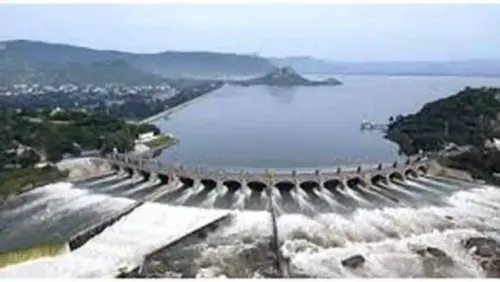
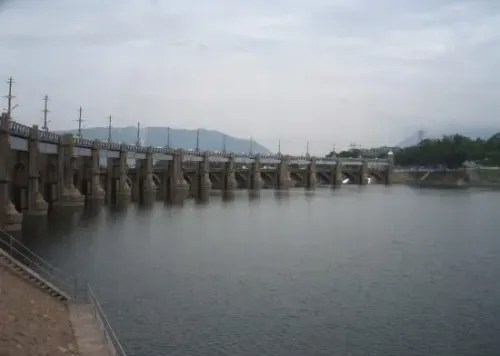
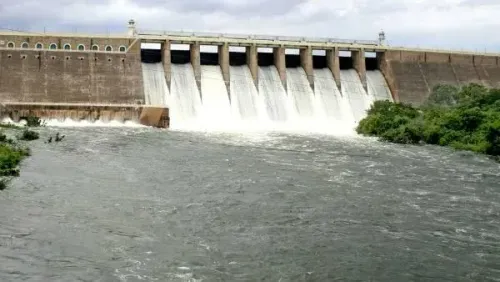
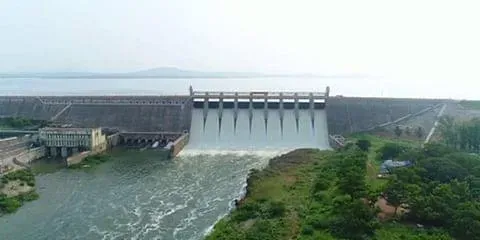
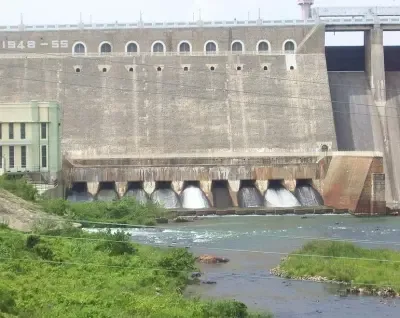
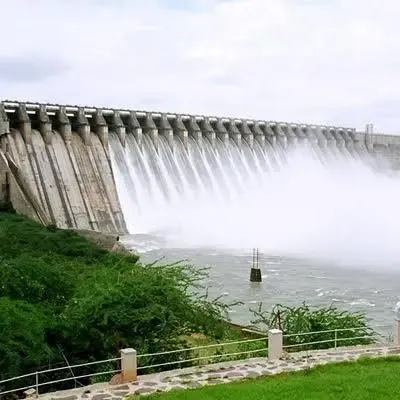
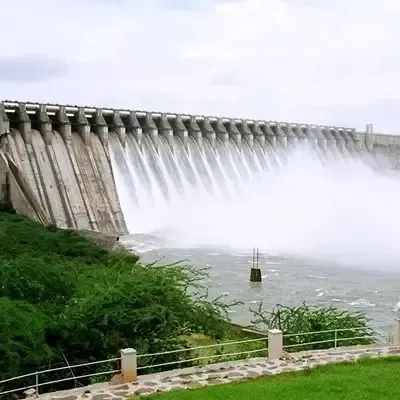
Bhavanisagar dam level rises 2.21 feet in two days as inflow nears 3,500 cusecs
Synopsis
Bhavanisagar dam, which had sunk to around 50 feet amid a months-long dry spell, clawed back 2.21 feet in just two days as inflow climbed to nearly 3,500 cusecs. With irrigation releases suspended and catchment rains picking up, farmers in Erode are cautiously hopeful — but the dam still has a long way to go before reaching its 105-foot full level.
Key Takeaways
Bhavanisagar dam water level rose from 54.38 feet to 56.59 feet between 7 October and 9 October 2026 — a gain of 2.21 feet .
Inflow increased from 2,436 cusecs on 8 October to 3,488 cusecs on 9 October .
The reservoir had earlier fallen to around 50 feet against a full level of 105 feet .
Irrigation releases from the dam have been suspended to conserve incoming water.
Silt removal was permitted and carried out by farmers when the low level exposed portions of the reservoir bed.
Continued catchment rainfall is critical, as the dam remains well below its full capacity.
The water level at Bhavanisagar dam in Erode district, Tamil Nadu, rose by 2.21 feet in just two days after inflow climbed to nearly 3,500 cusecs, bringing measured relief to farmers who had watched storage decline sharply over several months. The reservoir's level stood at 54.38 feet at 6 pm on 7 October 2026 and recovered to 56.59 feet by 6 pm on 9 October 2026, according to dam authorities.
Inflow on the rise
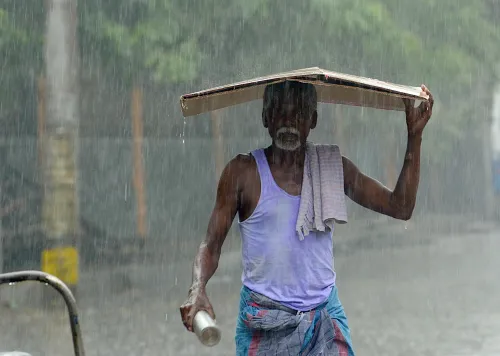
Inflow into the reservoir rose from 2,436 cusecs at 6 pm on 8 October to 3,488 cusecs at the same time the following day. The uptick follows recent rainfall in the catchment areas that feed the dam — the Bhavani river, which descends from the Nilgiris through Mettupalayam, and the Moyar river, flowing from the Gudalur hills through Thengumarahada. The combined surge has helped reverse a prolonged declining trend.
How low the dam had fallen
The reservoir, which has a full level of 105 feet, had earlier dropped to approximately 50 feet — a level that exposed stretches of the reservoir bed. Authorities used the opportunity to permit silt removal from the exposed sections, and farmers carried out the desilting work. The low storage had already constrained irrigation supply to agricultural users across the district.
Irrigation releases suspended to conserve water
In a bid to arrest further depletion, authorities suspended releases from the dam for irrigation. With outflow halted and inflow from catchment rainfall now improving, the reservoir has begun accumulating water steadily. The dual effect — no discharge, rising inflow — is credited with the 2.21-feet gain over two days. Officials have not indicated when irrigation releases will resume, making continued rainfall in the catchment critical to rebuilding storage toward the district's agricultural needs.
What farmers are watching
The improvement has lifted sentiment among farming communities in Erode, though uncertainty persists. The dam remains far below its full level of 105 feet, and any weakening of catchment rainfall could slow or reverse the recovery. Farmers dependent on the reservoir for irrigation — who had grown increasingly anxious as levels hovered near 50 feet — are closely tracking daily inflow readings. Notably, this recovery comes as October marks the tail end of the northeast monsoon window for the region, making the coming weeks decisive for whether storage can be meaningfully rebuilt before the next dry season.
Point of View
But it masks how precarious the situation still is — Bhavanisagar remains roughly 48 feet below full level, and the gain is partly an accounting effect of suspended irrigation releases rather than pure hydrological recovery. The real question is whether northeast monsoon rainfall in the Nilgiris and Gudalur catchments will sustain inflow through October, or whether this is a brief reprieve before another dry stretch. For a district as agriculturally dependent on a single reservoir as Erode, the margin for error is thin, and the absence of a clear timeline for resuming irrigation releases adds its own uncertainty for farmers planning their cropping cycles.
NationPress
10 Oct 2026
Frequently Asked Questions
What is the current water level of Bhavanisagar dam?
As of 6 pm on 9 October 2026 , the water level at Bhavanisagar dam stood at 56.59 feet , up from 54.38 feet two days earlier. The dam's full reservoir level is 105 feet, meaning it remains significantly below capacity.
Why did the Bhavanisagar dam level fall so low?
A prolonged dry spell with little rainfall in the catchment areas of the Bhavani and Moyar rivers caused the reservoir's level to drop to around 50 feet over several months. The low storage limited irrigation supply to farmers in Erode district and exposed portions of the reservoir bed.
Why have irrigation releases from Bhavanisagar been suspended?
Authorities suspended irrigation releases from the dam to conserve incoming water and allow storage to rebuild after months of decline. The suspension, combined with improving inflow from catchment rainfall, has contributed to the recent rise in water levels.
Which rivers feed Bhavanisagar dam?
Bhavanisagar dam receives water from the Bhavani river, which flows from the Nilgiris through Mettupalayam, and the Moyar river, which flows from the Gudalur hills through Thengumarahada before reaching the reservoir in Erode district.
When will irrigation from Bhavanisagar resume?
Authorities have not yet announced a timeline for resuming irrigation releases. Officials are prioritising storage recovery, and the decision will likely depend on whether inflow from catchment rainfall continues to improve in the coming days and weeks.