Did BJP and Shiv Sena Successfully End the 25-Year Thackeray Era in BMC Elections?

Synopsis
The recent BMC elections have marked a significant political shift in Mumbai, with BJP and Shiv Sena ending a 25-year reign by the Thackeray family. Discover the implications of this election and what it means for Mumbai's future governance.
Key Takeaways
BJP and Shiv Sena formed a coalition to dominate the BMC elections.
No party achieved the required majority of 114 seats.
Shiv Sena (UBT) showed strong resistance with 65 seats.
The results highlight a shift in voter loyalty and sentiment.
Future governance will likely involve strategic alliances .
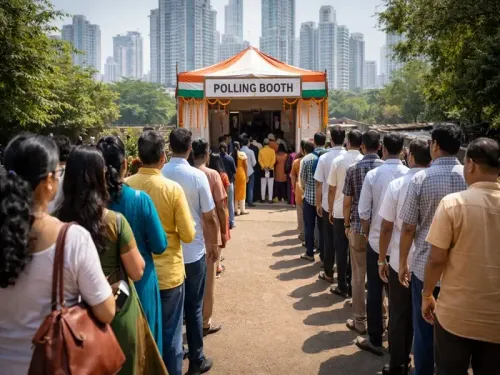
Mumbai, Jan 16 (NationPress) In a fiercely contested battle for the 227-member Brihanmumbai Municipal Corporation (BMC) elections, the BJP, in coalition with Shiv Sena, accomplished its Mission Mumbai. The BJP secured its position as the largest party by clinching 88 seats. Despite a considerable lead over its competitors, no individual party has managed to surpass the critical halfway threshold of 114 seats, underscoring the importance of alliances to govern the civic body.
Nevertheless, the BJP, along with the Shiv Sena's 28 corporators, finds itself in a favorable position to attain the mayoral seat, a goal the party has pursued for many years.
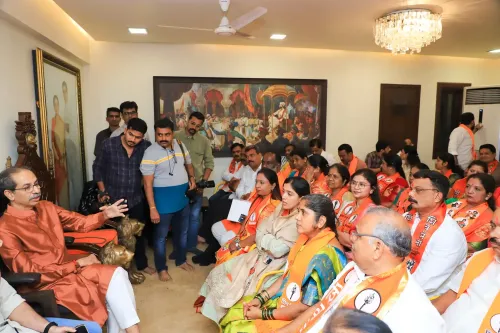
A pivotal narrative in this election is the division between the two factions of the Shiv Sena. The Uddhav Thackeray-led Shiv Sena (UBT) demonstrated significant strength, leading in 65 seats, remaining the foremost contender against the BJP. In contrast, the Shiv Sena (Shinde faction) is currently ahead in 28 seats.
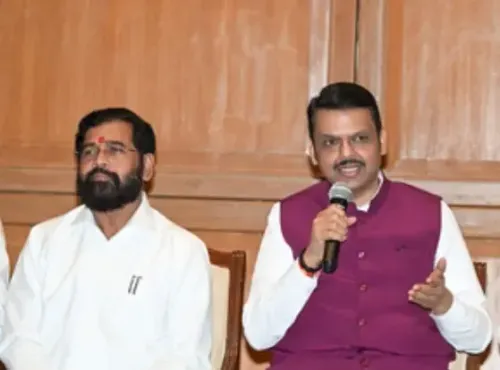
The Eknath Shinde-led faction, which had previously claimed to be the “true” Sena following victories in state Assembly elections and recent local polls, struggled to maintain its momentum. This was despite integrating former corporators from the Thackeray-led faction into their ranks.
The Shiv Sena (UBT), which allied with the Raj Thackeray-led Maharashtra Navnirman Sena (MNS) during the elections, is currently leading by a significant margin over the Shinde faction. This trend suggests that a larger portion of the traditional Sena voter base has remained loyal to the Thackeray camp in this electoral count. Although both Thackeray brothers appealed to voters by emphasizing the cause of Marathi identity, they failed to reach the essential 114-seat mark.
However, the Thackeray brothers put up a formidable challenge against the BJP-Shiv Sena alliance in the quest for a majority until the final results were declared.
With a dominant tally, the BJP has solidified its status as a significant force in Mumbai politics. Despite this, the party fell short of its goal of winning over 150 seats, despite efforts to strengthen its grassroots network and engage extensively with voters.
The BJP particularly countered the emotional appeals from the Thackeray brothers with a development-focused campaign, urging Mumbaikars to vote for a triple-engine government to ensure uninterrupted growth for the city.
The Congress, which contested the elections in alliance with the Vanchit Bahujan Aghadi, has been pushed to the fourth position. While it still holds some influence, its impact appears reduced compared to the BJP and Shiv Sena (UBT).
The AIMIM surprised many by winning eight seats, compared to the two seats claimed by the Samajwadi Party. The party hinted at consolidating its presence in Mumbai and across Maharashtra in anticipation of the next Assembly elections in 2029. It retains a significant influence in certain wards.
Raj Thackeray's party secured six seats, ensuring a small yet potentially pivotal presence. However, the party must enhance its organizational framework while maintaining its alliance with Shiv Sena (UBT).
The two factions of the NCP (NCP and NCP–Sharad Pawar) collectively won four seats, indicating a limited presence in the Mumbai municipal area compared to their performance in other regions of Maharashtra.
(Sanjay Jog can be reached at sanjay.j@ians.in)
Point of View
It is pivotal to recognize the significance of the recent BMC election results. The BJP and Shiv Sena's success marks an important turning point in Mumbai's political dynamics, ending a long-standing era of Thackeray rule. The need for coalitions reflects the changing landscape of voter sentiments and the intricate nature of local governance. This election not only impacts Mumbai but sets the stage for future political strategies across India.
NationPress
22 Sept 2026
Frequently Asked Questions
What was the outcome of the BMC elections?
The BJP, in alliance with Shiv Sena, emerged as the largest party, winning 88 seats in the BMC elections.
How many seats are needed for a majority in the BMC?
A total of 114 seats out of 227 is required for a majority in the BMC.
Who are the main contenders in the BMC elections?
The main contenders were the BJP, Shiv Sena (UBT), and the Shiv Sena (Shinde faction).
What role did alliances play in the election?
Alliances were crucial as no single party achieved the halfway mark, indicating a need for coalitions to govern.
What is the significance of this election for Mumbai's political future?
This election signifies a shift in power dynamics and may influence future governance strategies in Mumbai.