Will Maha: BMC elections become a multi-cornered contest?
Synopsis
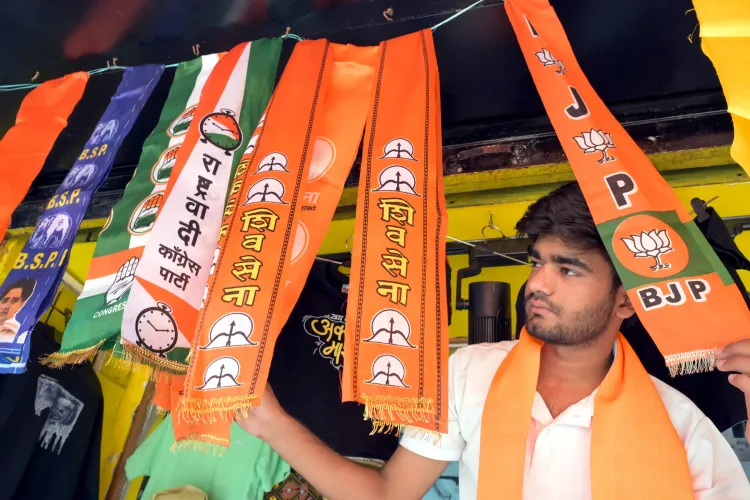
The BMC elections on January 15 promise a multi-layered contest with five factions vying for control, shifting the political landscape in Mumbai. Major alliances have fractured, introducing new players and strategies, making the upcoming elections a critical moment in local governance.
Key Takeaways
BMC elections set for January 15.
Five major factions contesting for power.
BJP and Shiv Sena MahaYuti aim for a dominant position.
Shiv Sena factions are vying for traditional Marathi votes.
Smaller parties could disrupt election outcomes.
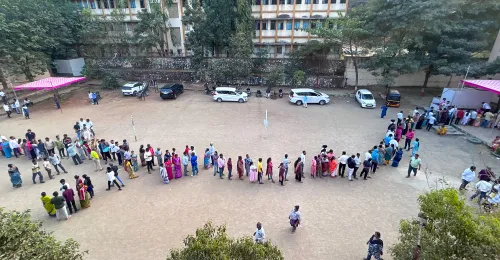
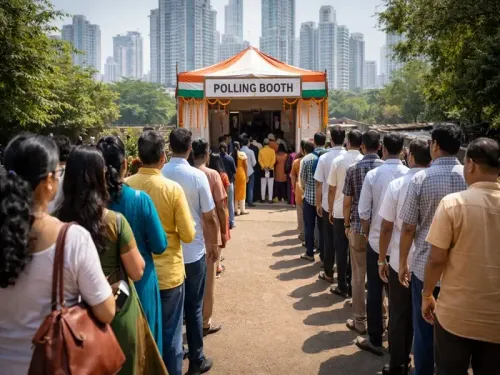
Mumbai, Dec 30 (NationPress) The upcoming BMC elections on January 15 are shaping up to be a multi-faceted contest, as the political landscape has shifted from a binary fight to a fragmented scenario involving five distinct power blocs.
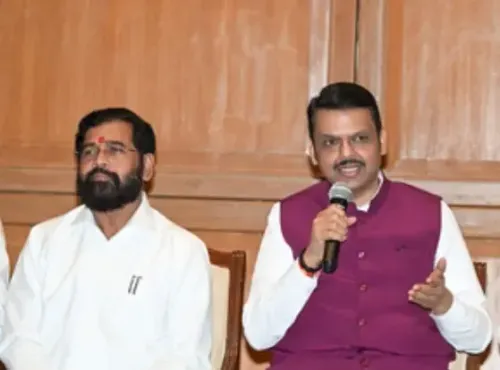
The BJP and Shiv Sena MahaYuti coalition, along with their partners, intend to remain a dominant force, aiming to raise the saffron flag at the BMC with a MahaYuti mayor.
The BJP is competing for 137 seats, while allocating 90 seats to Shiv Sena. Additionally, the BJP is set to launch its development agenda, urging voters to support a triple-engine government to enhance the city’s progress.
Meanwhile, Shiv Sena aims to reclaim traditional Marathi votes, asserting their identity as the authentic Shiv Sena, rooted in the principles of party founder Balasaheb Thackeray.
In an interesting twist, the Republican Party of India (A), led by Ramdas Athawale, is contesting the elections, claiming they were sidelined during seat-sharing negotiations.
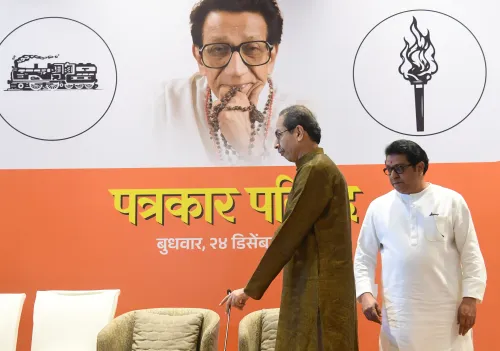
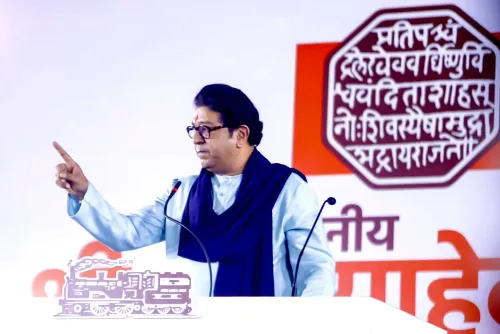
The Shiv Sena (UBT) and MNS alliance seeks to consolidate the “Marathi Manoos” vote by emphasizing emotional ties and local pride. This marks a reunion between Uddhav and Raj Thackeray after nearly two decades. Both cousins plan to leverage Balasaheb Thackeray’s legacy to counter the BJP, which they accuse of attempting to detach Mumbai from Maharashtra.
After breaking from the Maha Vikas Aghadi (MVA), Congress is running independently, partnering with Prakash Ambedkar’s Vanchit Bahujan Aghadi (VBA) to appeal to Dalit, Muslim, and North Indian voters.
Despite being part of the state-level MahaYuti, Ajit Pawar’s NCP is contesting alone after failing to secure a position in the BJP-led coalition.
The AAP and Samajwadi Party plan to disrupt the election dynamics by targeting specific areas, with AAP emphasizing Delhi-style civic transparency and SP focusing on wards with significant minority populations like Govandi and Mankhurd.
Historically, the unified Shiv Sena had a monopoly on the Marathi vote. Now, that vote is fragmented among three factions: Eknath Shinde (State Power), Uddhav (Legacy), and Raj Thackeray (Linguistic Identity).
In this context, the BJP aims to capitalize on its core voter base, which includes North Indians, Gujaratis, and the cosmopolitan elite, while the Marathi vote is divided among the three SeMNS factions.
Although parties like the VBA and AAP may not secure many seats, they could significantly impact frontrunners by drawing 2,000–3,000 votes in various wards, leading to unexpected outcomes.
By contesting independently, Congress risks diminishing its influence in Mumbai if it does not surpass its 2017 performance of 31 seats. However, insiders assert that collaborating with the Sena (UBT)-MNS alliance would alienate their Muslim and North Indian constituents due to the MNS’s “sons-of-the-soil” narrative, positioning them as a wild card in the suburbs.
Insiders also mentioned that by aligning with Prakash Ambedkar’s VBA, Congress aims to reconstruct a coalition of Dalits and Muslims, which was once their stronghold.
For the BJP, the BMC elections present an opportunity to establish its dominance in Mumbai. For both Sena factions, it’s a crucial battle for the “Bow and Arrow” legacy. For the citizens of Mumbai, this multi-faceted contest signifies a broader array of choices but raises the possibility of a fragmented mandate.
(Sanjay Jog can be reached at sanjay.j@ians.in)
Point of View
The BMC elections reveal a complex interplay of power among multiple parties. While traditional strongholds are being challenged, the emergence of new coalitions and independent candidates adds layers to the electoral contest. This multifaceted battle reflects the dynamic nature of Mumbai's politics, highlighting the diverse interests of its electorate.
NationPress
30 Sept 2026
Frequently Asked Questions
What are the main alliances participating in the BMC elections?
The main alliances include the BJP-Shiv Sena MahaYuti coalition, Shiv Sena (UBT) with MNS, and Congress with Vanchit Bahujan Aghadi. Each is targeting distinct voter demographics.
What strategy is the BJP employing in these elections?
The BJP is contesting 137 seats and aims to promote a development agenda while appealing for support for a triple-engine government to boost Mumbai's growth.
How are the factions of Shiv Sena approaching this election?
Shiv Sena aims to reclaim Marathi votes by positioning itself as the 'real' Shiv Sena, while the UBT and MNS focus on local pride and heritage.
What impact could smaller parties have in the election?
While smaller parties like VBA and AAP may not win many seats, they could influence the outcomes by drawing votes away from frontrunners.
What are the risks for Congress in this election?
Congress risks losing relevance in Mumbai if it fails to exceed its previous seat count, but aims to rebuild its coalition with Dalit and Muslim voters.