Karnataka BJP demands Dalit justice in Nagendra scam row
Synopsis
The BJP's counter-attack on Congress over the Valmiki Corporation scam cuts to the heart of a painful irony: both the accused minister and the officer who died by suicide are Dalits. By asking 'what justice for Dalits?' the BJP is attempting to flip Congress's identity-politics narrative — and the move could resonate in a state where Dalit votes are a decisive electoral variable.
Key Takeaways
BJP Leader of the Opposition R.
Ashoka demanded on 29 August that Congress explain its silence over the family of Dalit officer Chandrashekar , who died by suicide in connection with the Valmiki Corporation alleged scam.
Former Karnataka minister B.
Nagendra resigned on 28 August , saying he stepped down to protect the Congress party from embarrassment; he has accused BJP of targeting Dalits.
Ashoka alleged the Enforcement Directorate found Nagendra's involvement in the case and accused the state SIT of trying to suppress the scam.
Shivakumar had stated Nagendra was innocent — a claim Ashoka rejected, alleging Nagendra's name appeared in multiple chargesheets.
BJP MLA Gali Janardhana Reddy said the ED operates under strict guidelines and cannot be influenced, reiterating his allegation of Nagendra's involvement.
The alleged amount in dispute ranges between ₹84 crore and ₹187 crore , according to competing claims made on the floor of the Karnataka Assembly.
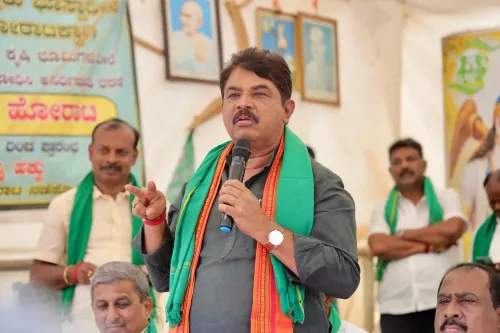
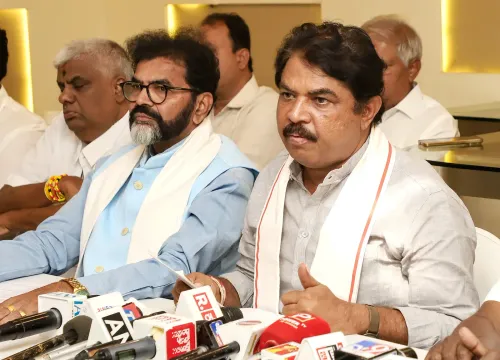
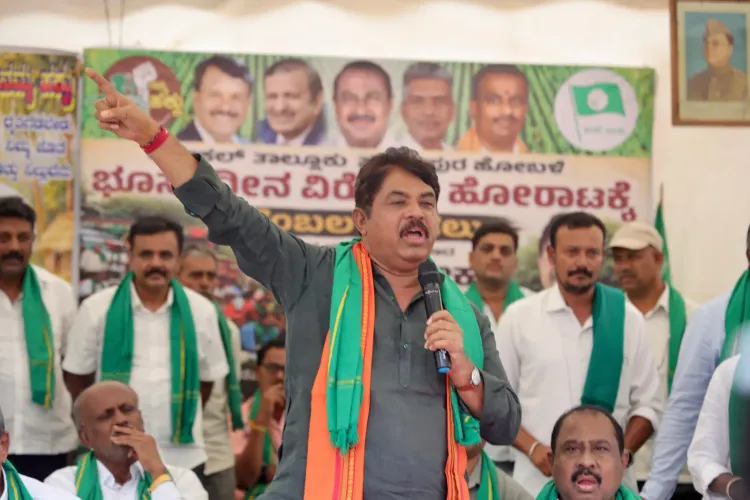
Bharatiya Janata Party (BJP) leader and Karnataka Leader of the Opposition R. Ashoka on Saturday, 29 August launched a sharp counter-offensive against the Congress in Bengaluru, demanding to know why the party was rallying behind former minister B. Nagendra while allegedly ignoring the family of Chandrashekar, a Dalit officer who died by suicide in connection with the Karnataka Maharshi Valmiki Scheduled Tribes Development Corporation alleged scam. The BJP's pushback came a day after Nagendra resigned from the state Cabinet, citing a desire to shield the Congress leadership from embarrassment over the controversy.
The Core Accusation
Ashoka argued that the Congress's defence of Nagendra exposed a double standard on Dalit rights. He pointed out that Chandrashekar's family had taken to the streets demanding justice, yet senior Congress leaders had stayed silent on their plight. 'According to Congress, the resignation of Dalit Minister Nagendra should not be accepted, while a Dalit officer like Chandrashekar can die by suicide. Chandrashekar was an honest officer,' Ashoka said.
He further alleged that several names Chandrashekar had mentioned before his death were also those of Dalits, and questioned whether Congress applied the principle of justice selectively based on financial standing. 'The deceased Dalit and his family do not need justice, but Minister Nagendra, who is well off, needs justice, according to Congress leaders. They should be ashamed. What kind of justice for Dalits is this?' Ashoka asked.
Invoking Ambedkar
Ashoka invoked the legacy of B.R. Ambedkar to sharpen his critique, arguing that the Congress's position was a betrayal of constitutional values. 'If a Dalit is poor, he should not get justice, but if he is rich, justice should be ensured to him. Is this what Babasaheb Ambedkar taught us?' he asked. The rhetorical framing is notable: the BJP has sought to reposition itself as the defender of economically marginalised Dalits in a state where the community's political loyalties are fiercely contested.
The Valmiki Corporation Case: Background
The alleged irregularities in the Karnataka Maharshi Valmiki Scheduled Tribes Development Corporation came to light after a death note was recovered following Chandrashekar's suicide. Ashoka recalled raising the matter during the Assembly session when Chief Minister Siddaramaiah was in office, stating he had spoken for approximately two-and-a-half hours. He alleged that Siddaramaiah had then told the House that the amount involved was ₹84 crore, not ₹187 crore — a discrepancy the BJP has continued to highlight.
Ashoka claimed the Enforcement Directorate (ED) had found Nagendra's involvement in the case and accused the state government-constituted Special Investigation Team (SIT) of attempting to suppress the scam. Chief Minister D.K. Shivakumar had stated that Nagendra was innocent — a claim Ashoka rejected, alleging Nagendra's name had appeared in multiple chargesheets.
BJP MLA Reddy Weighs In
BJP MLA Gali Janardhana Reddy also criticised Nagendra, arguing that if he truly believed he was innocent, he should have produced evidence rather than simply asserting that his name was not mentioned. 'The ED has strict guidelines and nobody can influence it. If it has evidence, it will proceed with the case,' Reddy said, reiterating his allegation of Nagendra's involvement in the alleged scam.
Nagendra's Resignation and Congress's Position
Nagendra had on Friday, 28 August announced his resignation as Karnataka's Planning and Statistics Minister, framing the move as a sacrifice to protect the Congress party and its leadership from political fallout. He had also accused the BJP of targeting Dalits. The BJP's counter-narrative — that it is the Congress which is indifferent to the plight of a deceased Dalit officer's family — is expected to intensify as the case moves through investigative and judicial channels.
With the ED probe ongoing and the SIT's credibility under question from the Opposition, the political battle over the Valmiki Corporation case is far from settled.
Point of View
It forces Congress to defend a position that looks uncomfortable regardless of Nagendra's guilt or innocence. Yet the BJP's own record on Scheduled Tribes welfare spending deserves scrutiny; invoking Ambedkar while also defending allies with chequered caste-equity histories is a contradiction the party has not resolved. The deeper issue — that both the accused and the victim in this case are Dalits — exposes how intra-community power asymmetries can be weaponised by every side of the political spectrum. The ED's next move will matter more than any press conference.
NationPress
13 Oct 2026
Frequently Asked Questions
Why did Karnataka minister B. Nagendra resign?
B. Nagendra resigned as Karnataka's Planning and Statistics Minister on 28 August, stating he was stepping down to prevent the Congress party and its leadership from being embarrassed by the controversy surrounding the alleged Valmiki Scheduled Tribes Development Corporation scam. He has denied wrongdoing and accused the BJP of targeting Dalits.
Who was Chandrashekar and what is his connection to the Karnataka scam?
Chandrashekar was a Dalit government officer whose death by suicide brought the alleged irregularities in the Karnataka Maharshi Valmiki Scheduled Tribes Development Corporation to light. A death note recovered after his suicide reportedly named several individuals, triggering the current political and legal controversy.
What is the Valmiki Corporation scam about?
The Karnataka Maharshi Valmiki Scheduled Tribes Development Corporation case involves alleged financial irregularities in funds meant for Scheduled Tribe welfare. The disputed amount ranges between ₹84 crore and ₹187 crore, according to competing claims. The Enforcement Directorate is probing the case, and a state SIT has also been constituted.
What has the Enforcement Directorate found in the Nagendra case?
BJP's R. Ashoka has alleged that the ED found evidence of Nagendra's involvement in the Valmiki Corporation case and that his name appeared in multiple chargesheets. The Congress government and Chief Minister D.K. Shivakumar have maintained that Nagendra is innocent. The ED probe is ongoing.
How does this controversy affect Karnataka's political landscape?
The case has opened a sharp fault line between the BJP and Congress over Dalit representation and justice, with both parties claiming to champion Dalit rights. With the ED probe active and the SIT's independence questioned by the Opposition, the controversy is likely to intensify ahead of future electoral cycles in Karnataka.