BJP's Narhari Amin Denies Operation Lotus After AAP Split
Synopsis
BJP MP Narhari Amin rejected 'Operation Lotus' allegations after Raghav Chadha and six AAP Rajya Sabha MPs resigned and joined the BJP on April 24. Amin cited AAP's two-year internal rift and Chadha's clash with Kejriwal over parliamentary priorities as the real drivers behind the dramatic political split.
Key Takeaways
Raghav Chadha and six other AAP Rajya Sabha MPs resigned from the Aam Aadmi Party and announced merger with the BJP on April 24, 2025 .
BJP MP Narhari Amin rejected "Operation Lotus" allegations, stating all leaders join the BJP voluntarily and of their own accord.
Chadha was removed as AAP's Deputy Leader in the Rajya Sabha earlier in April 2025 amid reported internal disagreements.
AAP MP Sanjay Singh alleged the BJP was using "Operation Lotus" to systematically weaken the opposition party.
According to Amin , the core dispute was over Chadha's parliamentary approach — raising citizen issues during Zero Hour versus targeting the BJP as the party leadership demanded.
The split comes after AAP's defeat in the 2025 Delhi Assembly elections , deepening the party's national political crisis.
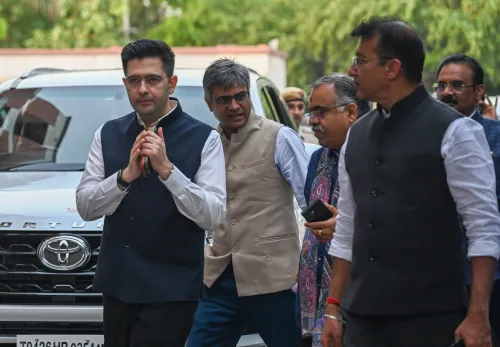
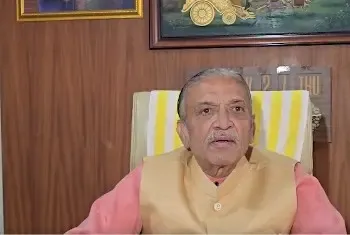
New Delhi/Gandhinagar, April 24: BJP Rajya Sabha MP Narhari Amin on Friday flatly rejected allegations of "Operation Lotus" following the dramatic exit of Raghav Chadha and six other AAP Rajya Sabha MPs from the Aam Aadmi Party (AAP), asserting that the BJP never engineers party defections and that all leaders join voluntarily. The development marks one of the most significant political ruptures within the AAP since its founding, raising serious questions about the party's internal cohesion ahead of future electoral cycles.
BJP Rejects Operation Lotus Charge
Speaking to IANS, Amin was categorical in dismissing any orchestrated effort to poach AAP leaders. "We do not break parties. They are joining and aligning with us willingly and voluntarily, and we have an open-minded approach," he stated. He described the decisions by Chadha and others as entirely independent, driven by personal conviction rather than external pressure.
The BJP MP also outlined the party's induction process, noting that "the party deliberates on profiles and consults local leaders as well as the public" before accepting new members — a remark aimed at countering perceptions of opportunistic absorption of defectors.
Drawing from personal experience, Amin recalled: "When I left Congress in 2012, I was accepted by the BJP and even received a call from Narendra Modi." He used this to argue that the BJP's approach to welcoming leaders from other parties is neither new nor covert.
The AAP Fracture: What Triggered the Split
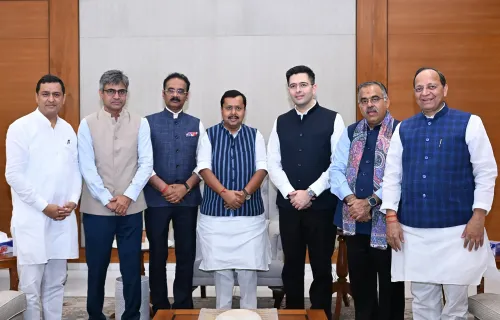
Raghav Chadha, along with six fellow AAP Rajya Sabha MPs, resigned from the party and announced their merger with the BJP — a seismic shift that exposed deep fault lines within the Arvind Kejriwal-led outfit. The resignations follow months of simmering internal discord that had become increasingly difficult to contain.
Earlier this month, Chadha was stripped of his position as the party's Deputy Leader in the Rajya Sabha, reportedly over disagreements about his role and the direction he was taking within parliamentary proceedings. The demotion was widely seen as a signal of his deteriorating relationship with the party's top brass.
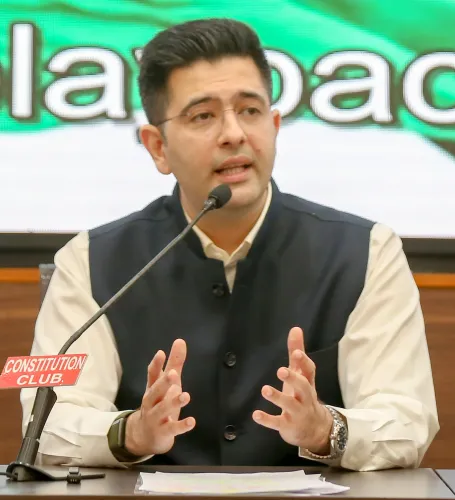
After resigning, Chadha told reporters that he had been "the right man in the wrong party" — a pointed statement that encapsulates the ideological and operational friction that had built up over time.
Internal Rift: Kejriwal and Sanjay Singh at the Centre
According to Amin, infighting within the AAP had been festering for nearly two years. He noted that Chadha was known for raising issues affecting ordinary citizens during Zero Hour in Parliament — a practice Amin praised, calling him "an intelligent politician."
However, this approach reportedly clashed with the priorities of AAP national convenor Arvind Kejriwal and Rajya Sabha MP Sanjay Singh, who allegedly wanted Chadha to focus parliamentary time on attacking the BJP and Prime Minister Narendra Modi rather than citizen-centric issues.
This contradiction — between a legislator focused on public welfare and a party demanding political warfare — appears to have been the breaking point in the relationship.
AAP Hits Back: Sanjay Singh Alleges BJP Conspiracy
In a separate press conference, AAP MP Sanjay Singh alleged that the BJP was deliberately attempting to destabilise the party through what he termed "Operation Lotus" — a reference to the BJP's alleged strategy of engineering defections to weaken opposition parties, a charge that has been levelled in multiple states over the past several years.
Notably, the term "Operation Lotus" gained national prominence during the 2019 Karnataka political crisis and has since been invoked in Madhya Pradesh, Goa, Maharashtra, and Manipur, where opposition legislators switched sides under controversial circumstances. Critics argue the pattern is too consistent to be coincidental; the BJP maintains each case reflects voluntary political realignment.
Broader Political Implications
The collapse of AAP's Rajya Sabha bloc is strategically significant. Losing seven MPs in the upper house weakens the party's legislative voice at the national level at a time when Kejriwal is already navigating post-election turbulence following the AAP's defeat in the 2025 Delhi Assembly elections.
For the BJP, the absorption of these MPs strengthens its numerical position in the Rajya Sabha and delivers a symbolic blow to one of its most vocal critics. The timing — ahead of potential state elections and ongoing debates on key legislation — amplifies the strategic value of this realignment.
Political analysts observe that the AAP, once celebrated as a disruptive anti-establishment force, is increasingly showing structural vulnerabilities typical of personality-driven parties where loyalty to the leader supersedes institutional processes. The party's inability to retain credible voices like Chadha may signal a deeper crisis of internal democracy.
As the political dust settles, all eyes will be on whether more AAP leaders follow suit, and how Kejriwal responds to stabilise his party's national presence in the weeks ahead.
Point of View
' it exposes a deeper truth: AAP has consistently struggled to accommodate independent voices within its ranks. The BJP's denial of engineering defections is predictable, but the pattern across Karnataka, Maharashtra, and now Delhi is hard to dismiss as coincidence. What's undeniable is that Arvind Kejriwal, already weakened by the 2025 Delhi defeat, now faces a national credibility crisis that no press conference can easily paper over.
NationPress
19 Sept 2026
Frequently Asked Questions
What is Operation Lotus and why is it linked to the AAP split?
'Operation Lotus' refers to an alleged BJP strategy of engineering defections from opposition parties to weaken them legislatively. AAP's Sanjay Singh used the term after Raghav Chadha and six other AAP Rajya Sabha MPs resigned and joined the BJP on April 24, 2025.
Why did Raghav Chadha leave the AAP?
Raghav Chadha left the AAP citing fundamental differences over priorities, saying he was 'the right man in the wrong party.' Reports indicate he clashed with Arvind Kejriwal and Sanjay Singh over focusing on citizen issues in Parliament rather than targeting the BJP.
How many AAP MPs joined the BJP after the split?
Seven AAP Rajya Sabha MPs, including Raghav Chadha, resigned from the party and announced their merger with the BJP on April 24, 2025. This significantly reduces AAP's strength in the upper house of Parliament.
What did BJP MP Narhari Amin say about the AAP defections?
BJP Rajya Sabha MP Narhari Amin stated that the BJP does not break parties and that all leaders join voluntarily. He attributed the split to a two-year internal rift within the AAP and described Chadha as an intelligent politician who raised citizens' issues during Zero Hour.
What is the political impact of AAP losing seven Rajya Sabha MPs?
Losing seven Rajya Sabha MPs severely weakens AAP's legislative voice at the national level, coming shortly after the party's defeat in the 2025 Delhi Assembly elections. It strengthens the BJP's numerical position in the upper house and deals a symbolic blow to Arvind Kejriwal's national political standing.