BJP slams Kapil Sibal's 'ashamed to live here' remark, calls it insult to 140 crore Indians
Synopsis
Kapil Sibal’s blunt declaration that he is ‘ashamed to live’ in India—triggered by the reported attack on two TMC MPs—has drawn a fierce BJP counter-offensive invoking the Constitution, 140 crore Indians, and the 1984 anti-Sikh riots. The exchange lays bare how swiftly political criticism in India is recast as a patriotism battle.
Key Takeaways
Rajya Sabha member Kapil Sibal said he was ‘ashamed to live’ in India after a reported attack on TMC MPs Abhishek Banerjee and Kalyan Banerjee .
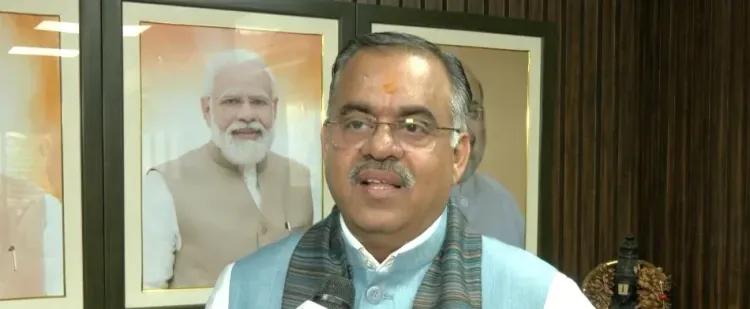
BJP National General Secretary Tarun Chugh called Sibal’s remarks an insult to India’s democratic institutions, the Constitution, and 140 crore Indians .
Chugh accused the Opposition of running a ‘propaganda campaign against democracy’ under Rahul Gandhi’s leadership.
Union Minister Giriraj Singh invoked the 1984 anti-Sikh riots , directing the criticism back at the Congress party.
Sibal had left the Indian National Congress in 2022 and now sits as an independent Rajya Sabha member.
Bharatiya Janata Party (BJP) leaders on Monday sharply condemned Rajya Sabha member Kapil Sibal over his remark that he was “ashamed to live” in India, calling the statement an affront to the country’s democratic institutions, its Constitution, and all 140 crore Indians. The backlash came swiftly, with senior party figures accusing Sibal of harbouring a “colonial mindset.”
What Sibal Said
The controversy was triggered after Sibal, a senior advocate and independent Rajya Sabha member, reacted to a reported attack on Trinamool Congress (TMC) members of Parliament Abhishek Banerjee and Kalyan Banerjee. “It’s shameful, absolutely shameful. I’m ashamed that I’m living in a country where this is what happens, where the political party in power will use any means to destroy whatever foundations of democracy our great leaders laid down when this republic came into being,” Sibal said.
BJP’s Response
BJP National General Secretary Tarun Chugh was among the first to respond, stating: “Kapil Sibal’s statement against the country is an insult to India’s democratic institutions, the Constitution, and 140 crore Indians. Along with Kapil Sibal, this statement reflects a colonial mindset. Their frustration and disappointment are clearly visible in such remarks.”
Chugh further said, “Kapil Sibal, the country that made you a leader and a renowned advocate, is the very country you are insulting. India is the world’s largest democracy, where power changes through democratic processes, not through ‘Khela Hobe’. Here, citizens are given full freedom to express their views. This statement reflects the mindset of the Opposition. Under the leadership of Rahul Gandhi, some people are running a propaganda campaign against democracy and constitutional institutions.”
Giriraj Singh Invokes 1984
Union Minister Giriraj Singh also weighed in, drawing a sharp historical contrast. “Perhaps Kapil Sibal does not remember the days when, under TMC rule, public representatives were allegedly killed and hanged from trees. Maybe Congress leaders have forgotten the time when Sikhs were massacred in the country,” Singh said.
He added, “Kapil Sibal belongs to a party that is blamed for the deaths of thousands of Sikhs. Therefore, such words would be more appropriate if directed at themselves. There is peace in the country today, but when people were abusing Prime Minister Narendra Modi and Union Home Minister Amit Shah, where were these Congress leaders then?” The reference is widely understood as an allusion to the 1984 anti-Sikh riots, a recurring flashpoint in BJP-Congress exchanges.
Broader Political Context
This comes amid heightened political tensions following the reported attack on the two TMC parliamentarians, an incident that has drawn reactions across party lines. Notably, Sibal—who left the Indian National Congress (INC) in 2022—has consistently been a vocal critic of what he describes as democratic backsliding. His remarks, however, have now drawn fire not just from the ruling party but also opened a broader debate on the boundaries of political dissent and patriotic expression in India.
The episode underscores a recurring pattern in Indian politics where criticism of state conduct is quickly reframed as criticism of the nation itself—a dynamic that opposition voices and civil society observers have repeatedly flagged as a chilling effect on free speech.
Point of View
The ruling party successfully changes the subject. Sibal, no longer a Congress member, is nonetheless useful as a proxy target to paint the entire opposition as self-loathing elites. The pattern is familiar and effective—but it does not address whether the attack on the TMC MPs occurred, who was responsible, or what accountability looks like.
NationPress
17 Oct 2026
Frequently Asked Questions
What did Kapil Sibal say that sparked the controversy?
Kapil Sibal said he was ‘ashamed to live in a country’ where attacks like the one on TMC MPs Abhishek Banerjee and Kalyan Banerjee could take place. He called it ‘absolutely shameful’ and linked it to what he described as an attempt by the ruling party to undermine democratic foundations.
How did the BJP respond to Kapil Sibal’s remarks?
BJP National General Secretary Tarun Chugh called the remarks an insult to India’s democratic institutions, the Constitution, and 140 crore Indians, accusing Sibal of a ‘colonial mindset.’ Union Minister Giriraj Singh also criticised Sibal and invoked the 1984 anti-Sikh riots to redirect the charge at the Congress party.
Who is Kapil Sibal and which party does he represent?
Kapil Sibal is a senior advocate and Rajya Sabha member who left the Indian National Congress in 2022 and currently sits as an independent. He has been a frequent critic of what he views as erosion of democratic norms in India.
What was the incident that prompted Sibal’s remarks?
Sibal was reacting to a reported attack on Trinamool Congress MPs Abhishek Banerjee and Kalyan Banerjee. The nature and details of the attack, as well as who was responsible, have not been independently confirmed in the source material.
Why did Giriraj Singh mention the 1984 anti-Sikh riots?
Union Minister Giriraj Singh invoked the 1984 riots—for which the Congress party has historically faced blame—to argue that Sibal’s criticism of the current government was hypocritical, given his past association with a party accused of far graver violence against citizens.