BJP slams sting op on regime change plot, accuses Opposition of anti-democracy agenda
Synopsis
A sting operation by Times Now Navbharat has turbocharged the Centre-Opposition clash over street protests and regime change, with BJP leader Mrityunjay Tiwari alleging that the footage exposes the INDIA bloc's intent to replicate Bangladesh-style political disruption in India. Disclosures about daily protest funding of ₹5 lakh and alleged AAP connections have added fresh fuel to the controversy.
Key Takeaways
BJP leader Mrityunjay Tiwari accused Rahul Gandhi and the INDIA bloc of working to undermine India's democracy and Constitution on 3 November .
A sting operation by Times Now Navbharat allegedly captured individuals discussing plans to replicate Bangladesh and Nepal -style regime-change protests.
Maulana Siraj Khan , Mumbai Chief of Jamiat-Ulema-e-Hind , was reportedly filmed making inflammatory remarks about Muslim anger.
Bheem Kumar of Krantikari Yuva Sangathan disclosed that the daily expenditure of the protest stood at approximately ₹5 lakh .
He also alleged that most protesters had links to Aam Aadmi Party (AAP) .
The controversy follows the reported resignation of Union Minister Dharmendra Pradhan amid the protests.
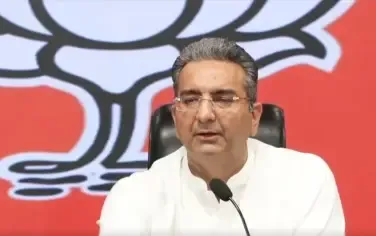
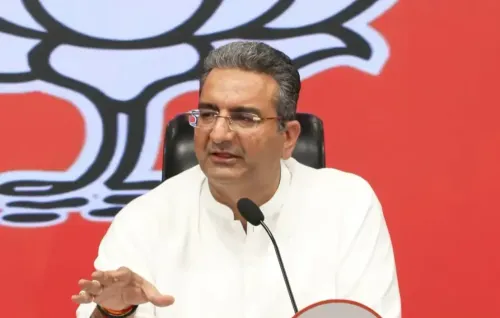
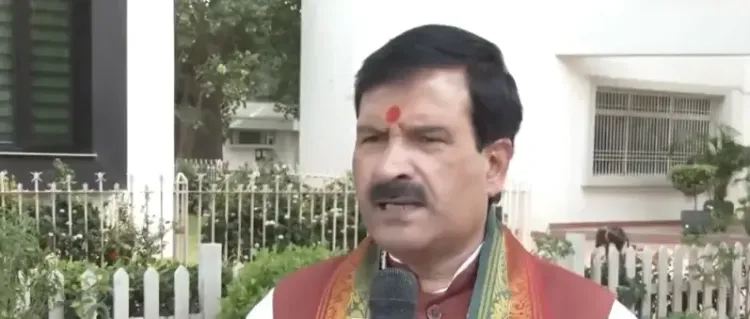
Bharatiya Janata Party (BJP) leader Mrityunjay Tiwari on Tuesday, 3 November hit back at the Opposition over a sting operation that allegedly exposed plans to engineer a regime change in India, accusing Congress leader Rahul Gandhi and the INDIA bloc of actively working to undermine the country's democracy and Constitution. Tiwari made the remarks in Patna, reacting to what he described as a long-anticipated unmasking of the Opposition's intentions.
What Tiwari Said
"It was already anticipated. The people of the country had a hunch about the intentions behind all this talk of regime change and turning India into Bangladesh," Tiwari said. He alleged that the mindset of Rahul Gandhi and allied opposition leaders had now been fully exposed.
"What Rahul Gandhi and other leaders of the opposition parties in his INDIA alliance have in mind, and the extent to which they intend to trample upon the country's democracy and Constitution, has now been exposed. They have no faith in democracy, the Constitution or the Judiciary. These people are hand in glove with traitors and are working to weaken the country," Tiwari said.
He added that no one could weaken the resolve of Prime Minister Narendra Modi, who, he claimed, enjoys the blessings and support of the people of the country.
The Sting Operation: Key Disclosures
The controversy centres on a sting operation conducted by television channel Times Now Navbharat, which targeted individuals allegedly under scrutiny for backing regime-change operations through what the channel described as anarchic means. The operation purportedly drew comparisons to the violent protest movements that led to government changes in Bangladesh and Nepal.
Maulana Siraj Khan, Mumbai Chief of Jamiat-Ulema-e-Hind, was captured on camera reportedly stating that Muslim anger, if it were to break out, would not be contained. The channel's operation also covered multiple student outfits and individuals on the question of 'filling the streets' to bring about change.
Funding and Organisation of Protests
Bheem Kumar, Convener of Krantikari Yuva Sangathan (Revolutionary Youth Organisation), spoke to the channel about the 20 July rally and described how resources and funds were mobilised to sustain the agitation — which grew into a national issue and reportedly led to the resignation of Union Minister Dharmendra Pradhan. Kumar disclosed that the daily expenditure of the demonstration stood at approximately ₹5 lakh.
Without naming the founder of Cockroach Janta Party (CJP), Abhijeet Dipke, Kumar alleged that most protesters were either Aam Aadmi Party (AAP) supporters or had connections with AAP. Mudita Kushwaha, national spokesperson of Krantikari Yuva Sangathan, also reportedly backed the view that Bangladesh and Nepal-style operations could be replicated in India.
The Broader Political Context
The sting has intensified an already charged Centre-Opposition standoff over the legitimacy of street protests as a means to challenge the government. The Opposition has defended such demonstrations as a 'rightful' democratic tool, while the ruling BJP has framed them as part of a coordinated destabilisation effort. This comes amid a period of heightened political tension, with both sides escalating accusations ahead of upcoming electoral cycles. The BJP asserted that the Indian public would deliver a fitting reply to those seeking to weaken the nation's democratic institutions.
Point of View
A framing the ruling party has deployed repeatedly since 2014. What the sting actually establishes versus what it implies are two different things: candid remarks and boastful claims by fringe organisers are not the same as an orchestrated conspiracy with Opposition leadership. The Opposition's silence or defensive posture on the funding disclosures, however, is politically costly. The ₹5 lakh-a-day figure and the alleged AAP links — unverified independently — have already entered the news cycle as facts rather than allegations. With multiple state elections approaching, the BJP's democracy-versus-anarchy framing is likely to sharpen, and the INDIA bloc will need a more coherent counter-narrative than it has offered so far.
NationPress
3 Nov 2026
Frequently Asked Questions
What is the sting operation on regime change in India?
It is an undercover operation conducted by television channel Times Now Navbharat, which allegedly captured individuals associated with protest movements discussing plans to engineer a regime change in India, reportedly drawing parallels with political upheavals in Bangladesh and Nepal. The footage has triggered a sharp political row between the ruling BJP and the INDIA bloc Opposition.
What did BJP leader Mrityunjay Tiwari say about the sting operation?
Tiwari said the sting had exposed the anti-democracy intentions of Congress leader Rahul Gandhi and the INDIA bloc, alleging they had no faith in democracy, the Constitution, or the Judiciary. He claimed the people of India would deliver a fitting reply to those seeking to weaken the country.
Who is Bheem Kumar and what did he reveal?
Bheem Kumar is the Convener of Krantikari Yuva Sangathan (Revolutionary Youth Organisation). In the sting footage, he reportedly described how funds were arranged for the protests and disclosed that the daily expenditure of the demonstration stood at approximately ₹5 lakh, while also alleging that most protesters had connections with the Aam Aadmi Party (AAP).
What did Maulana Siraj Khan say in the sting footage?
Maulana Siraj Khan, Mumbai Chief of Jamiat-Ulema-e-Hind, was reportedly captured on camera stating that Muslim anger, if it were to break out, would not be contained. His remarks have been cited by BJP leaders as evidence of dangerous rhetoric linked to the regime-change narrative.
How does this controversy connect to Union Minister Dharmendra Pradhan's resignation?
According to the sting's disclosures, the protest movement that Bheem Kumar helped organise snowballed into a national issue that reportedly led to the resignation of Union Minister Dharmendra Pradhan. The precise circumstances of the resignation have not been independently detailed in the available reports.