Brij Bhushan Singh Sparks Debate Over Freedom Struggle Credit in Bihar
Synopsis
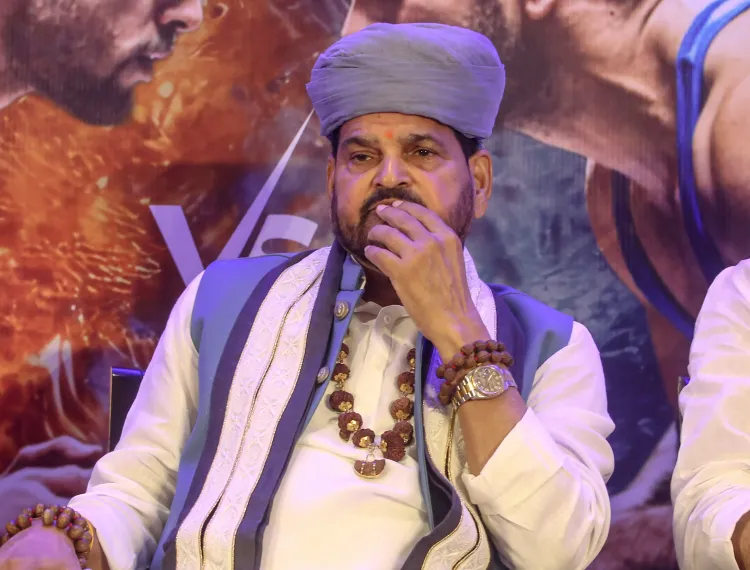
Former MP Brij Bhushan Sharan Singh ignited a historical and political storm at Bihar's Vijayotsav event by questioning Gandhi's sole credit for India's independence, calling for greater recognition of revolutionaries like Veer Kunwar Singh, Birsa Munda, and Rani Lakshmibai — a debate that carries deep electoral significance in Bihar.
Key Takeaways
Former MP Brij Bhushan Sharan Singh sparked a debate at the Babu Veer Kunwar Singh Vijayotsav in Bhagalpur on April 23 by questioning Mahatma Gandhi's sole credit for India's independence.
Singh highlighted unrecognised freedom fighters including Rani Lakshmibai , Veer Kunwar Singh , Birsa Munda , and Devi Bakhsh Singh as overlooked heroes of the independence movement.
Singh cited poet Ramdhari Singh Dinkar to argue that history will judge those who remained neutral and silent on the contributions of revolutionaries.
On the Indian Constitution , Singh acknowledged Dr.
Ambedkar's central role but stressed it was a collective effort by the entire Constituent Assembly .
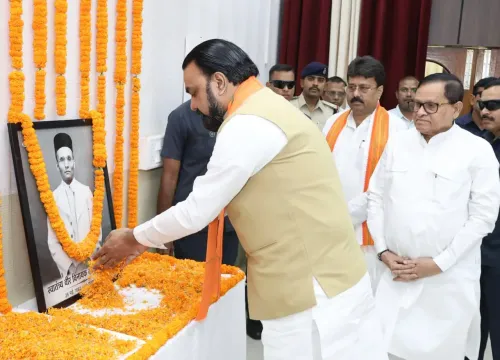
Bihar Governor Syed Ata Hasnain , CM Samrat Choudhary , and both Deputy CMs paid tribute to Veer Kunwar Singh at Veer Kunwar Singh Azadi Park in Patna.
The RJD commemorated the anniversary at its state headquarters, with State President Mangni Lal Mandal describing Veer Kunwar Singh as a towering symbol of the 1857 uprising .
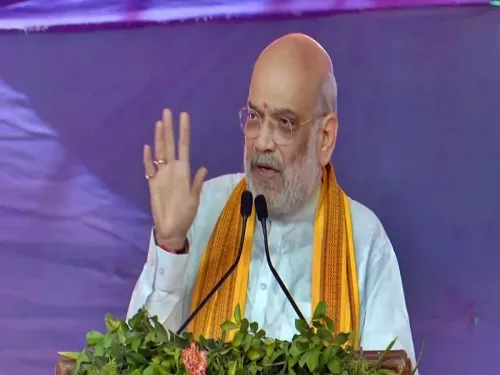
Patna, April 23: A fresh political and historical debate erupted in Bihar after former Member of Parliament Brij Bhushan Sharan Singh made pointed remarks about the credit attributed to Mahatma Gandhi for India's independence during the 'Babu Veer Kunwar Singh Vijayotsav' event held in Bhagalpur on Thursday, April 23. Singh argued that crediting Gandhi alone diminishes the immense sacrifices made by countless revolutionaries who bled for the nation's freedom.
What Brij Bhushan Singh Said
Referencing the iconic patriotic song 'Sabarmati ke Sant…', Singh stated that reducing India's independence narrative to a single figure does a grave injustice to the broader freedom movement. He specifically named freedom fighters such as Rani Lakshmibai, Veer Kunwar Singh, Birsa Munda, and Devi Bakhsh Singh, asserting that these towering figures have been systematically overlooked in mainstream historical accounts.
Quoting the celebrated Hindi poet Ramdhari Singh Dinkar, Singh warned that history will judge those who remained silent and neutral, adding that collective societal silence has allowed the neglect of several revolutionary icons to persist for decades.
Remarks on the Constitution and B.R. Ambedkar
Singh also entered the ongoing national discourse around the framing of the Indian Constitution, acknowledging that Dr. B.R. Ambedkar played a central and pivotal role in its drafting. However, he stressed that the Constitution was ultimately the product of collective deliberations by all members of the Constituent Assembly, with significant contributions from leaders across states, including those from Bihar.
This comment comes amid a broader national debate about the recognition of Ambedkar's legacy, making Singh's remarks particularly timely and politically charged.
Veer Kunwar Singh Birth Anniversary Observed Across Bihar
The occasion was the birth anniversary of Veer Kunwar Singh, the legendary warrior of the 1857 uprising who, even at the remarkable age of 80, led armed resistance against British colonial rule alongside figures like Rani Lakshmibai, Tatya Tope, and Bahadur Shah Zafar.
In Patna, Governor Syed Ata Hasnain paid floral tributes at the statue of Veer Kunwar Singh at Veer Kunwar Singh Azadi Park. Chief Minister Samrat Choudhary, Deputy Chief Minister Vijay Kumar Choudhary, and Deputy Chief Minister Bijendra Prasad Yadav also participated in the commemorative ceremonies.
RJD Marks the Anniversary at Party Headquarters
At the state headquarters of the Rashtriya Janata Dal (RJD), the birth anniversary was observed under the leadership of State President Mangni Lal Mandal. Party leaders paid floral tributes to the freedom fighter in a formal ceremony.
Addressing party workers, Mandal described Veer Kunwar Singh as a symbol of unity and sacrifice, highlighting how fighters from diverse communities rallied under his leadership during the 1857 uprising — India's first major organized revolt against British rule.
Why This Debate Matters Now
Singh's remarks arrive at a moment when India is actively re-examining its colonial history and the relative recognition given to various freedom fighters. Historians and political analysts have long pointed out that the nationalist movement was far more diverse than textbook narratives suggest, with armed revolutionaries often sidelined in favour of the non-violent movement led by Gandhi.
This debate also carries electoral undertones in Bihar, where caste identities and regional pride in local heroes like Veer Kunwar Singh and Birsa Munda hold significant political weight. As the state continues to navigate coalition politics ahead of future elections, such statements by prominent leaders are rarely without strategic intent.
As the conversation around India's freedom struggle narrative intensifies, expect further political responses from opposition parties and historians in the coming days, potentially escalating this into a national-level discourse on how India teaches and remembers its independence movement.
Point of View
Where figures like Veer Kunwar Singh and Birsa Munda carry enormous cultural capital. The timing, on the birth anniversary of Veer Kunwar Singh, is calculated: by positioning these warriors as neglected heroes, Singh taps into a deep-seated sentiment that the Gandhi-centric Congress narrative has long marginalised non-elite, non-Brahminical freedom fighters. What's often missed in mainstream coverage is that this revisionism, while containing legitimate historical grievances, is also a tool of electoral mobilisation — and its implications for Bihar's caste-driven politics deserve far more scrutiny than a simple he-said-she-said report.
NationPress
7 Oct 2026
Frequently Asked Questions
What did Brij Bhushan Singh say about Mahatma Gandhi and India's independence?
Brij Bhushan Sharan Singh stated that attributing India's independence solely to Mahatma Gandhi undermines the sacrifices of numerous revolutionaries. He cited the song 'Sabarmati ke Sant…' and argued that fighters like Veer Kunwar Singh, Birsa Munda, and Rani Lakshmibai deserve equal recognition.
What is the 'Babu Veer Kunwar Singh Vijayotsav' event?
The 'Babu Veer Kunwar Singh Vijayotsav' is an event held in Bihar to commemorate the birth anniversary of Veer Kunwar Singh, a legendary warrior of the 1857 uprising who fought British colonial rule at the age of 80. This year's event was held in Bhagalpur on April 23.
What did Brij Bhushan Singh say about the Indian Constitution and B.R. Ambedkar?
Singh acknowledged Ambedkar's pivotal role in drafting the Constitution but emphasized that it was a collective effort by all members of the Constituent Assembly. He highlighted contributions from leaders across regions, including Bihar.
Who is Veer Kunwar Singh and why is he significant?
Veer Kunwar Singh was an 80-year-old zamindar from Bihar who became one of the most prominent leaders of India's first war of independence in 1857, fighting alongside Rani Lakshmibai, Tatya Tope, and Bahadur Shah Zafar. He is celebrated as a symbol of unity and resistance against British colonial rule.
How did Bihar's political leaders observe Veer Kunwar Singh's birth anniversary?
Governor Syed Ata Hasnain paid floral tributes at Veer Kunwar Singh Azadi Park in Patna, while Chief Minister Samrat Choudhary and both Deputy Chief Ministers also participated in ceremonies. The RJD also held a separate commemoration at its state headquarters under State President Mangni Lal Mandal.