Calcutta High Court bars eviction over political affiliation in West Bengal

Synopsis
The Calcutta High Court has barred evictions based on political affiliation in West Bengal and ordered police to act on post-poll violence — with former Chief Minister Mamata Banerjee arguing the case as counsel, not as a politician. The court's decision on whether to refer the matter to a five-judge bench, as was done after the 2021 elections, could define how seriously the judiciary treats this fresh wave of allegations.
Key Takeaways
A Division Bench of the Calcutta High Court ruled on 14 May that no one in West Bengal can be evicted solely on the basis of political affiliation.
The bench, led by Chief Justice Sujoy Paul and Justice Partha Sarathi Sen , directed West Bengal Police and Kolkata Police to prevent post-poll violence.
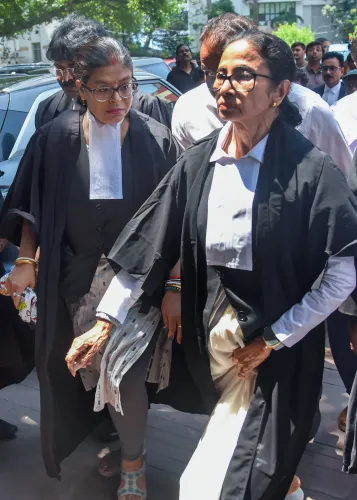
Former Chief Minister Mamata Banerjee appeared as counsel for the petitioner, claiming over 2,000 complaints of post-poll violence had surfaced.
State government counsel Dhiraj Trivedi called the allegations baseless, noting no specific incidents were cited in the petition.
The next hearing is in five weeks , when the court will decide whether to refer the matter to a five-judge bench — as was done after the 2021 West Bengal Assembly elections .
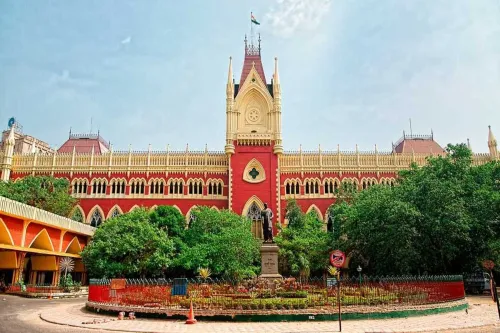
A Division Bench of the Calcutta High Court on Thursday, 14 May ruled that no resident or business owner in West Bengal can be evicted solely on the basis of political affiliation, issuing the directive amid a public interest litigation over alleged post-poll violence following the state's recent assembly election results. The bench also ordered both West Bengal Police and Kolkata Police to take firm action to prevent further incidents of post-poll violence.
The Bench and the Order
The Division Bench, comprising Chief Justice Sujoy Paul and Justice Partha Sarathi Sen, passed the order while hearing a PIL that was filed in the wake of alleged violence reported across the state after results of the West Bengal Assembly polls were declared on 4 May. The court directed all parties to file affidavits before the next date of hearing, set five weeks from Thursday. On that date, the bench will decide whether to refer the matter to a five-judge bench — a step taken previously in a similar case arising from post-poll violence after the 2021 West Bengal Assembly elections.
Mamata Banerjee Appears as Counsel
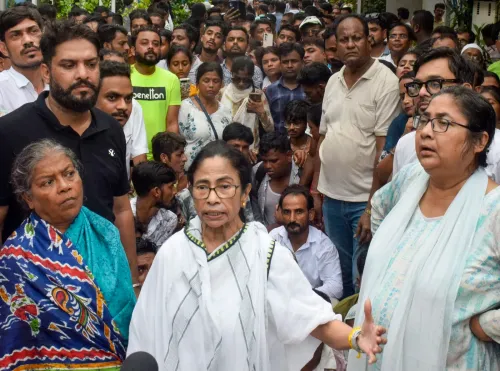
In a notable development, former West Bengal Chief Minister Mamata Banerjee appeared before the court not as a political figure but as counsel, arguing on behalf of the petitioner. She urged the court to intervene and prevent ongoing violence, contending that no section of society had been spared — particularly those from the minority community, women, and children.
'The police are not taking any action. If the court allows, I will mention these allegations in an additional affidavit. Save the people of the state. This is not a ‘bulldozer’ state. This is West Bengal. Please save the people of the state,' Banerjee argued before the bench.
State Government Pushes Back
State government counsel Dhiraj Trivedi countered Banerjee's submissions, describing her allegations as baseless. He argued that the petition cited no specific instances of post-poll violence and did not name individual complainants, making it difficult for the court to issue an interim order. 'No specific instances of post-poll violence have been cited in the petition. The petitioner is claiming that over 2,000 complaints of post-poll violence have surfaced. But no instance has been cited. The details of the complainants have also not been mentioned,' Trivedi said. He further argued that since the 2021 post-poll violence case was heard by a five-judge bench, it would be premature to pass an interim order without specific instances being placed on record.
Historical Context and What Comes Next
Post-poll violence in West Bengal has been a recurring and deeply contested issue. After the 2021 assembly elections, the Calcutta High Court constituted a special five-judge bench to examine similar allegations, and the National Human Rights Commission was also directed to investigate. The current case follows a familiar pattern — a PIL, competing claims, and the court navigating between urgency and evidentiary thresholds. The matter's referral to a larger bench, if ordered five weeks hence, would signal that the court views the allegations as requiring deeper constitutional scrutiny. All parties must now submit affidavits, and the strength of those submissions will determine the case's trajectory.
Point of View
Once again, crossed the threshold of judicial notice. Mamata Banerjee's dual role — former chief minister and courtroom counsel — is legally permissible but politically loaded, and the state government's pushback on the absence of specific instances is a standard procedural defence that courts have historically not found sufficient to deny interim relief in violence cases. The real question is whether this bench follows the 2021 precedent and constitutes a five-judge bench, which would elevate the matter considerably and put the state administration under sustained judicial scrutiny. That decision, due in five weeks, will matter far more than Thursday's interim order.
NationPress
17 Sept 2026
Frequently Asked Questions
What did the Calcutta High Court order regarding post-poll violence in West Bengal?
The Calcutta High Court ruled on 14 May that no person in West Bengal can be evicted from their home or business solely because of their political affiliation. The court also directed West Bengal Police and Kolkata Police to take strong action to prevent incidents of post-poll violence.
Why did Mamata Banerjee appear in the Calcutta High Court?
Former West Bengal Chief Minister Mamata Banerjee appeared before the Calcutta High Court as a counsel, arguing on behalf of the petitioner in a PIL related to alleged post-poll violence. She urged the court to intervene, claiming that minorities, women, and children had been particularly affected and that police were not acting on complaints.
What is the state government's position on the post-poll violence allegations?
State government counsel Dhiraj Trivedi described the allegations as baseless, arguing that the petition cited no specific instances of violence and did not identify individual complainants. He contended that an interim order should not be passed without concrete evidence being placed before the court.
Will the case be referred to a five-judge bench?
The court will decide whether to refer the matter to a five-judge bench at the next hearing, scheduled five weeks from 14 May. A similar case of post-poll violence after the 2021 West Bengal Assembly elections was heard by a five-judge bench, and the court indicated it may follow that precedent depending on the affidavits submitted.
When were the West Bengal Assembly poll results declared?
The results of the West Bengal Assembly polls were declared on 4 May. The PIL before the Calcutta High Court was filed in response to alleged violence that broke out in the state following the declaration of those results.