Khalistani Extremism Poses Major Challenge as India and Canada Seek Stronger Ties
Synopsis
As Canada shifts its diplomatic strategy towards Asia, India emerges as a key partner. However, Khalistani extremism presents a significant hurdle in building lasting relations. Discover how this issue affects national security and bilateral ties.
Key Takeaways
Canada is focusing on establishing a long-term partnership with India.
Mark Carney's visit symbolizes a shift in bilateral relations.
Khalistani extremism is a major security concern for India.
Canada is balancing its relationships with Pakistan and China alongside India.
Trade diversification and technological cooperation are key areas of collaboration.
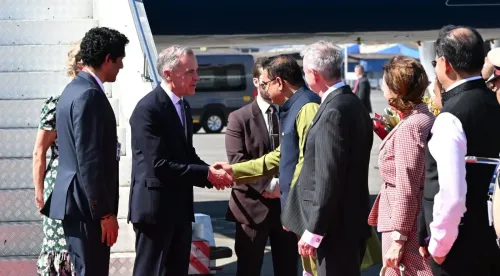
Ottawa/New Delhi, March 13 (NationPress) As Canada adjusts its diplomatic focus in Asia, India is emerging as the key nation with which Ottawa aspires to forge a lasting strategic alliance.
In the context of efforts to restore the India-Canada relationship, the phrase “establishing a new normal” more accurately captures the current dynamics than simply “reviving ties.” The immediate challenge lies in mending trust, while the broader aim is to cultivate a more robust and institutionalized strategic partnership, as highlighted in a recent report.
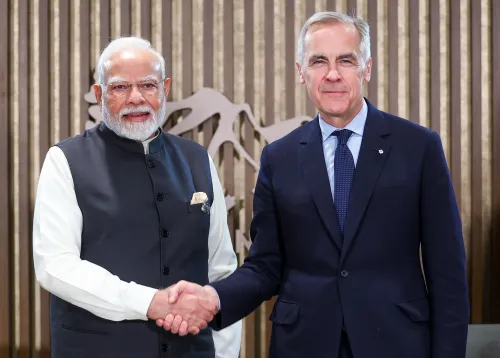
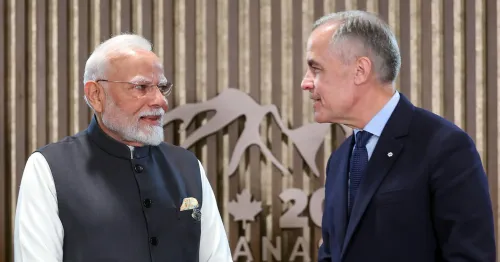
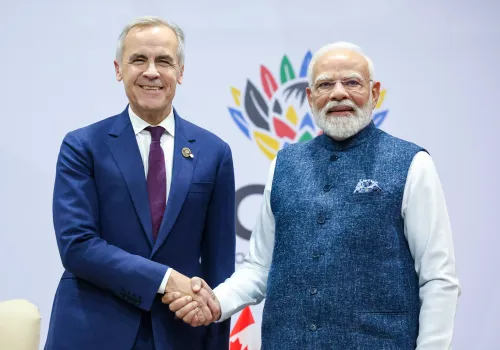
In an article for India Narrative, former Indian diplomat Sanjay Kumar Verma remarked that from India's perspective, Canadian Prime Minister Mark Carney’s recent visit to India should not be viewed as the conclusion of a challenging period but rather as the beginning of a new diplomatic balance.
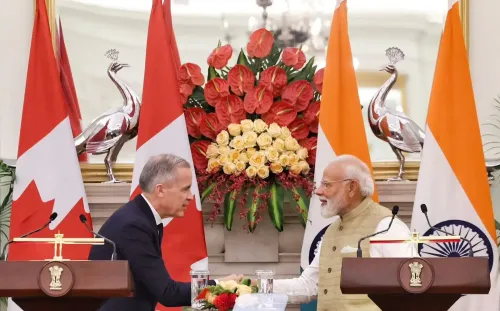
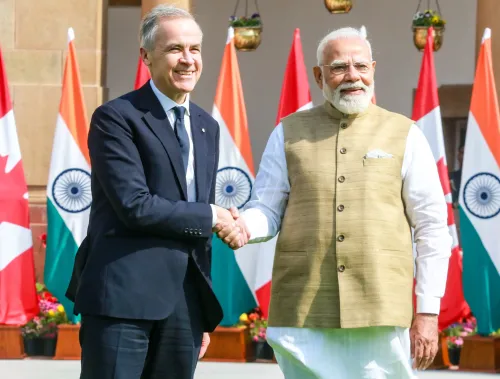
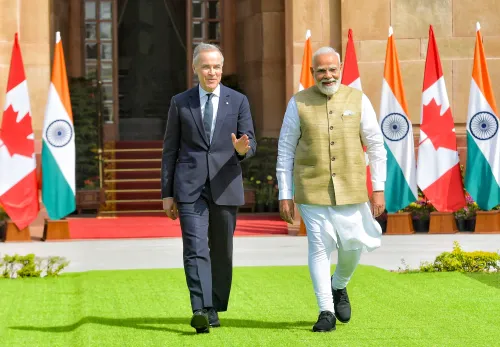
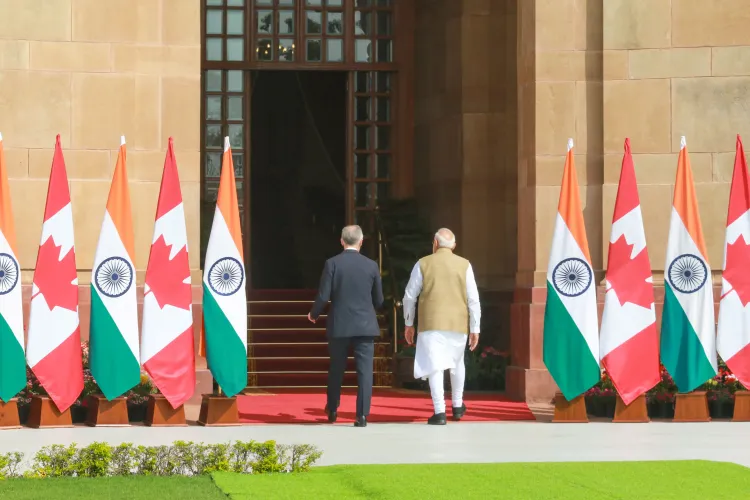
“Prime Minister Mark Carney’s visit to India from February 27 to March 2, 2026, was significant not only because it reestablished a relationship that had strayed off course but also because it demonstrated Ottawa’s recognition that ties with New Delhi cannot be held hostage by episodic political crises. This marked Carney’s inaugural visit to India as Prime Minister and the first bilateral engagement by a Canadian Prime Minister since 2018. Both nations intentionally referred to the outcome as a ‘renewed India–Canada Strategic Partnership,’” wrote Verma, who has served as India’s High Commissioner to Canada.
“The choice of terminology is crucial. It implies that Canada is not merely addressing diplomatic strains that arose during 2023–24, but is also striving to establish the relationship on a broader and more sustainable strategic footing. However, a thorough examination of this evolution must transcend a limited bilateral outlook. Canada’s diplomatic reorientation in Asia is undergoing a significant transformation,” he added.
According to Verma, Ottawa’s endeavors to stabilize and rejuvenate its ties with India coincide with its increasing engagement with Pakistan, all while maintaining a cautious, interest-oriented relationship with China.
“Thus, the essential analytical question is not whether Canada is ‘returning’ to India, but rather how Ottawa prioritizes and differentiates its relationships with India, Pakistan, and China. Current evidence suggests a clear hierarchy: Pakistan is being engaged more actively at a functional level; China remains too significant to overlook but is also too challenging to trust; and India is increasingly viewed as a major strategic pillar in Canada’s Indo-Pacific and global strategy,” he elaborated.
This hierarchy, as per Verma, highlights the unique roles that these three nations play in Canada’s foreign policy framework. He emphasized that India is progressively regarded in Ottawa as a partner in “trade diversification, supply-chain resilience, clean energy transition, critical minerals, advanced technological collaboration, and Indo-Pacific stability.”
As the India-Canada relationship continues to evolve, Verma pointed out, “From the Indian perspective, however, one significant barrier remains: the trust deficit stemming from extremist politics on Canadian soil. The relationship cannot attain meaningful stabilization unless anti-India Khalistani extremism operating from within Canada is approached as a critical security challenge. For New Delhi, this matter transcends domestic political discourse in Canada and directly impacts India’s national security concerns.”
Point of View
The current diplomatic efforts between Canada and India reflect a strategic pivot. While both countries seek to strengthen their ties, the underlying trust deficit due to Khalistani extremism complicates progress. Addressing this issue is paramount for a durable partnership.
NationPress
1 Oct 2026
Frequently Asked Questions
What is the significance of Mark Carney's visit to India?
Mark Carney's visit marks the first bilateral engagement by a Canadian Prime Minister since 2018, symbolizing a renewed focus on strengthening ties between Canada and India.
How does Khalistani extremism affect India-Canada relations?
Khalistani extremism is viewed as a significant security concern for India, creating a trust deficit that hinders meaningful stabilization of relations with Canada.
What are Canada’s current diplomatic priorities in Asia?
Canada is recalibrating its diplomatic focus in Asia, aiming to establish stronger ties with India while managing its relationships with Pakistan and China.
Why is India considered a strategic partner for Canada?
India is increasingly perceived as a key partner for Canada in areas like trade diversification, supply-chain resilience, and Indo-Pacific stability.
What challenges does Canada face in its relations with India?
The primary challenge is the trust deficit arising from extremist politics, particularly related to Khalistani extremism, which poses security concerns for India.