Canada Investment Summit 2026: Carney vows $720bn push to cut US dependence

Synopsis
As US President Trump escalates trade bans on Canadian goods, Prime Minister Mark Carney has launched Canada's inaugural Investment Summit in Toronto — targeting $720 billion in investments over five years and openly positioning Canada as a high-trust, US-independent destination for global capital. It is Canada's most ambitious economic pivot in a generation.
Key Takeaways
PM Mark Carney opened the inaugural Canada Investment Summit in Toronto on 14 September 2026 .
The summit targets up to 1 trillion Canadian dollars (~ $720 billion ) in total investments over the next five years .
Canada's 'Deal Book' highlights priority projects in energy, critical minerals, advanced technologies, and infrastructure.
US President Donald Trump has ordered import bans on Canadian alcoholic beverages, dairy products, and motorcycles, effective 29 September .
Existing 50 per cent US duties on Canadian goods remain in place; affected trade valued in the 'single-digit billions' according to US officials.
The summit is explicitly designed to reduce Canada's economic dependence on the United States .
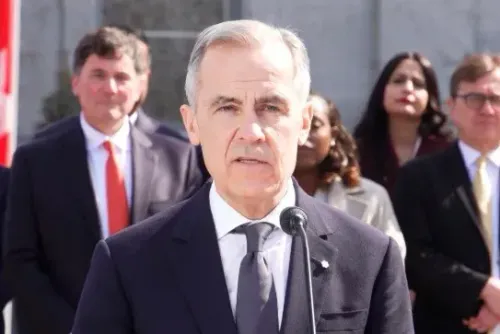
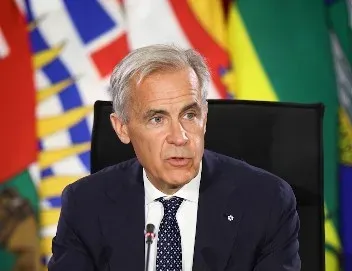
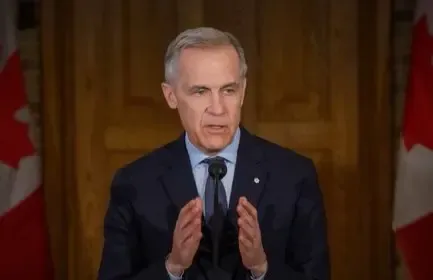
Canadian Prime Minister Mark Carney declared that a new national consensus has taken hold in Canada, telling business leaders on Sunday, 14 September that the country is firmly "taking control of our future" — a statement that framed the ambitious goals of the inaugural Canada Investment Summit in Toronto. The two-day summit, running 14–15 September, aims to attract up to 1 trillion Canadian dollars (approximately $720 billion) in total investments over the next five years.
Carney's Message to Business Leaders
Addressing Canadian business leaders at a welcome reception on Sunday evening, Carney set out a confident vision of national self-reliance. "We will build more, we will trade more with each other, we will trade more with the world, and we will create sustainable prosperity here at home," he said.
Carney described the moment as defining for the country, invoking a philosophy of unity over uniformity. "We believe our differences are our strength and cultivate them on this risk-taking journey," he added. He also highlighted Canada's natural advantages: "We have what the world wants: the energy, the resources, the talent, the technology, the capital — and our greatest strength is something that can't be found on any balance sheet: trust."
What the Canada Investment Summit Aims to Achieve
The inaugural summit in Toronto — Canada's largest city — is a key strategic initiative to bridge global capital with large-scale domestic projects. A central feature is Canada's 'Deal Book', which showcases priority projects spanning energy, critical minerals, advanced technologies, and major infrastructure.
Beyond attracting foreign investment, the summit is explicitly designed to strengthen domestic supply chain resilience, boost productivity, and reduce Canada's economic reliance on the United States. This goal takes on particular urgency given the current state of Canada–US trade relations.
The US Trade Pressure Driving the Pivot
The summit takes place against a charged backdrop. US President Donald Trump this month ordered bans on a broad range of Canadian goods — including alcoholic beverages, dairy products, and motorcycles — as his administration escalated its trade confrontation with Ottawa. The import bans are set to take effect at 12:01 am Eastern Time on 29 September. Canadian goods imported before that date but not yet cleared for consumption will remain subject to an existing 50 per cent duty.
A senior US administration official told reporters that the measures were designed to counter Canadian retaliation, protect American production, and restore what the White House describes as a level playing field. The official said the import bans would affect Canadian trade valued in the "single-digit billions," while changes to the existing tariff list would not significantly alter the roughly $20 billion in trade already covered by those duties.
Context: Canada's Strategic Recalibration
The timing of the summit is hardly coincidental. Canada's push to diversify investment and trade partnerships reflects a broader structural anxiety about over-dependence on a single trading partner that accounts for the bulk of its exports. This is the first time Canada has convened a summit of this scale specifically to court global capital, and Carney's framing — centred on trust and national cohesion — appears calibrated to distinguish Canada's investment climate from a US environment marked by policy unpredictability.
Notably, the $720 billion target, if achieved over five years, would represent one of the largest sustained foreign and domestic investment drives in the country's recent history. Whether the ambition translates into committed capital will become clearer as the summit progresses through 15 September.
Point of View
And it is shrewder than it sounds. What mainstream coverage underplays is that the $720 billion target is not just an economic number; it is a political signal to domestic audiences that Canada has alternatives to the US market. The harder question is whether the Deal Book projects are shovel-ready enough to convert summit enthusiasm into binding commitments, or whether this becomes another aspirational headline. Canada has convened investment forums before; the differentiator this time is genuine geopolitical urgency — which could either accelerate capital decisions or introduce the kind of risk premium that discourages long-horizon investors.
NationPress
14 Sept 2026
Frequently Asked Questions
What is the Canada Investment Summit 2026?
The Canada Investment Summit is a two-day inaugural event held on 14–15 September 2026 in Toronto, designed to attract up to 1 trillion Canadian dollars ($720 billion) in investments over five years. It showcases a 'Deal Book' of major projects in energy, critical minerals, advanced technologies, and infrastructure.
What did PM Mark Carney say at the summit?
Carney told business leaders that Canada is 'taking control of our future,' pledging to build more, trade more broadly, and create sustainable domestic prosperity. He cited Canada's energy, resources, talent, technology, capital, and — most distinctly — 'trust' as the country's defining competitive advantage.
How does the US–Canada trade dispute connect to the summit?
US President Donald Trump ordered import bans on Canadian alcoholic beverages, dairy products, and motorcycles this month, effective 29 September, as part of an escalating trade confrontation. The summit is partly a strategic response, aiming to diversify Canada's investment and trade relationships away from dependence on the United States.
What is Canada's 'Deal Book'?
Canada's Deal Book is a curated portfolio of key investment projects featured at the summit, spanning energy, critical minerals, advanced technologies, and major infrastructure. It is designed to connect large-scale Canadian projects with global capital.
When do the US import bans on Canadian goods take effect?
The US import bans take effect at 12:01 am Eastern Time on 29 September 2026. Canadian goods imported before that date but not cleared for consumption will remain subject to the existing 50 per cent duty.