How is the Political Debate Over the Chandigarh Bill Escalating After the Centre's Clarification?
Synopsis
Political tensions are escalating in Punjab regarding the Centre's plans for Chandigarh under Article 240. Opposition parties are rallying against what they deem an 'anti-Punjab' move. The situation is fraught with claims of undermining Punjab's historical rights, and protests are poised to erupt as discussions unfold.
Key Takeaways
Political tensions in Punjab are rising over the Chandigarh bill.
The proposal has drawn strong opposition from parties like AAP and Congress.
Article 240 could alter Chandigarh's governance structure.
The Central government claims no final decision has been made.
Protests are anticipated ahead of the Winter Session of Parliament.
Chandigarh, Nov 23 (NationPress) The political climate in Punjab has escalated following the Central government's indication to bring Chandigarh under Article 240 of the Constitution. This provision permits the President to directly establish regulations for the Union Territory.
Despite the Central government clarifying on Sunday that no definitive decision has been made and that any action will involve discussions with all relevant parties, the suggestion has sparked vehement opposition throughout the political landscape in Punjab.
The AAP and Congress have condemned the proposal, labeling it as “anti-Punjab” and a move to undermine the state’s historical and political claims over Chandigarh.
Leaders in Punjab contend that applying Article 240, a clause currently relevant to Union Territories such as Andaman and Nicobar Islands, Lakshadweep, Dadra and Nagar Haveli, Daman and Diu, and Puducherry, would jeopardize Punjab’s long-standing claim over the city.
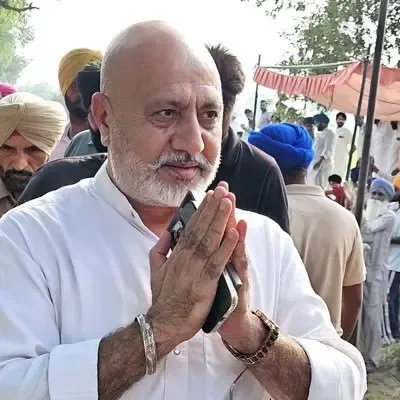
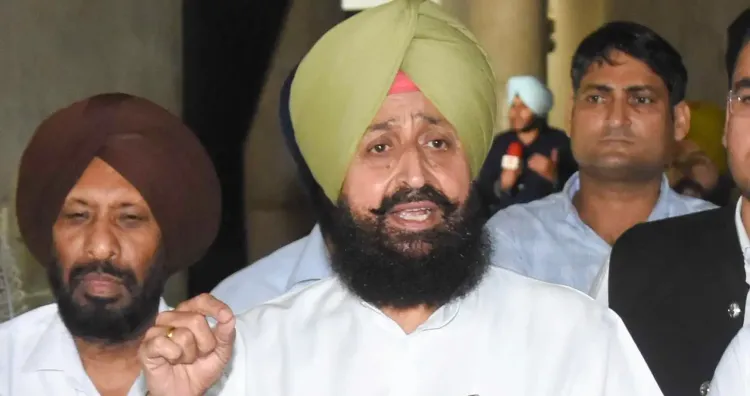
In a statement to IANS, the Leader of the Opposition in the Punjab Assembly, Pratap Singh Bajwa, remarked, “The Constitution (131st Amendment) Bill that the BJP government is proposing is fundamentally an effort to seize Chandigarh. Since the BJP came to power, Punjab has consistently voted against PM Modi and the BJP–RSS ideology in the last five to seven elections, and now this is their final push to take control of Chandigarh.
“The central government is intentionally trying to diminish Punjab's rightful claims over Chandigarh, river resources, and Punjab University. They are collaborating with the RSS to rewrite history,” he added.
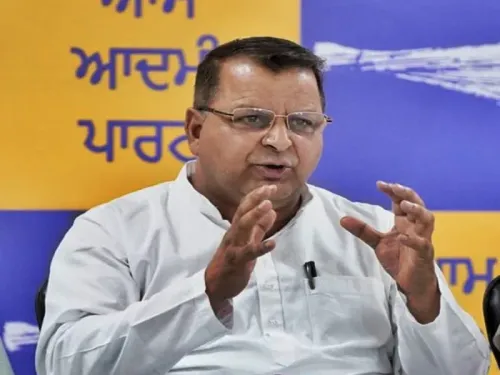
Punjab Minister Harpal Singh Cheema also criticized the initiative, stating to IANS, “The BJP first attempted to appropriate our water resources, which are our natural assets. They sought control over BBMB, then targeted Chandigarh University, which is a Punjab university along with 200 colleges that belong to Punjab. Now, they are setting their sights on Chandigarh as well.”
BJP leader and former Union Minister Vijay Sampla stated that the Punjab unit of the BJP will confer with the high command to ensure that the public's demands are acknowledged.
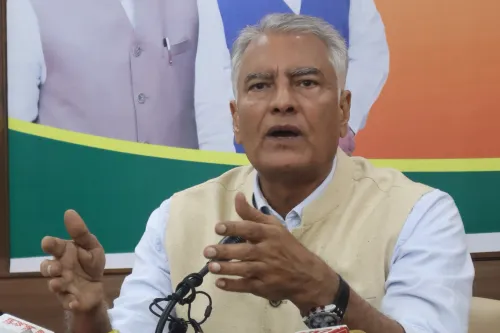
Sampla expressed to IANS, “When Punjab and Haryana were established in 1966, Chandigarh was designated as the temporary capital of Haryana, and it was agreed that it would remain so until Haryana developed its own permanent capital. However, the Congress party's misguided policies have perpetuated confusion and harmed the interests of Punjab residents. Now, reports indicate that Chandigarh could be governed under Article 240, which may weaken Punjab's claim, alter administrative control, and even permit the appointment of a Lieutenant Governor, which will not sit well with the people of Punjab.
He added that the BJP’s Punjab unit stands with the people and will address the matter with the high command.
Congress leader Amarinder Singh Raja Warring asserted that his party will resist the proposal “by every means available.”
“We will contest this both in Parliament and on the streets. This is a battle for Punjab, and we will fight it with all our strength. We will deliberate on the matter in the Political Affairs Committee, gather insights from all leaders, and then formulate our strategy,” Warring informed IANS.
Meanwhile, the Home Ministry issued a statement clarifying that the proposal “does not involve altering the governance or administrative arrangements of Chandigarh or its traditional relationships with Punjab or Haryana.”
“The initiative to streamline law-making exclusively by the Central Government for the Union Territory of Chandigarh is under review at the Central Government level. No final decision has been made regarding this proposal,” it stated.
Reassuring that there is “no reason for concern” on this issue, the Home Ministry added, “An appropriate resolution will only be reached following sufficient consultations with all stakeholders, considering the interests of Chandigarh. The Central Government does not intend to present any legislation to this effect in the upcoming Winter Session of Parliament.
Currently, Chandigarh is managed by the Punjab Governor and serves as the joint capital for Punjab and Haryana.
However, a Parliament bulletin has suggested that the Constitution (131st Amendment) Bill, 2025, could be introduced during the Winter Session starting December 1, inciting protests across the political spectrum in Punjab.
Political parties including the AAP, Congress, and the Shiromani Akali Dal have strongly criticized the proposal, branding it as “anti-Punjab.”
They argue that including Chandigarh under Article 240, which presently applies to regions like Andaman and Nicobar Islands, Lakshadweep, Dadra and Nagar Haveli, Daman and Diu, and Puducherry, will undermine Punjab's longstanding claim over the city.
Chandigarh was established as a Union Territory in 1966 when Haryana was separated from Punjab and has since functioned as a shared capital.
While the Governor of Punjab also acts as the administrator of Chandigarh, political figures in the state have long maintained that Chandigarh rightfully belongs to Punjab and that Haryana should have its own capital.
Point of View
It's crucial to acknowledge the sensitivity surrounding Chandigarh's status. The ongoing political discourse highlights not only local sentiments but also the broader implications for federal relations in India. A balanced dialogue involving all stakeholders is essential to address the concerns raised by Punjab's leaders while ensuring governance remains effective in the Union Territory.
NationPress
23 Sept 2026
Frequently Asked Questions
What is the significance of Article 240?
Article 240 allows the President of India to make regulations for Union Territories, potentially altering their governance and administrative structure.
Why are political parties opposing the Chandigarh bill?
Political parties in Punjab argue that the bill undermines the state's historical claim over Chandigarh and could lead to a loss of control over its governance.
What has the Central government said about the proposal?
The Central government clarified that no final decision has been made regarding the proposal and emphasized the need for consultation with all stakeholders.
What are the implications of the bill for Punjab?
If enacted, the bill could shift administrative control of Chandigarh, weakening Punjab's claims and possibly introducing a Lieutenant Governor.
When is the Constitution (131st Amendment) Bill expected to be introduced?
Reports suggest that the bill could be introduced during the upcoming Winter Session of Parliament starting December 1.