Will the Supreme Court Hear ED's Petition Against CM Mamata Banerjee Over I-PAC Controversy?

Synopsis
In a significant development, the Supreme Court is set to deliberate on the ED's petition against CM Mamata Banerjee, which claims obstruction of their investigation during raids linked to I-PAC. This critical case raises questions about political interference and the integrity of electoral strategies.
Key Takeaways
Supreme Court to hear ED's petition today.
Claims of obstruction by West Bengal government.
Potential implications for the upcoming 2026 Assembly elections.
Political tensions highlighted between state and central authorities.
Trinamool Congress alleges ulterior motives behind the raids.
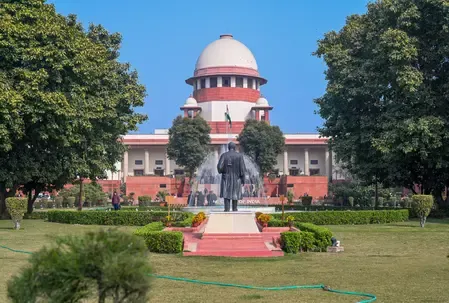
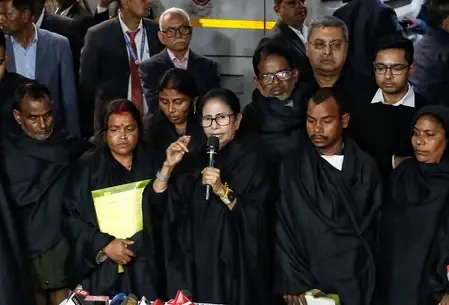
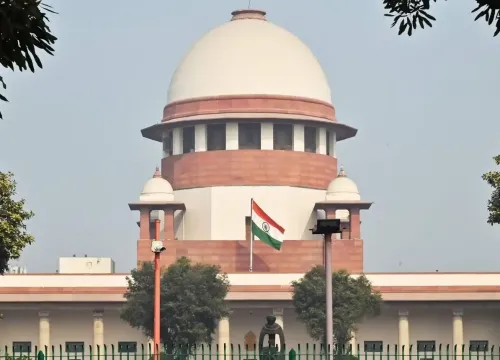
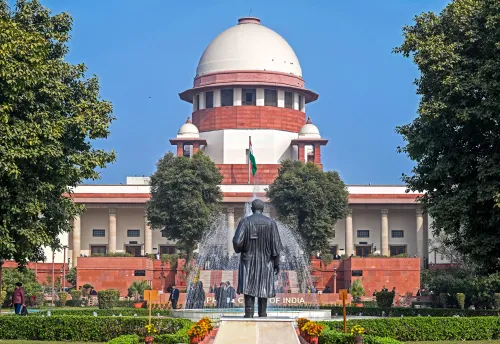
New Delhi, Jan 15 (NationPress) The Supreme Court is poised to consider a petition today from the Enforcement Directorate (ED), which alleges that its recent coordinated raid and search operations at the Indian Political Action Committee (I-PAC) office and the home of co-founder Pratik Jain were hindered by the West Bengal government and Chief Minister Mamata Banerjee.
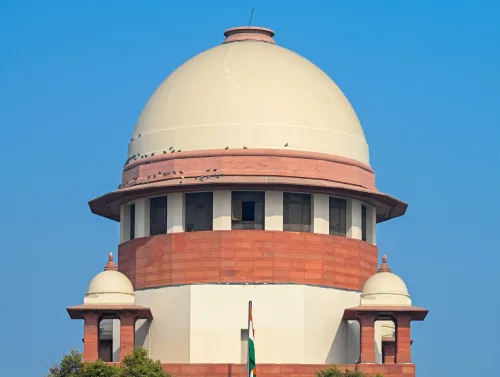
A bench comprising Justices Prashant Kumar Sharma and Vipul M. Pancholi is scheduled to review the case later today, according to the causelist posted on the apex court's website.
The ED is urgently seeking judicial intervention, asserting that its officials encountered significant resistance during the raid and were obstructed from fulfilling their legal responsibilities.
The central anti-money laundering agency further contends that interference from the West Bengal authorities has undermined the integrity of its investigation.
In anticipation of the ED's actions, the West Bengal government has proactively filed a caveat with the Supreme Court, requesting that no decisions be made without allowing them to present their case.
This measure aims to prevent the granting of any interim relief to the central agency without the state government being adequately heard.
Furthermore, the Calcutta High Court has recently addressed a petition claiming that CM Mamata Banerjee has misused her constitutional authority by allegedly obstructing the official activities of central agency personnel.
Additionally, there are two counter-petitions related to this case: one from Pratik Jain and another from the Trinamool Congress.
The Trinamool Congress, in its counter-petition, alleges that since I-PAC serves as the party's voter-strategy agency, the ED's raid was aimed at confiscating documents pertaining to its electoral strategy for the upcoming 2026 Assembly elections, potentially to share this information with the Bharatiya Janata Party (BJP).
Point of View
It's essential to recognize the gravity of this case involving the ED and Mamata Banerjee. The allegations of obstruction signify a broader conflict between state and central authorities, reflecting the tensions in India's political landscape. It's crucial that the judiciary addresses these issues impartially to uphold the rule of law.
NationPress
19 Sept 2026
Frequently Asked Questions
What is the main issue in the Supreme Court case?
The case revolves around the ED's claim that the West Bengal government and CM Mamata Banerjee obstructed their investigation during raids at I-PAC.
Who are the key figures involved?
Key figures include CM Mamata Banerjee, Pratik Jain, and representatives from the Enforcement Directorate.
What are the implications of this case?
The case could impact the political dynamics in West Bengal and the relationship between state and central authorities.
How has the West Bengal government responded?
The West Bengal government has filed a caveat in the Supreme Court to ensure their side is heard before any decisions are made.