Priyanka Chaturvedi pushes 815-seat Lok Sabha for women's quota
Synopsis
Priyanka Chaturvedi wants a 50% bigger Lok Sabha, about 815 seats, so women don't have to wait for incumbents to step aside. Her pitch lands days before Parliament meets amid a delimitation Bill debate. Her own party, the Shiv Sena (UBT), has yet to state its official position on that legislation.
Key Takeaways
Priyanka Chaturvedi on 27 November 2026 renewed her demand to expand the Lok Sabha from 543 to around 815 seats.
She said in a post on X that she remains firm despite trolling and opposition from political “gatekeepers”.
The 106th Amendment Act passed in September 2023 by 454–2 in the Lok Sabha and 214 votes unanimously in the Rajya Sabha.
Implementation is tied to a post-enactment Census and delimitation, so the 2029 rollout is not guaranteed.
She proposed uniform expansion that preserves states' relative shares, to address North-South anxieties.
The Shiv Sena (UBT) has yet to disclose its stance on the delimitation Bill ahead of the 30 November session.
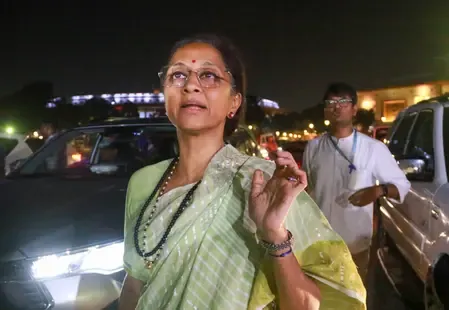
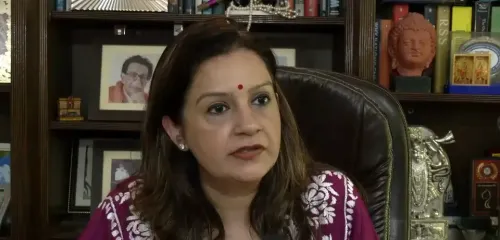
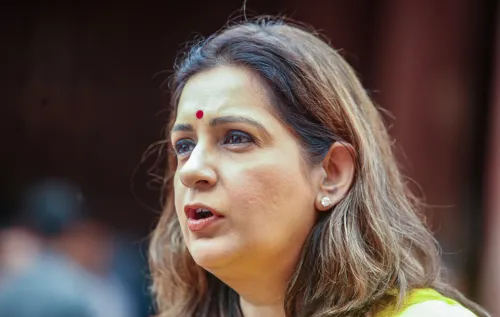
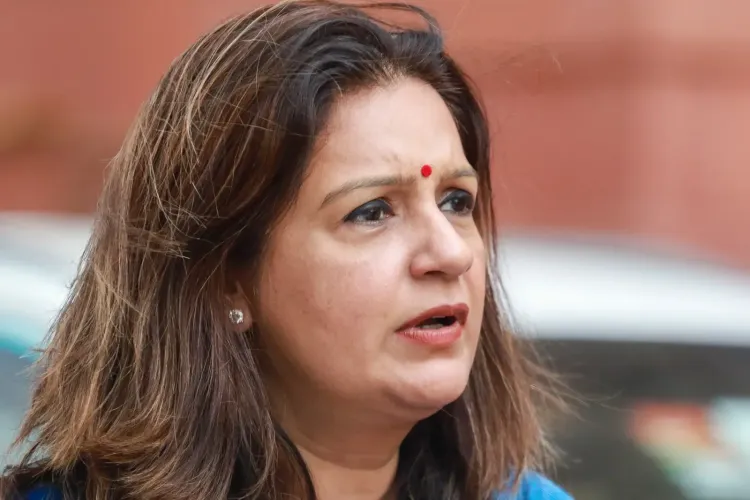
Shiv Sena (Uddhav Balasaheb Thackeray) leader and former MP Priyanka Chaturvedi on Friday, 27 November 2026, renewed her call to expand the Lok Sabha by 50 per cent, from the current 543 seats to around 815. Speaking from Mumbai, she argued that India must open up “more democratic space” for women instead of asking them to wait for vacancies in the existing House.
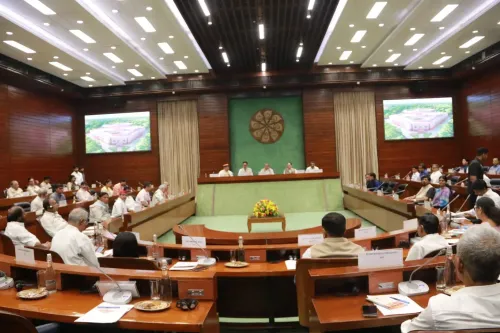
Her remarks come three days before the Parliament session opens on 30 November, as debate intensifies over the government's proposed delimitation Bill.
Key Developments
Chaturvedi responded to criticism and online trolling of her position in a post on X. She said she remained firm on her demand despite resistance from political “gatekeepers”.
She recalled that the Women's Reservation Bill, first introduced in Parliament in 1996, took 27 years to pass. She blamed that long legislative stalemate on the reluctance of existing power structures to give up political space.
“My argument has never been that women’s representation should come at the cost of anyone else’s representation. It is precisely the opposite,” Chaturvedi said.
“We should be creating more democratic space, not asking women to wait for someone to vacate theirs,” she added.
The Implementation Bottleneck
Chaturvedi acknowledged the historic passage of the Constitution (106th Amendment) Act in September 2023. The law cleared the Lok Sabha by a 454–2 margin and passed the Rajya Sabha unanimously with 214 votes.
She pointed to a critical catch. The law's implementation depends on a post-enactment Census and a subsequent delimitation exercise. The projected 2029 rollout is therefore an anticipated timeline, not a constitutional guarantee.
The Proposed Formula
To break the impasse, Chaturvedi proposed enlarging the lower house to reflect India's growing population. She said this could also ease regional anxieties between North and South India.
She suggested a uniform expansion that would preserve each state's existing relative share while adding new seats. She said the final allocation must follow a transparent and equitable formula.
Beyond gender parity, Chaturvedi said a larger Lok Sabha would allow broader inclusion of Scheduled Castes (SCs), Scheduled Tribes (STs), smaller communities and younger citizens.
Political Context
Her statement comes while the Shiv Sena (UBT), a constituent of the INDIA bloc, has yet to disclose its official position on the proposed delimitation legislation. That makes Chaturvedi's intervention a notable marker of the debate within the Opposition camp.
Delimitation has long been sensitive because seat allocation tied to population could shift political weight between regions. Chaturvedi's model of proportional, uniform expansion seeks to address that concern directly.
With the winter session set to begin on 30 November, attention will turn to whether the delimitation Bill is tabled and how parties, including the Shiv Sena (UBT), position themselves on seat expansion and the timing of women's reservation.
Point of View
But it shifts the battle to the allocation formula, where North-South tensions are sharpest. The silence of her own party on the delimitation Bill exposes how unsettled the Opposition remains on this question. If Parliament wants women's reservation to be more than a deferred promise, it must spell out a timeline and a formula, not just a vote count.
NationPress
27 Nov 2026
Frequently Asked Questions
What has Priyanka Chaturvedi demanded about the Lok Sabha?
She has demanded a 50 per cent increase in Lok Sabha strength, from 543 to around 815 seats. She argues this would make room for women's reservation without displacing existing representation.
Why is women's reservation not yet in effect despite the 2023 law?
The Constitution (106th Amendment) Act is tied to a post-enactment Census and a delimitation exercise. As a result, the projected 2029 rollout is an anticipated timeline rather than a constitutional guarantee.
How did Parliament vote on the Women's Reservation Bill in 2023?
The Bill passed the Lok Sabha by a 454–2 margin and the Rajya Sabha unanimously with 214 votes in September 2023. It was first introduced in Parliament in 1996, 27 years earlier.
How does Chaturvedi propose to address North-South concerns?
She suggests a uniform expansion that preserves each state's existing relative share of seats while adding new ones. She says the final allocation should follow a transparent and equitable formula.
What is the Shiv Sena (UBT)'s stand on the delimitation Bill?
The Shiv Sena (UBT), a constituent of the INDIA bloc, has yet to disclose its official position on the proposed delimitation legislation. The Parliament session begins on 30 November.