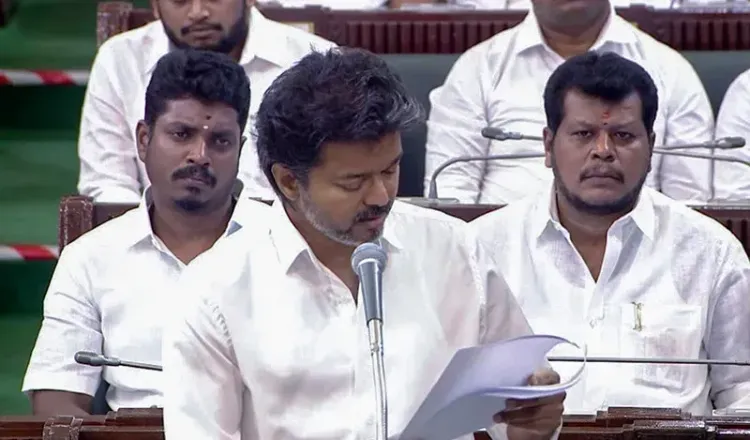
Tamil Nadu CM Vijay pushes 33% women's quota in Lok Sabha from 2029
Synopsis
Tamil Nadu CM C Joseph Vijay has formally moved a state assembly resolution demanding that the Centre implement 33% women's reservation in the Lok Sabha from 2029 — without waiting for delimitation. The move directly challenges the conditionality embedded in the 2023 constitutional amendment and signals a hardening front among southern states ahead of any census-linked seat redistribution.
Key Takeaways
Tamil Nadu CM C Joseph Vijay tabled a resolution in the state assembly on 12 August demanding 33% women's reservation in the Lok Sabha from the 2029 general election .
He urged the Centre to permanently fix Lok Sabha strength at 543 seats , decoupling women's quota from any future delimitation exercise.
Vijay argued that states which successfully implemented population-control programmes must not lose parliamentary representation in a population-based delimitation.
Left parties and the DMDK supported the resolution during the Assembly debate.
The Constitution (106th Amendment) Act, 2023 links women's reservation to post-census delimitation — a conditionality Tamil Nadu is formally contesting.
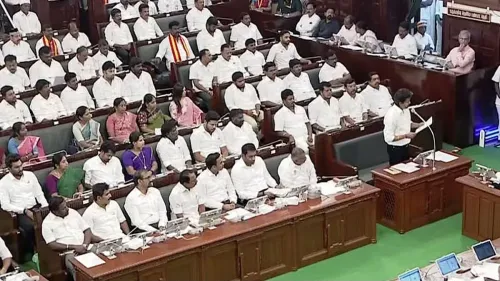
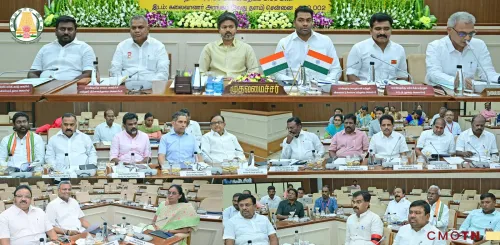
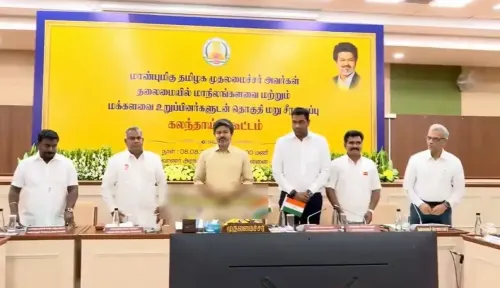
Tamil Nadu Chief Minister C Joseph Vijay on Wednesday, 12 August urged the Union government to permanently fix the strength of the Lok Sabha at 543 seats and implement 33 per cent reservation for women in Parliament from the 2029 general election — without tying it to any future delimitation exercise. The demands were tabled as a resolution in the Tamil Nadu Legislative Assembly, marking a direct push from the state government to the Centre on two of the most contested parliamentary reform issues.
Key Demands in the Resolution
Chief Minister Vijay insisted that the women's reservation be operationalised on the basis of the existing 543-seat Lok Sabha, rejecting any argument that implementation must await an increase in the number of constituencies. He was categorical that procedural or delimitation-related grounds should not be used to delay the quota further.
'Reservation for women is not a concession, it is their democratic right,' Vijay said, underlining the urgency of ensuring greater representation of women in Parliament.
The Delimitation Concern
At the heart of the resolution lies a broader anxiety shared by Tamil Nadu and several other southern states: that a population-based redrawing of Lok Sabha constituencies could shrink their proportional representation relative to states that recorded higher population growth. Tamil Nadu has been among the states that successfully implemented population-control programmes over decades — and fears being penalised for that success if seat allocation is recalibrated on current census figures.
Vijay argued it was the Union government's responsibility to ensure that states which had effectively controlled population growth were not placed at a disadvantage during any future delimitation exercise.
Assembly Response
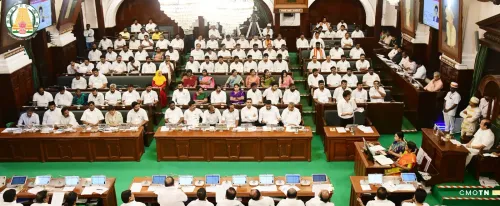
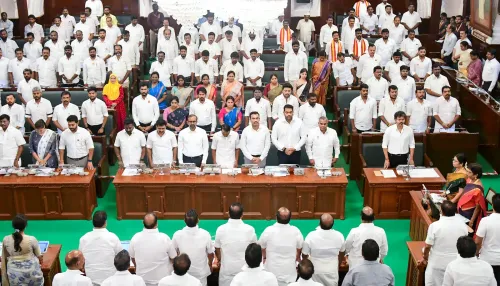
After Assembly Speaker J.C.D. Prabhakar invited members to record their support or opposition, legislators from the Left parties spoke in favour of the resolution. The Desiya Murpokku Dravida Kazhagam (DMDK) also welcomed the move, supporting both the demand to safeguard Tamil Nadu's parliamentary representation and the call for immediate implementation of the 33 per cent women's reservation.
Notably, the resolution reflects a rare cross-party consensus in the Assembly on an issue that cuts across regional and national politics.
Wider Context
The Constitution (One Hundred and Sixth Amendment) Act, 2023 — which provides for 33 per cent reservation for women in the Lok Sabha and state assemblies — was passed by Parliament but explicitly linked its commencement to the completion of a delimitation exercise following a fresh census. That conditionality has drawn sustained criticism from opposition parties and several state governments, who argue it effectively defers implementation by a decade or more. Tamil Nadu's resolution is among the most formal state-level challenges to that conditionality to date.
With the next general election due in 2029, the window to act without delimitation is narrowing, and pressure from southern states is likely to intensify as the census timeline becomes clearer.
Point of View
Vijay is calling the Centre's bluff: if the political will exists, the mechanism already does. The deeper subtext is the delimitation anxiety, which unites southern states across party lines in a way few issues do. A population-based seat redistribution could transfer significant parliamentary weight northward — and that structural shift, once made, would be nearly impossible to reverse. The Centre has so far offered no credible counter-assurance, which means this pressure is only going to build as the census and delimitation timelines converge.
NationPress
26 Sept 2026
Frequently Asked Questions
What did Tamil Nadu CM C Joseph Vijay demand regarding women's reservation in Parliament?
Vijay demanded that the Centre implement 33% reservation for women in the Lok Sabha from the 2029 general election, without linking it to any delimitation exercise or increase in the number of constituencies. He moved a formal resolution in the Tamil Nadu Legislative Assembly to this effect on 12 August.
Why does Tamil Nadu want Lok Sabha seats permanently fixed at 543?
Tamil Nadu fears that a population-based delimitation exercise could reduce its proportional representation in Parliament, since the state successfully implemented population-control programmes and has lower population growth than several northern states. Fixing the total at 543 seats would prevent such a redistribution.
What is the current status of the 33% women's reservation law?
The Constitution (One Hundred and Sixth Amendment) Act, 2023 provides for 33% reservation for women in the Lok Sabha and state assemblies, but its commencement is linked to a delimitation exercise following a fresh census. Critics argue this effectively defers implementation by a decade or more.
Who supported the Tamil Nadu Assembly resolution?
Left party legislators and the Desiya Murpokku Dravida Kazhagam (DMDK) spoke in favour of the resolution during the Assembly debate, signalling broad cross-party support within the house.
How does this affect the 2029 general election?
If the Centre accepts Tamil Nadu's demand, women's reservation could be implemented in the Lok Sabha for the 2029 general election without waiting for census-linked delimitation. As of now, no formal response from the Union government has been reported.