What New Initiatives Did the Chhattisgarh Cabinet Approve Regarding Excise Policy and Education?
Synopsis
Discover how the Chhattisgarh Cabinet, under Chief Minister Vishnu Deo Sai, is set to revolutionize revenue, education, technology, and healthcare with new policies and initiatives. Learn about the establishment of NMIMS and the MoU with STPI for start-ups, all aiming to enhance the state's infrastructure and academic landscape.
Key Takeaways
Approval of Chhattisgarh Excise Policy for 2026-27.
Land allocated for Narsee Monjee Institute of Management Studies.
MoU with STPI to support IT and start-ups.
Establishment of ESDD center for hardware start-ups.
Enhancements in government healthcare diagnostics.
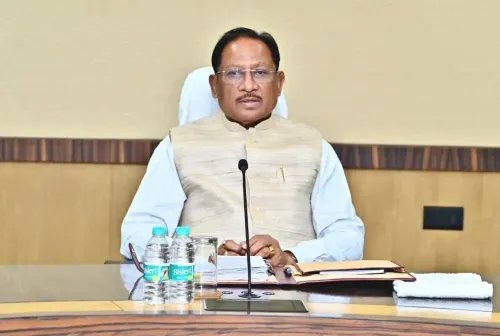
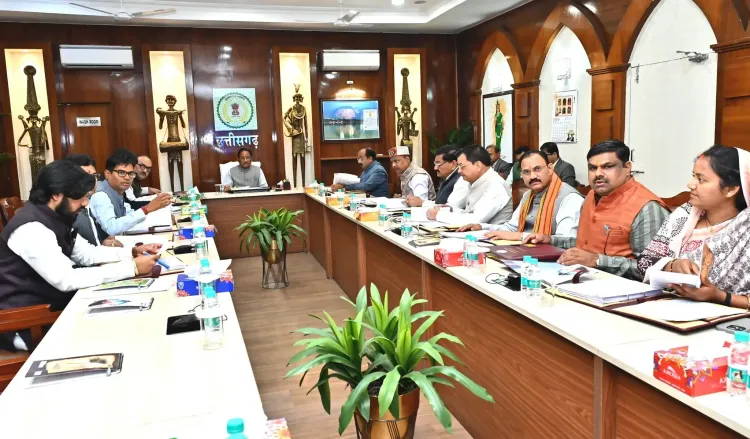
Raipur, Jan 21 (NationPress) The Chhattisgarh Cabinet, led by Chief Minister Vishnu Deo Sai, convened on Wednesday to endorse various vital proposals designed to enhance revenue, education, technology entrepreneurship, and public health infrastructure throughout the state.
In a significant administrative decision, the Council of Ministers ratified the Chhattisgarh Excise Policy for the fiscal year 2026-27. This policy framework has received formal approval, empowering the Excise Department to initiate all required ancillary and implementation actions. Details regarding revenue optimization strategies and regulatory guidelines are set to be announced shortly after departmental finalization.
A momentous decision in the education sector involved the Cabinet designating around 40 acres of land in Sector-18 of Nava Raipur Atal Nagar to the Shri Vile Parle Kelavani Mandal (SVKM) on a one-time 90-year lease. This land will enable the establishment of a campus for the esteemed Narsee Monjee Institute of Management Studies (NMIMS).
SVKM, a prominent educational trust operating since 1934, manages over 30 institutions nationwide, providing education to more than 100,000 students each year, from pre-primary to doctoral levels. NMIMS was ranked 52nd in the NIRF University Rankings of 2025.
Officials emphasized that the arrival of this national-level institution in Chhattisgarh will substantially enhance access to modern, high-caliber higher education, particularly in management and related fields, thereby enriching the state's academic landscape.
To foster the IT/ITeS sector and support the start-up ecosystem, the Cabinet endorsed the signing of a Memorandum of Understanding (MoU) with Software Technology Parks of India (STPI). This agreement will establish four new entrepreneurship centers in Nava Raipur Atal Nagar, focusing on domain-specific innovation.
STPI, which oversees 68 centers (many in Tier-2 and Tier-3 cities), will collaborate with the state's Department of Electronics and Information Technology to promote 133 start-ups over the next three to five years in areas such as AI, MedTech (including innovations based on herbal medicine and forest products), Smart City solutions, and Smart Agri.
Additionally, an Electronics System Design and Development (ESDD) center will be created under STPI to assist students, entrepreneurs, researchers, and industries in prototyping ESDM products, providing comprehensive support to 30–40 hardware startups and MSMEs annually.
In the healthcare sector, the Cabinet made decisive moves to ensure quality diagnostic services in all government health facilities. Proposals were approved to enhance laboratory operations at district hospitals, community health centers, and primary health centers, improving existing resources and increasing testing volumes per prescribed standards. These initiatives aim to boost accessibility to reliable diagnostics, lessen reliance on private facilities, and elevate overall public healthcare delivery in the state.
Point of View
The Chhattisgarh Cabinet's recent initiatives reflect a proactive approach towards enhancing economic growth and educational opportunities. The focus on technology and public health demonstrates a commitment to improving the quality of life and fostering innovation in the state. These measures align with national goals of promoting entrepreneurship and accessible education, positioning Chhattisgarh as a key player in India's developmental narrative.
NationPress
7 Oct 2026
Frequently Asked Questions
What is the new excise policy approved by the Chhattisgarh Cabinet?
The Chhattisgarh Cabinet approved the Excise Policy for the fiscal year 2026-27, allowing the Excise Department to implement necessary proceedings.
What educational institution is being established in Chhattisgarh?
The prestigious Narsee Monjee Institute of Management Studies (NMIMS) will establish a campus in Nava Raipur Atal Nagar.
What is the significance of the MoU with STPI?
The MoU will facilitate the establishment of four new entrepreneurship centers, promoting innovation in the IT/ITeS sector and supporting start-ups.
How will the healthcare system be improved?
The Cabinet approved proposals to enhance laboratory operations in government health institutions, improving access to quality diagnostics.
What is the expected impact of these initiatives?
These initiatives aim to boost education, foster technology entrepreneurship, and enhance public health infrastructure in Chhattisgarh.