ECI dissent row: Chidambaram demands Parliamentary review, SIR suspension

Synopsis
A newspaper report alleging that two Election Commissioners objected on record to 14 decisions over 10 months has triggered a sharp political response: Congress leader P. Chidambaram is now demanding a full Parliamentary Committee audit of ECI decisions and an immediate nationwide suspension of the SIR process — a challenge to the poll body's institutional credibility that the ECI itself has flatly rejected.
Key Takeaways
Chidambaram on 23 September demanded a Parliamentary Committee review of all recent ECI decisions and immediate suspension of the SIR process.
A newspaper report alleged that two Election Commissioners objected on record on 14 occasions over 10 months to steps taken by the Commission.
Objections reportedly covered voter additions, name deletions from electoral rolls, and commissioners allegedly being kept uninformed about certain decisions.
The ECI has rejected the report, with sources close to the matter clarifying the commissioners made 'observations,' not formal dissent.
Chidambaram argued that a flawed decision-making process — as repeatedly held by the Supreme Court — renders the resulting decisions equally flawed.
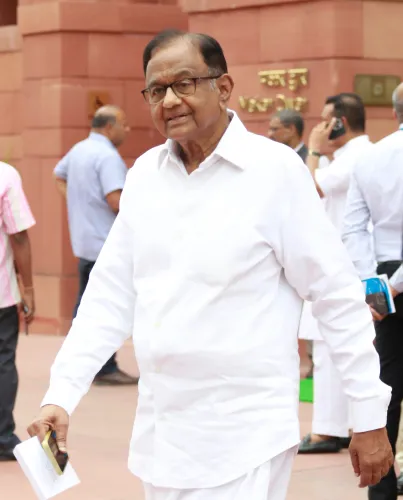
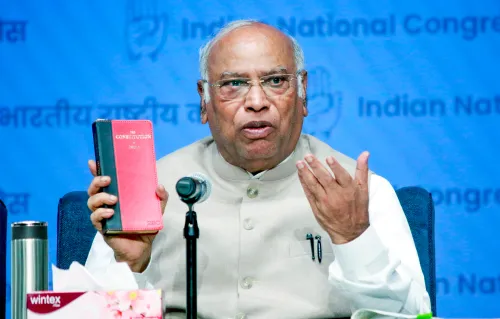
Senior Congress leader P. Chidambaram on Wednesday, 23 September called for a Parliamentary Committee review of all decisions taken by the Election Commission of India (ECI) in recent years, and demanded the immediate suspension of the Special Intensive Review (SIR) process currently underway across the country. His remarks follow a newspaper investigative report alleging internal dissent within the poll body.
The Dissent Report and Its Claims
A leading daily published an investigative report claiming that on 14 occasions over a period of 10 months, two Election Commissioners had objected on record to steps taken by the Commission. According to the report, the objections covered a range of decisions and processes, including allegations that the commissioners were kept in the dark about certain matters, as well as concerns over the addition of new voters and deletion of names from electoral rolls.
What Chidambaram Said
Chidambaram stated that the report, 'if correct, shake the foundations of the Election Commission of India.' He drew a distinction between two separate issues — the decisions themselves and the decision-making process. 'The Supreme Court has repeatedly held that if the decision-making process is flawed or wrong, the decision will also be flawed or wrong,' he said.
The Congress leader argued that the Opposition had already contended that 'many decisions concerning S.I.R. were wrong,' and that the report now revealed the decision-making process was 'also wrong.' He questioned how the Chief Election Commissioner could make his individual view the 'decision' of the ECI if two Election Commissioners had taken a contrary position.
ECI's Rebuttal
The Election Commission of India has categorically rejected the newspaper's claims. People familiar with the developments and having direct knowledge of the matter stated that no Election Commissioner had recorded any formal dissent on the decisions taken by the poll body. They clarified that the two commissioners had made certain observations, which were subsequently examined by the Commission — a routine part of internal deliberation, not a formal dissent.
Why This Matters
The controversy arrives at a sensitive time, with the SIR process — which involves intensive scrutiny of electoral rolls — already drawing scrutiny from Opposition parties over alleged irregularities in voter additions and deletions. Chidambaram's demand for a Parliamentary review of ECI decisions represents an escalation of the Opposition's challenge to the credibility of the poll body, going beyond the SIR dispute to question the broader institutional integrity of the Commission. Notably, the ECI is a constitutionally independent body, and a Parliamentary Committee review of its decisions would be an unprecedented step.
What Happens Next
The Opposition is expected to press the demand in Parliament, while the ECI is likely to face further questions about its internal deliberation processes. The government has not yet responded formally to Chidambaram's call for a committee review. How the ruling Bharatiya Janata Party (BJP) responds — and whether the Supreme Court is drawn into the SIR controversy — will be closely watched in the days ahead.
Point of View
He shifts the burden of proof onto the ECI to demonstrate its deliberations were sound, not merely its outcomes. The ECI's rebuttal — that the commissioners made 'observations,' not formal dissent — is a distinction that matters enormously in law but may carry little weight in public perception amid an already-contested SIR process. What mainstream coverage is missing is the structural question: India has no robust mechanism for scrutinising ECI's internal deliberations, and Chidambaram's Parliamentary Committee demand, however unprecedented, may force a long-overdue debate about accountability within a body that is constitutionally insulated from review.
NationPress
23 Sept 2026
Frequently Asked Questions
What is the ECI dissent row about?
The controversy stems from a newspaper investigative report claiming that two Election Commissioners objected on record to 14 decisions taken by the Election Commission of India over a 10-month period. The alleged objections related to voter additions, electoral roll deletions, and commissioners reportedly being kept uninformed about certain matters.
What has P. Chidambaram demanded?
Chidambaram has demanded that all ECI decisions taken in recent years be reviewed by a Parliamentary Committee, and that the Special Intensive Review (SIR) process currently underway across the country be suspended immediately. He argued that a flawed decision-making process invalidates the decisions themselves, citing Supreme Court precedent.
How has the Election Commission responded?
The ECI has rejected the newspaper's claims. Sources with direct knowledge of the matter stated that no Election Commissioner formally recorded dissent; the two commissioners had made observations that were subsequently examined by the Commission as part of normal internal deliberation.
What is the Special Intensive Review (SIR)?
The Special Intensive Review is an ongoing process by the Election Commission involving intensive scrutiny of electoral rolls, covering the addition of new voters and the deletion of names. Opposition parties have raised concerns about alleged irregularities in how the process is being conducted.
Can a Parliamentary Committee review ECI decisions?
It would be unprecedented. The Election Commission of India is a constitutionally independent body, and a formal Parliamentary Committee review of its decisions has no established precedent. Whether Parliament has the jurisdiction to conduct such a review is a constitutional question that would likely face legal challenge.