China's dam-building in Tibet fuelling flood disasters across South Asia
Synopsis
The same monsoon week that killed dozens in Assam and wrecked villages in Nepal has a common upstream thread: Tibet's rivers, increasingly controlled by Chinese dams. With Beijing planning a 60,000 MW mega dam at one of the world's most earthquake-prone sites, downstream nations India and Bangladesh face a water-security threat that no bilateral treaty currently addresses.
Key Takeaways
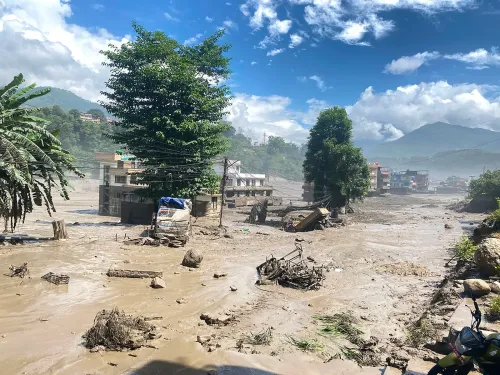
Flash floods from the Bhote Koshi river originating in Tibet caused widespread destruction in Nepal on 26 August .
The Brahmaputra overflowed in Assam , killing at least 50 people and displacing approximately 7 lakh people this monsoon.
China's proposed Medog Dam on the Yarlung Tsangpo would have a capacity of 60,000 MW — three times the Three Gorges Dam — at an estimated cost of $148 billion .
The site lies on the collision boundary of the Indian and Eurasian tectonic plates ; a magnitude 7.1 earthquake near Shigatse in January 2025 cracked five existing dams in Tibet.
The ISDP's 2026 report has called for the Medog project to be brought within the purview of global climate governance, including the UNFCCC .
Experts are urging transparent hydrological data sharing and climate-resilient water management as extreme weather intensifies across the region.
China's aggressive hydropower expansion on the Tibetan Plateau is drawing fresh scrutiny as flash floods from Tibet's rivers devastated Nepal, Bihar, and Assam in the same monsoon week, raising urgent questions about upstream dam management, water-sharing transparency, and downstream humanitarian risk across South Asia.
Flash Floods Devastate Nepal, Bihar, and Assam
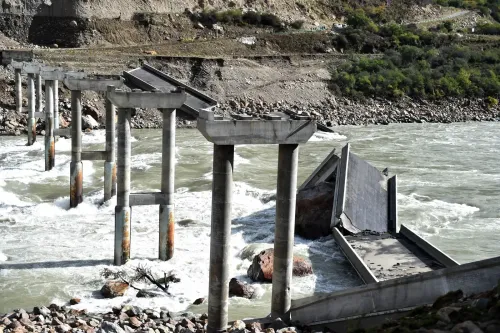
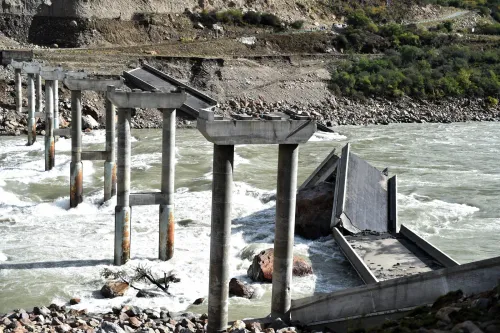
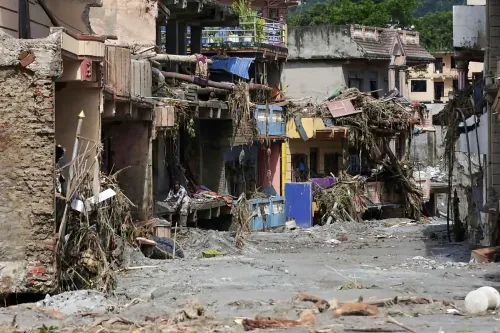
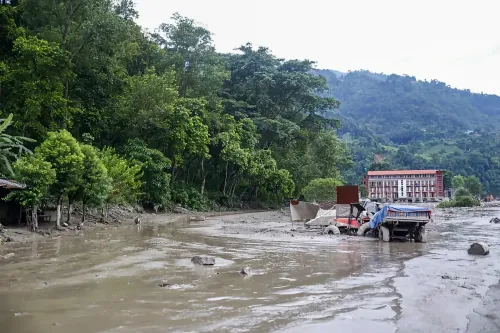
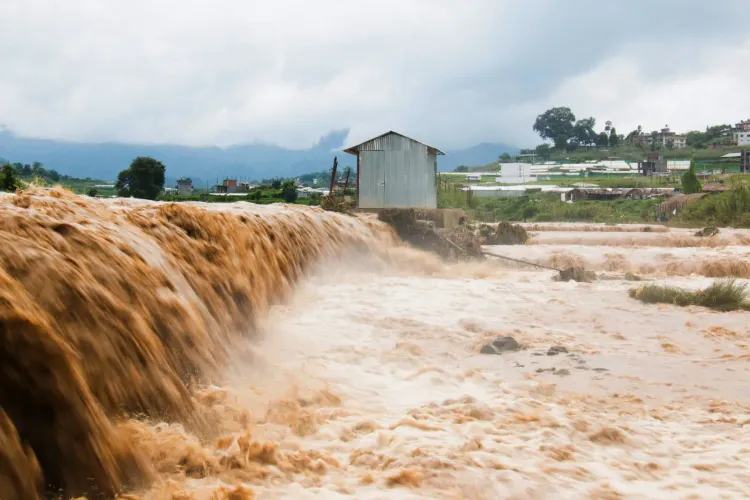
Widespread death and destruction struck Nepal on Wednesday, 26 August, as flash floods along the Bhote Koshi river — originating in Tibet — inundated multiple districts north of capital Kathmandu. Torrents of water surging from Tibet reportedly swept away bridges, damaged hydropower plants, and submerged villages.
In India, the Kosi River — long described as the 'Sorrow of Bihar' — swelled dangerously, threatening millions of lives and livelihoods across the state. Meanwhile, the Brahmaputra River, known as the Yarlung Tsangpo in Tibet, once again overflowed its banks this monsoon season, killing at least 50 people and displacing approximately 7 lakh people in Assam.
China's Dam Network: What Has Already Been Built
Studies suggest that China's dam-building programme in Tibet and downstream regions is creating a dangerous convergence of ecological fragility, geopolitical tension, and human vulnerability. Beijing has already constructed several large dams on the Yarlung Tsangpo, including the Zangmu Dam, completed in 2015, and the Jiexu and Jiacha dams, which followed shortly after. These projects are part of a broader hydropower push aimed at securing domestic energy needs.
The Medog Mega Dam: Scale, Cost, and Controversy
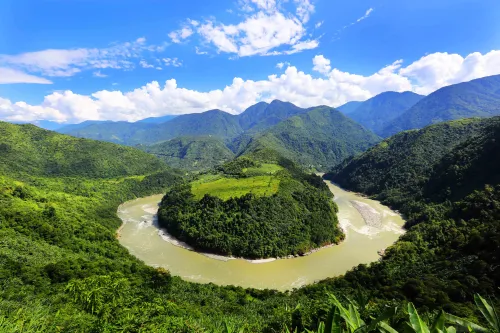
More controversially, Beijing has announced plans for a super dam at Medog County (also referred to as Motuo), near the Great Bend of the Yarlung Tsangpo — the dramatic U-turn the river makes before entering India as the Brahmaputra and flowing into Bangladesh as the Jamuna. Much of the project's detail remains undisclosed.
What is known is that the proposed Medog Dam could generate three times the power of the Three Gorges Dam, which is currently the world's largest hydroelectric station at more than 22,500 MW. With a proposed installed capacity of 60,000 MW and an estimated cost of approximately 1 trillion yuan (around $148 billion), the Medog project would be the largest hydropower project ever attempted. Its scale raises serious concerns about seismic safety and downstream flood management.
Seismic Risks and Expert Warnings
'The Medog Imperative', a 2026 report by the Institute for Security and Development Policy (ISDP), a Stockholm-based non-profit research and policy organisation, warned explicitly of the site's seismic volatility. The report cited the January 2025 earthquake on the Tibetan Plateau — which caused significant loss of life and infrastructure damage — as a precedent, noting that Chinese officials acknowledged cracks appeared on five hydropower dams in Tibet following a magnitude 7.1 earthquake near Shigatse that killed more than 120 people.
'Recall the January 2025 earthquake on the Tibetan Plateau that caused massive damage to human life, ecology, and security. Combined with the political sensitivities surrounding Tibet and China's upper-riparian status, the project raises a series of questions that cannot remain outside the purview of global climate governance, especially the United Nations Framework Convention on Climate Change (UNFCCC),' the ISDP report warned.
The Medog site sits along the collision boundary of the Indian and Eurasian tectonic plates — one of the world's most seismically active zones. A study by researchers at the China Institute of Water Resources and Hydropower Research (IWHR) assessed the potential for reservoir-induced seismicity and reportedly noted the same tectonic risk. Separate reports citing Chinese hydrology and geology journals — including Shuili Xuebao (Journal of Hydraulic Engineering) and Dizhi Kexue (Geological Science) — highlighted engineering challenges including tunnelling through permafrost, managing unstable sediment, and mitigating seismic risk.
Experts have also warned that even a structurally sound dam cannot prevent landslides and mudflows triggered by earthquakes — and that the scale of excavation involved in the Medog project could make such secondary disasters more likely.
Downstream Consequences and Calls for Transparency
The risks are not confined to Tibet. Sudden dam failures or uncontrolled releases could devastate downstream regions in India and Bangladesh, while altered sediment flows threaten agriculture and ecosystems across the Gangetic plains. Some experts are calling for a shift toward climate-resilient water management — smaller, adaptive infrastructure projects, robust early-warning systems, and transparent hydrological data sharing between riparian nations. As extreme weather events intensify, the absence of a binding transboundary water-sharing agreement between China and its downstream neighbours is increasingly viewed as a structural gap in regional disaster preparedness.
Point of View
Bihar, and Assam is not coincidental — it maps almost exactly onto China's upstream dam network on the Tibetan Plateau, yet no binding transboundary water treaty exists between Beijing and its downstream neighbours. The Medog Dam debate tends to be framed around energy gigawatts, but the more urgent question is liability: who bears the cost when a seismic event on the Indian-Eurasian plate boundary triggers a controlled or uncontrolled release into the Brahmaputra valley? India has raised concerns diplomatically but has little leverage without a multilateral framework. The ISDP's call to bring Medog within UNFCCC purview is the right instinct, but China has consistently resisted internationalising what it frames as a sovereign infrastructure decision. The window for preventive diplomacy is narrowing as construction timelines accelerate.
NationPress
10 Oct 2026
Frequently Asked Questions
How is China's dam-building in Tibet linked to floods in Nepal and India?
Rivers originating on the Tibetan Plateau — including the Bhote Koshi, Yarlung Tsangpo (Brahmaputra), and Kosi — flow downstream into Nepal, India, and Bangladesh. Studies suggest that China's upstream dam operations can affect water release volumes and sediment flows, contributing to flash flood risk in downstream regions, particularly during monsoon season.
What is the Medog Dam and why is it controversial?
The Medog Dam is a proposed Chinese hydropower project on the Yarlung Tsangpo near Medog County, Tibet, with a planned capacity of 60,000 MW — roughly three times that of the Three Gorges Dam — at an estimated cost of around $148 billion. It is controversial because the site lies in one of the world's most seismically active zones, and a dam failure or uncontrolled release could devastate downstream communities in India and Bangladesh.
What did the 2025 Shigatse earthquake reveal about dam safety in Tibet?
A magnitude 7.1 earthquake near Shigatse in January 2025 killed more than 120 people and, according to Chinese officials, caused cracks to appear on five hydropower dams in Tibet. The ISDP's 2026 report cited this event as evidence of the seismic vulnerability of large dam infrastructure on the Tibetan Plateau.
Which countries are most at risk from the Medog Dam?
India and Bangladesh face the greatest downstream risk. The Yarlung Tsangpo enters India as the Brahmaputra and flows into Bangladesh as the Jamuna. A dam failure or large-scale uncontrolled release could devastate communities along these rivers, while altered sediment flows could damage agriculture across the Gangetic plains.
What are experts recommending as an alternative to large dam projects in Tibet?
Some experts are advocating a shift toward climate-resilient water management — including smaller, adaptive infrastructure projects, robust early-warning systems, and transparent hydrological data sharing between China and downstream riparian nations. They also argue the Medog project should be subject to international climate governance frameworks such as the UNFCCC.