CII Western Region urges export diversification, MSME push amid US tariff pressure
Synopsis
With a 100% US tariff threat looming, CII Western Region is pushing Indian industry to stop depending on a handful of export markets and products — and to start treating MSMEs as the engine of that shift. The SME-to-MNC programme and Gujarat's 7.5 GW data centre policy signal that the state is positioning itself as India's next advanced manufacturing and digital hub.
Key Takeaways
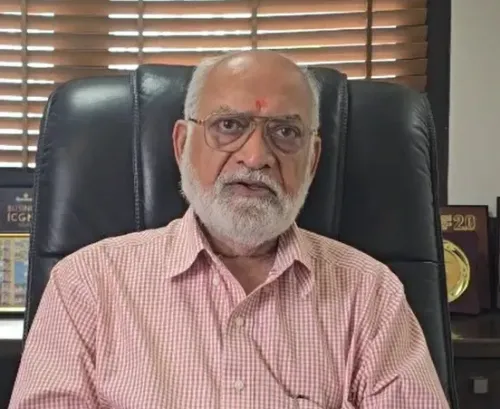
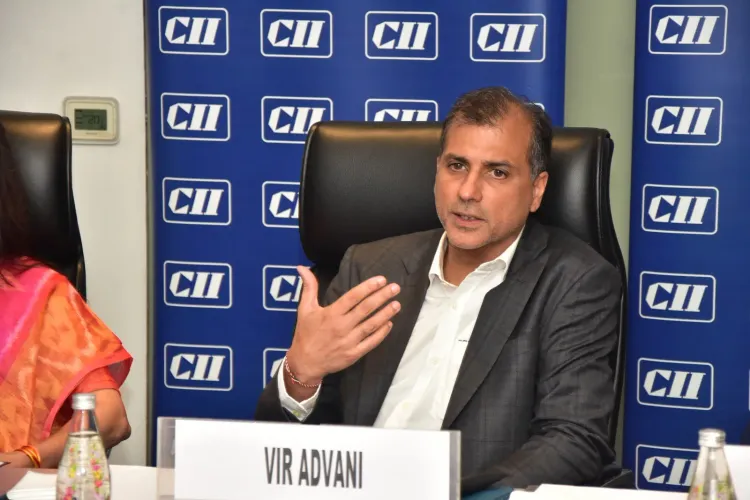
CII Western Region chairman Vir S Advani called for urgent export market diversification at a media roundtable in Ahmedabad on 14 August .
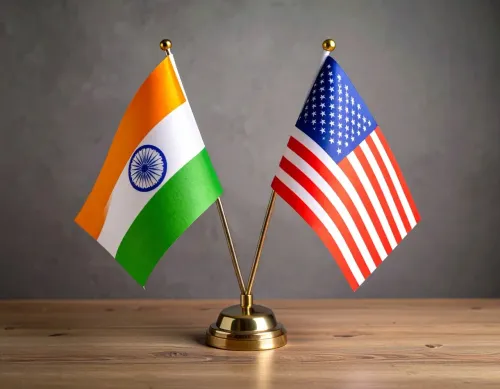
The proposed 100% US tariff was described as 'the big elephant' pressuring Indian exporters; CII is more optimistic than earlier in the year about a negotiated outcome.
CII's 'SME to MNC' programme targets MSMEs with revenues of around ₹100 crore across Gujarat, Maharashtra and Goa , aiming to scale them to ₹1,000 crore over 24 months .
CII Gujarat chairman Achal Bakeri said Gujarat aims to become 'the data centre capital of this country, if not of Asia', with Dholera identified as a key hub.
Gujarat's Data Centre Policy 2026-29 targets 7.5 GW of capacity.
The Vibrant Gujarat Global Summit in January 2027 is expected to spotlight advanced manufacturing, semiconductors, defence, AI and data centres.
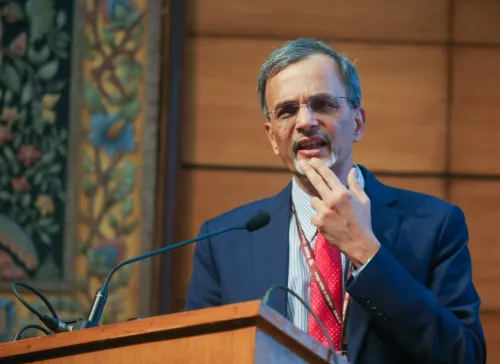
The Confederation of Indian Industry (CII) Western Region has called for urgent market diversification, stronger export competitiveness and accelerated MSME development as Indian industry navigates a difficult global trade environment shaped by US tariff uncertainty and rising import costs. CII Western Region chairman Vir S Advani made the remarks at a media roundtable in Ahmedabad on 14 August, outlining the industry body's priorities for Gujarat's next phase of industrial growth.
US Tariff Threat and the Case for Diversification
Advani identified the proposed 100% US tariff as the single most pressing concern for Indian exporters. 'This 100 per cent tariff is the big elephant. That's what's concerning everyone,' he said, while noting that 'very heavy bilateral conversation and communication' between India and the US was now under way. CII, he added, is more optimistic about the India-US trade situation than it was earlier in the year and expects the issue to be negotiated toward an outcome favourable to India relative to its competitors.
However, Advani stressed that the tariff standoff had exposed a structural vulnerability: Indian exports are concentrated in too few products and too few destination markets. He pointed to the United Kingdom, the European Union and Australia as priority markets deserving closer attention. CII, he said, is working with the Ministry of Commerce on a granular, product-and-country-level export strategy following recent free trade agreement signings — mapping opportunities down to the six-digit HSN code level.
'We only export such few products and only to such few countries. So diversification is the most important thing,' Advani said. He argued that growing exports, rather than simply curbing imports, was the more sustainable route to managing India's balance of payments and stabilising the rupee.
MSME Competitiveness: The SME-to-MNC Programme
MSME development emerged as a central theme, with Advani describing smaller businesses as often lacking the resources to identify overseas markets, improve competitiveness or manage multiple operational demands simultaneously. CII's Western Region — covering Gujarat, Maharashtra and Goa — is preparing an 'SME to MNC' programme under which larger companies would provide structured support to smaller businesses in their supply chains over a 24-month period through CII's Centre of Excellence on MSME Competitiveness.
The programme targets businesses with revenues of around ₹100 crore, with the stated aim of helping selected companies scale to ₹1,000 crore and eventually enter international markets. 'If we can create even 20 companies who can come out of this ₹100 crore range… if 20 of them can become ₹1,000 crore companies with CII's help, then from ₹1,000 crore to ₹10,000 crore, they'll do on their own,' Advani said.
On the policy side, Advani called for reforms to GST, customs and indirect taxes to free up capital within businesses, and advocated for decriminalisation of provisions in commercial laws to boost entrepreneurial confidence and encourage investment.
AI Access and Technology Adoption for Smaller Firms
Artificial intelligence was flagged as another area where CII is actively supporting MSMEs. Advani said the organisation had conducted workshops on deploying AI in business operations and is exploring ways to improve technology access for smaller firms that may struggle with the cost of advanced AI tools. CII is also facilitating connections between technology start-ups and established companies through its Centres of Excellence.
The organisation expressed particular interest in open AI models and regional-language models, which could offer cost-effective alternatives to expensive proprietary systems. CII's current AI focus, Advani clarified, is on broad-based learning, training and adoption rather than sector-specific research.
Gujarat's Data Centre Ambitions and New Industrial Policies
Achal Bakeri, chairman of CII Gujarat, highlighted the state's emerging position as a potential data centre hub, citing available land, reliable power supply, relatively low construction costs and submarine data cables landing along Gujarat's coastline. He identified Dholera as a key location for large-scale digital infrastructure. 'The ambition is for Gujarat to be the data centre capital of this country, if not of Asia,' Bakeri said, while acknowledging that water availability and environmental considerations remained open questions for hyperscale projects.
Gujarat's Data Centre Policy 2026-29 targets 7.5 GW of capacity and aims to attract large-scale hyperscale investment. Bakeri also welcomed the Viksit Gujarat Industrial Policy 2026 and the Gujarat Shipbuilding and Repair Policy 2026, describing them as reinforcing the state's manufacturing, maritime and digital ambitions. CII Gujarat's guiding theme for the period is 'Virasat Se Vikas: Gujarat@2047' — development rooted in the state's heritage, enterprise and craftsmanship.
Vibrant Gujarat 2027 and the Road Ahead
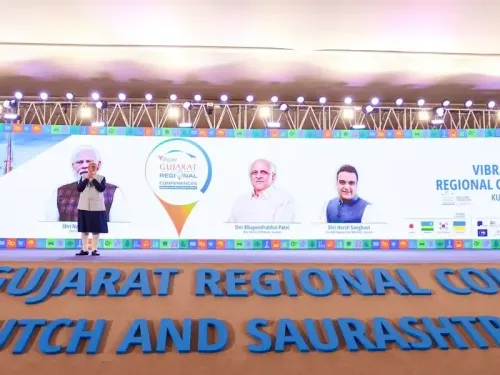
Advani said the Vibrant Gujarat Regional Conferences had helped extend investment outreach beyond Ahmedabad and Gandhinagar, bringing the process closer to investors across different parts of the state. He expects the Vibrant Gujarat Global Summit in January 2027 to draw heightened attention to advanced manufacturing, semiconductors, defence and aerospace, AI and data centres. 'I think the nature of the investment will go more towards advanced manufacturing, because that's also the direction India is in,' he said.
CII also recommended a tourism-led development approach linking tourism with sports, heritage and conservation, and noted that Gujarat's expanding air connectivity — including smaller-city links — could spread economic benefits beyond established destinations. Advani confirmed CII would continue supporting the Gujarat government on policy advocacy, exports, renewable energy, logistics, skills and MSME development ahead of the 2027 summit.
Point of View
But the structural challenge it describes — too few products, too few markets — has been acknowledged for years without decisive movement. The SME-to-MNC programme is an interesting supply-chain-led model, but targeting 20 companies over 24 months is modest against the scale of India's MSME sector. Gujarat's data centre ambitions are credible given its infrastructure advantages, but the water-availability question for hyperscale facilities is not a footnote — it is a material constraint that the state's 7.5 GW target will eventually have to reckon with seriously.
NationPress
28 Sept 2026
Frequently Asked Questions
What did CII Western Region say about US tariffs and Indian exports?
CII Western Region chairman Vir S Advani described the proposed 100% US tariff as 'the big elephant' weighing on Indian exporters. He said active bilateral negotiations between India and the US are under way and CII is more optimistic than earlier in the year about a favourable outcome, but stressed that Indian companies must diversify their export destinations and product range regardless of the tariff outcome.
What is CII's SME to MNC programme?
It is a 24-month structured support initiative being prepared by CII's Western Region — covering Gujarat, Maharashtra and Goa — under which larger companies help smaller businesses in their supply chains scale up. The programme targets MSMEs with revenues of around ₹100 crore and aims to help them grow to ₹1,000 crore, with support delivered through CII's Centre of Excellence on MSME Competitiveness.
What is Gujarat's Data Centre Policy 2026-29?
Gujarat's Data Centre Policy 2026-29 targets 7.5 GW of data centre capacity and is designed to attract large-scale hyperscale and digital infrastructure investment. CII Gujarat chairman Achal Bakeri cited the state's land availability, power supply, low construction costs and submarine cable landings as competitive advantages, with Dholera identified as a key location.
Which new export markets is CII recommending for Indian companies?
CII has pointed to the United Kingdom, the European Union and Australia as priority markets that Indian companies should examine more closely. The industry body is working with the Ministry of Commerce on a product-and-country-level strategy mapped down to the six-digit HSN code level, following recent free trade agreement signings.
What is the Vibrant Gujarat Global Summit 2027?
The Vibrant Gujarat Global Summit is a major investment and business event scheduled for January 2027. CII Western Region chairman Vir S Advani expects it to draw significant attention to advanced manufacturing, semiconductors, defence and aerospace, AI and data centres, reflecting India's broader industrial direction.