Will Outgoing CJI Gavai Refuse Government Positions After Retirement?
Synopsis
Outgoing CJI B.R. Gavai has made headlines by announcing his refusal to accept any government roles following his retirement. In an engaging press interaction, he shared his views on judicial independence, reservation policies, and the influence of social media. Discover his plans for future social service work and insights on crucial judicial matters.
Key Takeaways
CJI Gavai will not accept government roles post-retirement.
Social service will be a priority in his future plans.
He advocates for reform in reservation policies.
Concerns raised about social media's impact on judiciary integrity.
Clarifications made regarding the Supreme Court's opinion on Presidential references.
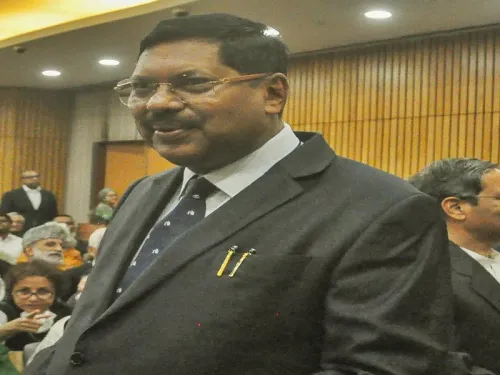
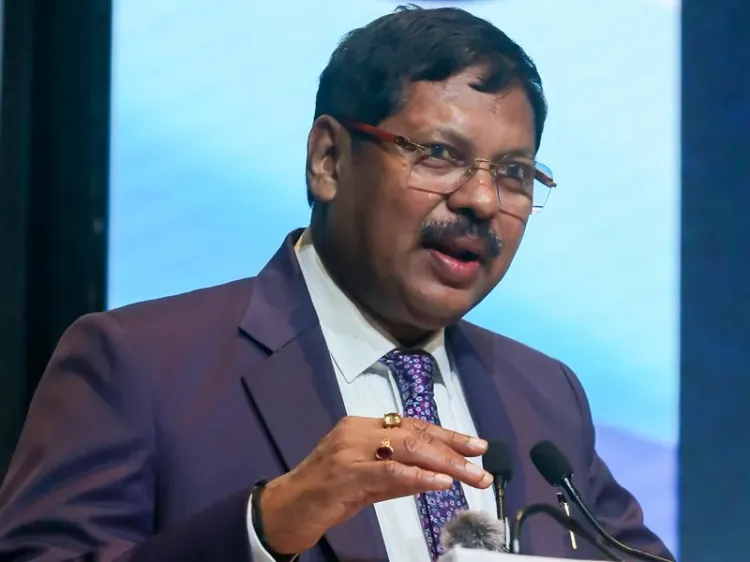
New Delhi, Nov 23 (NationPress) Outgoing Chief Justice of India (CJI) B.R. Gavai, who concludes his term on November 23, firmly declared that he will not take on any governmental position post-retirement.
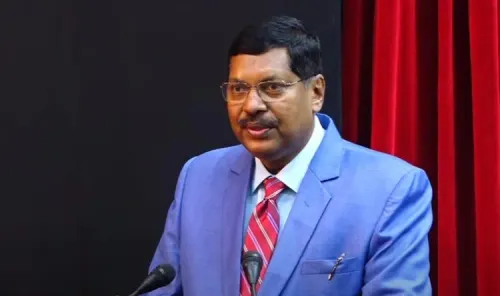
During a conversation with the press, CJI Gavai shared significant insights regarding judicial independence, reservation policies, social media influences, and the Supreme Court's recent stance on the Presidential reference.
Discussing his life after retirement, CJI Gavai stated his intention to take a brief "10 days of rest" before mapping out his future, while emphasizing that social service will remain a priority.
“Social work is ingrained in our ethos.. My focus will be on serving tribal communities,” he mentioned.
In advocating for modifications in the reservation system, CJI Gavai highlighted the necessity of applying the creamy layer principle to SC/ST quotas to ensure that affirmative action benefits those who truly require it.
Regarding the Justice Yashwant Varma matter, he refrained from commenting, noting that it is currently in the hands of Parliament.
When questioned about whether an FIR should be filed if cash is discovered at a judge's home or if such situations necessitate the CJI's consent, he again chose not to comment.
Expressing worry over the misinformation propagated by online platforms, the CJI remarked that social media has become “a dilemma” for the judiciary and other government branches.
“Statements we never utter are penned and displayed,” CJI Gavai noted.
“It’s inaccurate to assert that ruling in favor of the government implies a lack of judicial independence,” he countered, dismissing claims that a judge’s impartiality is compromised merely due to a ruling favoring the government.
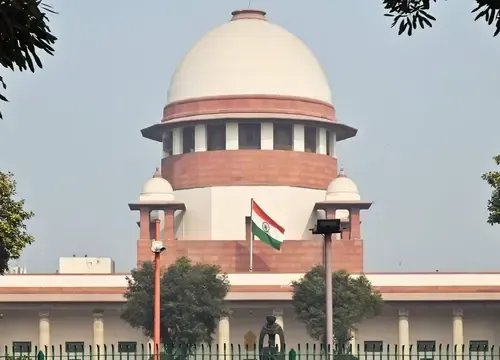
Clarifying the Supreme Court's recent judgment concerning the Presidential reference on bills awaiting approval from Governors and the President, CJI Gavai explained that the Constitution Bench did not overturn any prior decisions made by a two-judge Bench.
“We have not negated the earlier ruling. Our goal was to clarify the constitutional stance for future references,” he articulated.
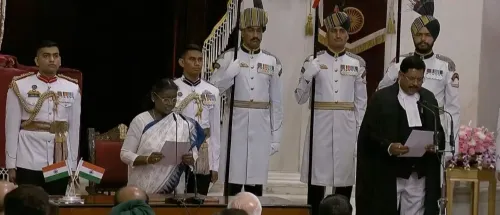
His comments followed a day after ceremonial proceedings where CJI Gavai emphasized the Supreme Court's adoption of a “Swadeshi interpretation” in its latest constitutional judgment.
Responding to Solicitor General Tushar Mehta's remark that “a new wave of Indian-ness has begun to permeate the judgments,” CJI Gavai stated: “In yesterday's ruling, we did not reference any foreign judgments and embraced Swadeshi interpretation.”
S-G Mehta, the second-highest law officer in the Centre, commended the Bench for effectively differentiating India’s constitutional framework from those of the American and British systems.
“Your lordships declared that we have our own jurisprudence, and the judgment addressed all matters in just 110 pages. This is indeed a fresh approach. A judgment should serve as a judgment, not an article for a law review,” he added.
Point of View
CJI Gavai's reflections on his retirement and the future of the judiciary signal a commitment to maintaining independence and integrity within the legal framework. His focus on social justice and reform in reservation policies highlights a progressive agenda that resonates with the needs of marginalized communities. It is crucial for the legal system to adapt and respond to the evolving societal landscape.
NationPress
19 Sept 2026
Frequently Asked Questions
What are CJI Gavai's plans after retirement?
CJI Gavai plans to take ten days of rest before deciding on his next steps, with a focus on social service, particularly in tribal areas.
Will he accept any government roles after retirement?
No, CJI Gavai has explicitly stated that he will not accept any government post after his retirement.
What were his views on the reservation policy?
CJI Gavai advocated for reforms in the reservation framework, emphasizing the need to extend the creamy layer principle to SC/ST quotas to ensure benefits reach those who genuinely need them.
What did he say about social media's influence?
He expressed concerns that social media has become a problem not just for the judiciary but for all branches of government, leading to distortions of information.
What was his stance on the Supreme Court's recent opinion regarding the Presidential reference?
CJI Gavai clarified that the Constitution Bench did not overturn previous rulings but provided clarification for the future constitutional position.