CJI Surya Kant Steps Back from Hearing on Election Commission Appointments

Synopsis
In a significant move, CJI Surya Kant has recused himself from petitions challenging a controversial law that alters the appointment process for the Chief Election Commissioner and other Election Commissioners, raising concerns over judicial independence and transparency.
Key Takeaways
CJI Surya Kant has recused himself from hearing related petitions.
The 2023 law removes the CJI from the appointment process for Election Commissioners.
A new Bench will hear the case on April 7 .
Petitions claim the law undermines judicial independence .
Previous interim measures involved the participation of the CJI in appointments.
New Delhi, March 20 (NationPress) Chief Justice of India (CJI) Surya Kant made the decision to recuse himself from overseeing a series of petitions contesting the Chief Election Commissioner and the other Election Commissioners (Appointment, Condition of Service and Term of Office) Act, 2023. This law notably excludes the CJI from the selection process for key officials within the Election Commission.
At the beginning of the proceedings, CJI Kant remarked that given the matter pertains to the responsibilities of the Chief Justice of India, it would be prudent for him to step back from the case to prevent any perception of bias.
“It would be more appropriate if this issue is referred to a different Bench. If I preside over the case, there might be claims of bias,” he stated.
Advocate Prashant Bhushan, representing the petitioner, proposed that the case be assigned to a Bench without any potential Chief Justice of India.
In response to this suggestion, CJI Kant confirmed that the case would indeed be referred to a Bench where the judge is not a potential Chief Justice, ensuring that “nobody can raise any concerns.”
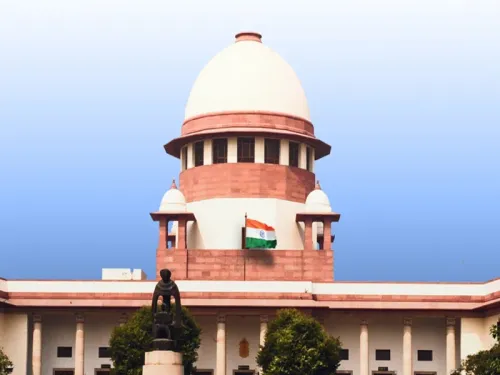
The Supreme Court has subsequently ordered that the case be scheduled for April 7 before a newly constituted Bench.
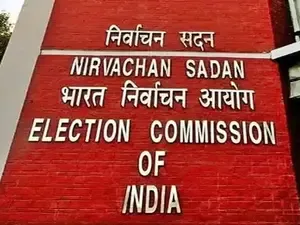
This legal challenge arises as the Supreme Court reviews the constitutional validity of the 2023 legislation, which effectively removed the Chief Justice of India from the committee responsible for appointing the Chief Election Commissioner (CEC) and other Election Commissioners (ECs).
In March 2023, a Constitution Bench had instructed that all appointments to the Election Commission of India (ECI) be made by the President based on a three-member panel comprising the Prime Minister, the Leader of the Opposition in the Lok Sabha, and the Chief Justice of India. This was an interim measure until Parliament introduced a formal law.
Following this, Parliament passed the 2023 law that established a selection committee consisting of the Prime Minister, the Leader of the Opposition (or the leader of the largest opposition party), and a Union Cabinet Minister designated by the Prime Minister, thereby omitting the CJI.
Numerous petitions have been lodged with the Supreme Court arguing that the exclusion of the CJI jeopardizes the independence and transparency of the appointment process, and they seek a judicial review to invalidate the law.
Point of View
He prioritizes the need for an unbiased judicial process. The ongoing legal challenges to the 2023 law highlight a pivotal moment in the discourse on electoral transparency and the independence of the judiciary. As debates intensify, the implications for democratic governance remain profound.
NationPress
22 Sept 2026
Frequently Asked Questions
What is the significance of the CJI's recusal?
CJI Surya Kant's recusal is significant as it ensures an unbiased evaluation of the petitions challenging the new law that alters the appointment process for Election Commissioners.
What does the 2023 law entail?
The 2023 law changes the appointment process of the Chief Election Commissioner and other Election Commissioners, excluding the CJI from the selection committee.
When is the next hearing scheduled?
The Supreme Court has scheduled the next hearing for April 7 before a newly constituted Bench.
Why are petitions being filed against the 2023 law?
Petitions argue that the exclusion of the CJI undermines the independence and transparency of the appointment process for Election Commissioners.
What was the interim measure set by the Constitution Bench in March 2023?
The interim measure required appointments to the Election Commission to be made by the President based on a panel that includes the CJI, the Prime Minister, and the Leader of the Opposition.