Supreme Court Upholds ECI's Bureaucratic Transfers Ahead of Bengal Elections
Synopsis
In a significant ruling, the Supreme Court has upheld the Election Commission's decision to transfer senior officials in West Bengal before the Assembly elections, highlighting that such actions are standard practice in electoral contexts. This decision has sparked discussions about the balance of power between state authorities and the Election Commission.
Key Takeaways
Supreme Court affirms ECI's authority to transfer officials for electoral integrity.
Routine practice of bureaucratic reshuffles before elections noted.
Petitioner's claims of lack of consultation deemed insufficient.
Calcutta High Court emphasizes ECI's power to ensure fair elections.
Potential implications for state governance and election oversight.
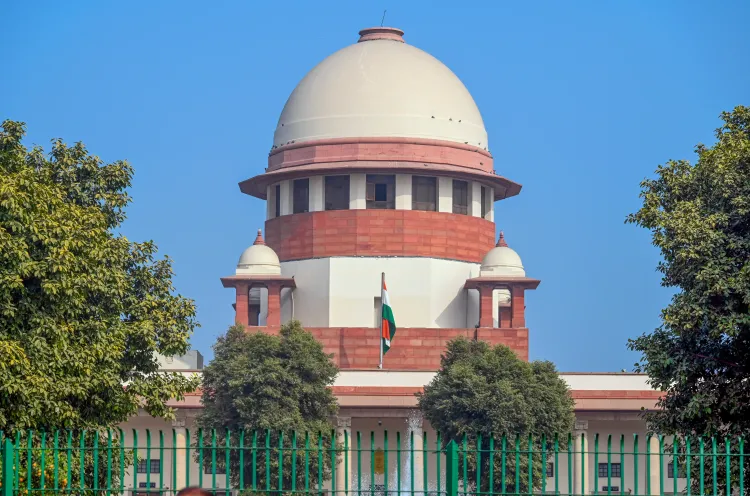
New Delhi, April 16 (NationPress) The Supreme Court has on Thursday decided against intervening with the Calcutta High Court’s ruling that affirmed the Election Commission of India’s (ECI) actions to transfer various senior bureaucrats and police officials in West Bengal in anticipation of the Assembly elections. The court noted that such reshuffles prior to elections are a standard procedure.
A bench led by Chief Justice of India (CJI) Surya Kant opted not to entertain the plea that challenged the extensive transfers mandated by the Election Commission, emphasizing that the movement of officials ahead of elections is commonplace and has historically occurred in multiple states.
During the proceedings, senior advocate Kalyan Bandopadhyay, representing the petitioner, asserted that the Election Commission had conducted the transfers without prior discussion with the West Bengal government, claiming that this action contradicted the established legal framework.
However, the CJI-led Bench pointed out that such transfers are not unusual, stating that having an observer from outside the state is often preferable to guarantee impartial elections.
The petitioner maintained that consulting the state government was essential and highlighted that, for the first time, even the Chief Secretary was replaced without any agreement.
While the apex court acknowledged that there was some merit in the argument regarding the necessity for state consultation, it refrained from intervening due to the imminent Assembly elections, leaving the legal question open for future consideration.
The bench indicated, "Such issues can be revisited later," making it clear that it was not inclined to disrupt the current situation.
The plea had contested the Calcutta High Court’s earlier decision to dismiss a public interest litigation (PIL) against the ECI’s directive to transfer key officials, including the Chief Secretary, Director General of Police (DGP), Home Secretary, and various District Magistrates and Superintendents of Police.
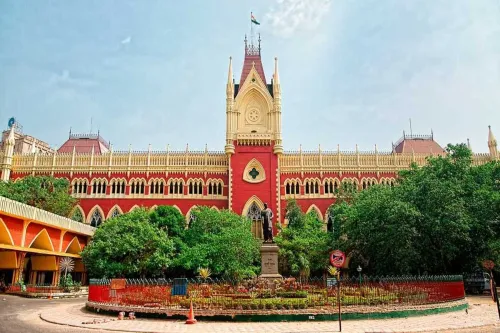
In its judgment on March 31, the Calcutta High Court noted that the petitioner had himself conceded in the writ petition that the Election Commission holds the authority to transfer officers for the sake of free and fair elections. The court stated that since this power was acknowledged, it was not inclined to conduct a "roving inquiry" into the ECI's authority to execute the transfers.
The Calcutta High Court also remarked that no signs of "administrative paralysis" had emerged simply from transferring officers, including those replaced by higher-ranking officials in some instances.
The court further opined that the movement of a "considerable number of officers" did not render the actions arbitrary or malicious, especially given that similar transfers are routinely conducted nationwide.
The PIL presented before the Calcutta High Court argued that the mass transfers compromised the authority of the elected state government and disrupted the administrative framework. This controversy originated in March, when the ECI mandated extensive transfers of senior officials in West Bengal subsequent to the implementation of the Model Code of Conduct ahead of the Assembly elections. The state government, led by Chief Minister Mamata Banerjee, raised objections, alleging that the Election Commission acted independently and undermined the authority of the elected government.
Point of View
The Supreme Court's decision underscores the recurring theme of electoral integrity in India. The ruling reinforces the Election Commission's authority to ensure unbiased elections, even amid political pushback from state governments. This scenario raises essential questions about the interplay between state governance and electoral oversight.
NationPress
20 Sept 2026
Frequently Asked Questions
What was the Supreme Court's ruling regarding the ECI's transfers?
The Supreme Court upheld the ECI's decision to transfer several senior officials in West Bengal, stating that such actions are common practice before elections.
What were the main arguments presented by the petitioner?
The petitioner argued that the ECI acted without consulting the West Bengal government, claiming this contradicted the statutory framework.
Did the Supreme Court find merit in the petitioner's arguments?
While the Supreme Court acknowledged some merit in the need for consultation, it chose not to intervene due to the upcoming elections.
How did the Calcutta High Court respond to the petition?
The Calcutta High Court dismissed the petition, asserting that the ECI possesses the authority to transfer officials to maintain free and fair elections.
What implications does this ruling have for future elections?
The ruling may set a precedent for how bureaucratic transfers are handled in the lead-up to elections, reinforcing the ECI's role.