India's NMSA covers 109 lakh hectares, 25.79 crore Soil Health Cards issued since 2015
Synopsis
A decade after its launch, India's National Mission for Sustainable Agriculture has issued 25.79 crore Soil Health Cards, covered 109 lakh hectares under micro-irrigation, and released 2,996 climate-resilient crop varieties. A 2025 NITI Aayog evaluation finds over 68% of farmers reporting meaningful soil health gains — a rare instance of a government scheme producing verifiable field-level outcomes.
Key Takeaways
₹2,119.84 crore released under Rainfed Area Development (RAD) since 2014-15 , covering 8.50 lakh hectares and benefiting 14.35 lakh farmers .
The Per Drop More Crop (PDMC) scheme has covered 109 lakh hectares with ₹26,325 crore in central assistance since 2015-16 .
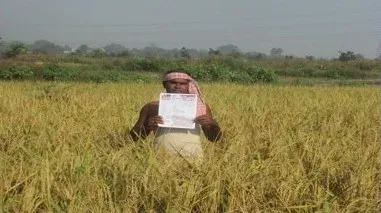
25.79 crore Soil Health Cards generated since 2015 ; 92.87 lakh soil samples tested in 2025-26 .
A 2025 NITI Aayog evaluation found 68.5% of surveyed farmers reported significant soil health improvement after adopting recommended practices.
2,996 climate-resilient crop varieties released under the National Agricultural Research System between 2014 and 2025 .
NMSA is now housed under Pradhan Mantri Rashtriya Krishi Vikas Yojana (PMRKVY) following restructuring in 2022-23 .
India's National Mission for Sustainable Agriculture (NMSA), launched in 2014-15, has channelled ₹2,119.84 crore under the Rainfed Area Development (RAD) component, covering 8.50 lakh hectares and benefiting 14.35 lakh farmers through the Integrated Farming System, according to an official fact-sheet released on Saturday, 9 May 2025. The figures underscore the government's decade-long push to build climate-resilient agriculture and improve soil health across the country.
Per Drop More Crop: Scale and Spend
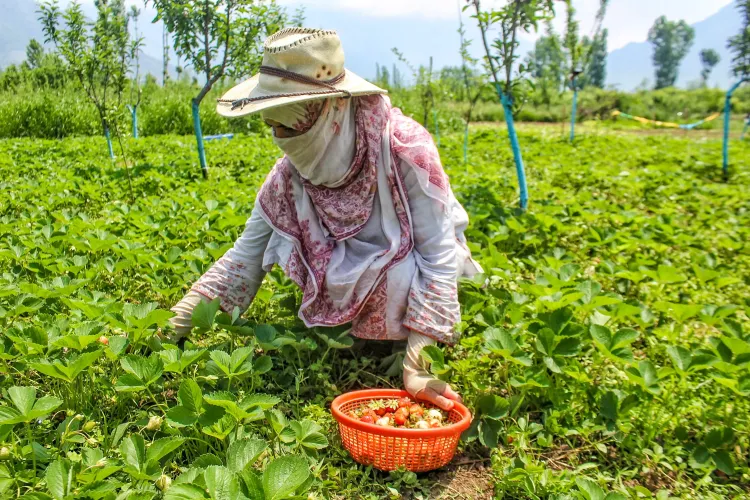
Implemented since 2015-16, the Per Drop More Crop (PDMC) scheme has covered approximately 109 lakh hectares, with ₹26,325 crore released as central assistance. The scheme focuses on micro-irrigation and water-use efficiency, targeting regions where groundwater depletion and erratic rainfall pose the greatest risk to farm incomes. This comes amid growing concern that India's irrigated farmland remains vulnerable to climate variability, making precision water management a strategic priority.
Soil Health Management: Testing and Advisory
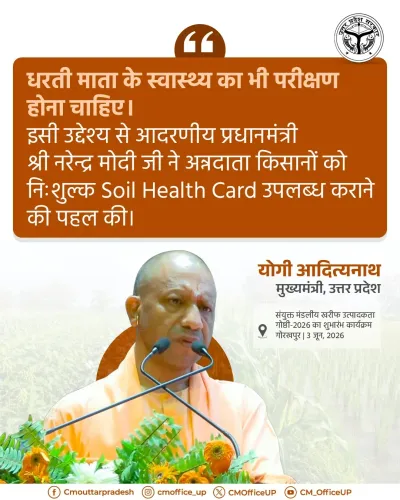
Under the Soil Health Management component, 97.53 lakh soil samples were collected and 92.87 lakh tested in 2025-26. Since 2015, a total of 25.79 crore Soil Health Cards have been generated to guide balanced nutrient management across farm holdings. The Soil Health Card (SHC) Scheme, launched in 2015, serves as the principal farmer advisory instrument under the NMSA, providing crop-specific nutrient recommendations that enable farmers to rationalise fertiliser use and improve soil productivity.
NITI Aayog Evaluation Findings
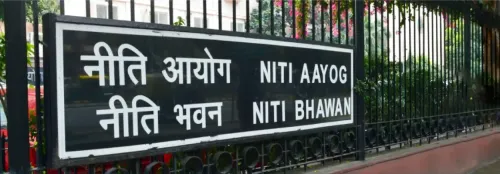
An evaluation conducted by NITI Aayog in 2025 indicates that the SHC scheme has contributed to correcting nutrient imbalances — particularly by reducing excessive urea use — and has led to measurable improvements in agricultural productivity. Notably, 68.5 per cent of surveyed farmers reported a significant improvement in soil health following adoption of the recommended practices, while 25.7 per cent observed marginal improvements. The scheme has also supported the broader objectives of Integrated Nutrient Management (INM).
Climate-Resilient Varieties and Institutional Restructuring
Between 2014 and 2025, a total of 2,996 climate-resilient crop varieties were released under the National Agricultural Research System, according to the fact-sheet. The NMSA was originally envisaged as a strategic intervention to mitigate the adverse impacts of climate variability on agriculture while ensuring long-term food and livelihood security. From 2018-19, it was operationalised as a sub-mission within the Green Revolution-Krishonnati Yojana umbrella scheme. A further institutional restructuring from 2022-23 resulted in its inclusion under the Pradhan Mantri Rashtriya Krishi Vikas Yojana (PMRKVY), reflecting a consolidated approach to sustainable, climate-resilient agricultural development. With climate shocks becoming more frequent, the government's ability to scale these programmes and verify on-ground outcomes will be the defining test of this decade-long investment.
Point of View
But scale alone does not settle the question of impact. The NITI Aayog's finding that 68.5% of surveyed farmers reported soil health gains is encouraging — but the evaluation's methodology and sample size are not publicly detailed, limiting independent verification. More telling is the urea-reduction signal: if excessive fertiliser use is genuinely declining, that would mark a structural shift in Indian farming economics, not just an advisory success. The scheme's repeated institutional reshuffling — from standalone mission to Krishonnati Yojana sub-mission to PMRKVY — risks fragmenting accountability. The real test over the next five years is whether soil health improvements translate into yield gains and reduced input costs for the farmer at the bottom of the income ladder.
NationPress
26 Sept 2026
Frequently Asked Questions
What is the National Mission for Sustainable Agriculture (NMSA)?
The NMSA is a government programme launched in 2014-15 to make Indian agriculture more resilient to climate variability and ensure long-term food and livelihood security. It operates through components including Rainfed Area Development, Per Drop More Crop, and Soil Health Management, and is currently housed under the Pradhan Mantri Rashtriya Krishi Vikas Yojana (PMRKVY).
What is the Soil Health Card scheme and how many cards have been issued?
The Soil Health Card (SHC) scheme, launched in 2015, provides crop-specific nutrient recommendations to farmers to help them rationalise fertiliser use and improve soil productivity. Since its launch, 25.79 crore Soil Health Cards have been generated across India.
What did the NITI Aayog evaluation of the Soil Health Card scheme find?
A 2025 NITI Aayog evaluation found that the SHC scheme has helped correct nutrient imbalances, particularly by reducing excessive urea use. Of the farmers surveyed, 68.5% reported a significant improvement in soil health, while 25.7% reported marginal improvements.
How many climate-resilient crop varieties has India released since 2014?
Between 2014 and 2025, a total of 2,996 climate-resilient crop varieties were released under the National Agricultural Research System, aimed at helping farmers adapt to changing weather patterns and climate variability.
What is the Per Drop More Crop (PDMC) scheme?
The Per Drop More Crop scheme, implemented since 2015-16, focuses on micro-irrigation and efficient water use in agriculture. It has covered approximately 109 lakh hectares with ₹26,325 crore released as central assistance to date.