CM Yogi Highlights PM Modi's Free Soil Health Card Push for Farmers
Synopsis
The Chief Minister's Office of Uttar Pradesh shared CM Yogi Adityanath's message likening soil testing to a health check for Mother Earth, crediting PM Narendra Modi for launching the free Soil Health Card scheme that provides farmers with nutrient data and crop-specific advisories to cut input costs and improve yields.
Key Takeaways
CM Yogi Adityanath compared soil testing to a health check for Mother Earth in a post shared by the UP CMO on 3 June 2026 .
He credited PM Narendra Modi with launching the free Soil Health Card initiative for farmers.
The Soil Health Card scheme was launched nationally in February 2015 by the Union Ministry of Agriculture.
Cards carry soil-nutrient test results and crop-specific fertiliser recommendations, issued free to cultivators.
The scheme aims to cut input costs, curb fertiliser overuse, and improve yields for small and marginal farmers.
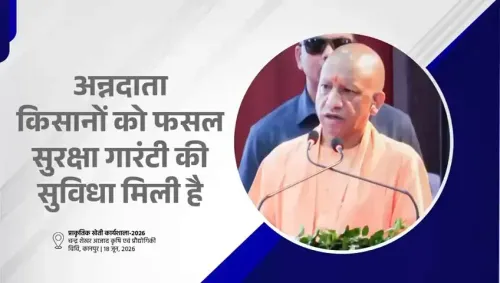
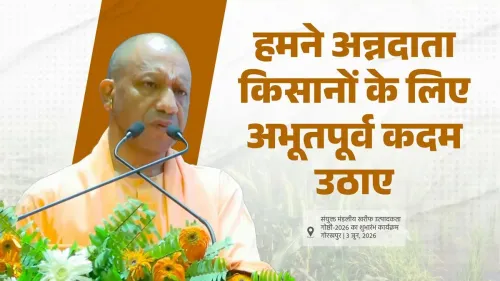
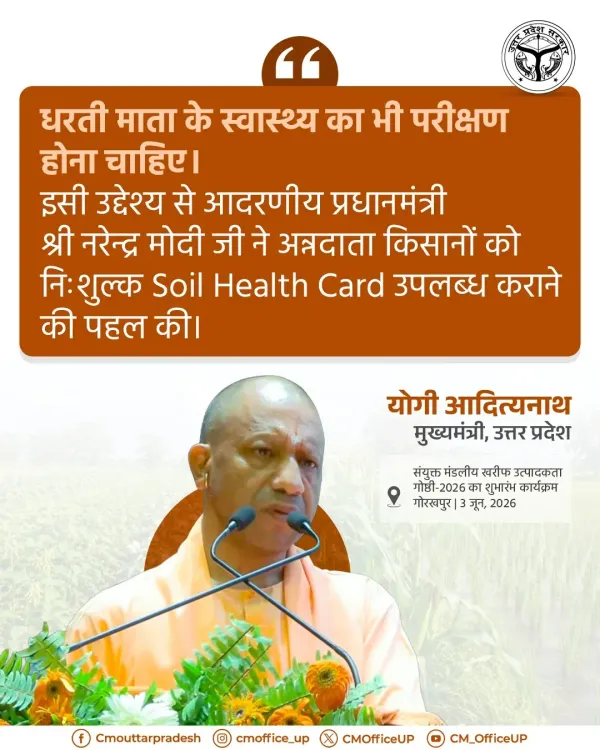
The Chief Minister's Office of Uttar Pradesh on Wednesday, 3 June 2026, amplified a message from Chief Minister Yogi Adityanath underscoring the importance of soil testing for India's cultivators and crediting Prime Minister Narendra Modi with launching the free Soil Health Card initiative for farmers. The post, shared from Lucknow, frames soil diagnostics as a health check for the earth itself and positions the central scheme as a cornerstone of welfare for the annadata (food provider).
In the post, the Chief Minister states, 'The health of Mother Earth must also be tested. With this very objective, the respected Prime Minister Shri Narendra Modi ji initiated the provision of free Soil Health Cards to our annadata farmers.' The original Hindi line — धरती माता के स्वास्थ्य का भी परीक्षण होना चाहिए — casts soil testing in maternal, almost devotional terms, a rhetorical register the Uttar Pradesh leadership has frequently used while discussing agricultural welfare.
Context
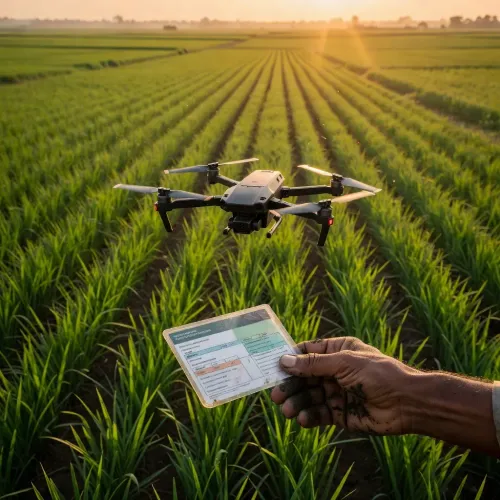
The Soil Health Card scheme was launched nationally in February 2015 by the Union Ministry of Agriculture. It provides farmers with a card containing the results of soil tests for key nutrients along with crop-specific recommendations on balanced fertiliser use.
The objective is twofold: improve yields by matching nutrient application to actual soil deficits, and reduce input costs by curbing the overuse of urea and other chemical fertilisers. The card is issued free of cost to cultivators.
Policy backdrop
The scheme sits within a broader central framework that links soil testing with productivity and sustainability goals. Successive editions of the programme have been integrated with missions focused on nutrient management, organic farming, and reducing farm input costs.
For Uttar Pradesh, India's largest agrarian state by farm population, the scheme has been a recurring talking point in the state government's outreach to cultivators. The state administration has periodically referenced central agriculture programmes — including the Soil Health Card — in its messaging on farmer welfare.
The Chief Minister's framing on Wednesday folds the scheme into a wider narrative of stewardship: that productive agriculture requires not just inputs and price support but a diagnostic understanding of the land itself.
Stakeholders and impact
The primary stakeholders are India's farmers, particularly small and marginal cultivators who account for the bulk of land holdings in Uttar Pradesh. For these farmers, fertiliser is among the largest recurring input costs, and over-application — often the result of guesswork — can both inflate expenses and degrade soil over time.
State agriculture departments, Krishi Vigyan Kendras, and a network of soil-testing laboratories form the delivery backbone. Extension workers translate the card's technical readings into crop-specific advisories that farmers can act on at the field level.
By publicly tying the state's farmer-welfare messaging to a flagship central scheme, the Chief Minister's Office reinforces the alignment between New Delhi and Lucknow on agricultural policy — a recurring motif in the state government's communications.
What's next
Attention is likely to turn to state-level progress reports on card issuance and to how the Soil Health Card is integrated with emerging digital soil-mapping tools under ongoing central agriculture programmes. The extent to which advisories translate into measurable changes in fertiliser use and yields will remain the key test of the scheme's long-term impact.
For Uttar Pradesh, with its vast and diverse agro-climatic zones, the scheme's value will hinge on the depth of last-mile delivery — turning lab results into decisions at the furrow.
Point of View
Civilisational language — Dharti Mata — the Chief Minister couples a technocratic scheme with cultural resonance, broadening its appeal beyond agronomy. It also reinforces a familiar political arc in which the state government foregrounds delivery of central flagship programmes rather than positioning itself in contrast to New Delhi. The real test, as ever, lies in last-mile execution: whether soil card advisories actually shift fertiliser practices on the ground.
NationPress
18 Oct 2026
Frequently Asked Questions
What is the Soil Health Card scheme?
It is a central government programme that provides farmers with a free card containing soil-nutrient test results and crop-specific recommendations on balanced fertiliser use. It was launched in February 2015 by the Union Ministry of Agriculture.
Is the Soil Health Card free for farmers?
Yes, the card is issued free of cost to cultivators. Soil samples are tested at government-linked laboratories and the results, along with advisories, are delivered to the farmer.
How does a Soil Health Card help farmers?
It helps farmers apply the right mix and quantity of fertilisers based on actual soil deficits, which can reduce input costs and improve yields. It also discourages overuse of chemicals like urea that can degrade soil over time.
What did CM Yogi Adityanath say about soil testing?
He said the health of Mother Earth must also be tested and credited PM Narendra Modi with launching the initiative to provide free Soil Health Cards to farmers. The message was shared by the Uttar Pradesh CMO on 3 June 2026.
Who runs the Soil Health Card scheme in Uttar Pradesh?
The scheme is a central initiative implemented through state agriculture departments, soil-testing laboratories, and extension networks such as Krishi Vigyan Kendras. In Uttar Pradesh, the state agriculture department coordinates delivery on the ground.