PM Modi Highlights Drones, Soil Health Cards for Farmers
Synopsis
Prime Minister Narendra Modi on June 11, 2026 reaffirmed farmer welfare as a top government priority, citing ongoing campaigns around agricultural drones, Soil Health Cards, and natural fertilisers as active tools to raise crop productivity across India.
Key Takeaways
Prime Minister Narendra Modi stated on June 11, 2026 that farmer welfare is among the government's highest priorities.
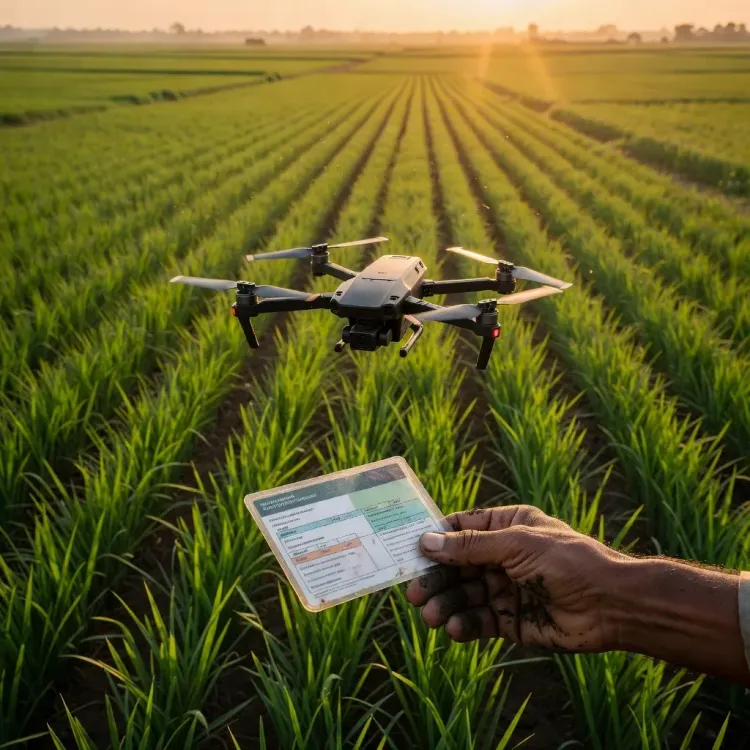
Three specific interventions were cited: agricultural drones , the Soil Health Card scheme, and natural fertiliser campaigns .
The Soil Health Card scheme was originally launched in February 2015 to provide farmers with soil nutrient data and fertiliser guidance.
The government's approach links precision technology, soil testing, and sustainable inputs as a unified agricultural modernisation strategy.
Drone deployment and natural farming guidelines are areas to watch in upcoming Union Budget or ministry-level announcements.
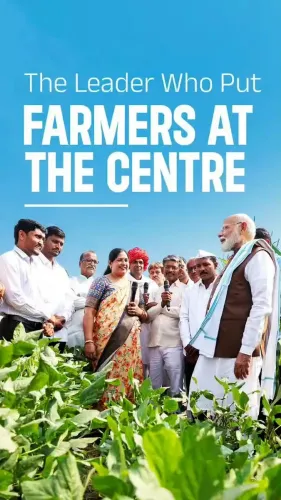
Prime Minister Narendra Modi on Thursday, June 11, 2026, reaffirmed that farmer welfare remains among the government's highest priorities, pointing to ongoing initiatives involving agricultural drones, Soil Health Cards, and natural fertiliser campaigns as tools to boost crop productivity.
In a post on X in Hindi, Modi wrote: 'किसानों का कल्याण हमारी सर्वोच्च प्राथमिकताओं में है' ('Farmer welfare is among our highest priorities'), adding that a consistent emphasis on providing modern agricultural facilities has led to campaigns around drones, Soil Health Cards, and natural fertilisers helping farmers increase crop productivity.
Context
The statement comes as the government continues to position technology-driven agriculture at the centre of its rural outreach. Modi has repeatedly invoked farmer welfare as a cornerstone of the BJP-led government's policy agenda, and this post reinforces that messaging with specific reference to three distinct interventions currently active in the field.
The framing — linking drones, soil testing, and natural inputs in a single statement — signals an effort to present a unified, modern vision of Indian farming rather than isolated schemes.
Policy Backdrop
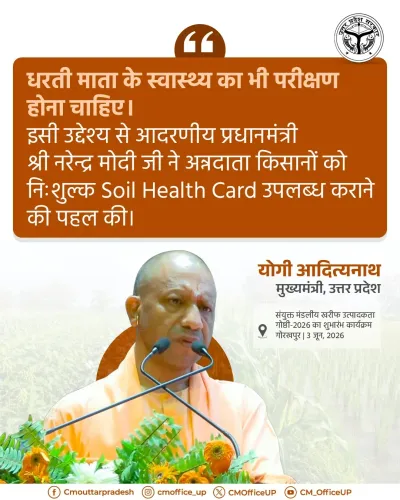
The Soil Health Card scheme was launched in February 2015 by the Government of India to give farmers detailed information on soil nutrient status and fertiliser recommendations, directly aimed at improving productivity while reducing input waste. It remains one of the flagship precision-farming initiatives of the Modi government.
Agricultural drone deployment has been promoted under mechanisation programmes to assist with precision spraying and crop monitoring, while natural farming campaigns seek to reduce dependence on chemical fertilisers — both aligning with a broader push toward climate-resilient, cost-efficient agriculture that has been a consistent policy direction since the mid-2010s.
Stakeholders and Impact
India's farming community — numbering in the hundreds of millions — stands as the primary stakeholder in these interventions. Smallholder and marginal farmers, who form the bulk of the agricultural workforce, are the intended beneficiaries of soil testing services, subsidised drone access, and natural input support.
State governments, agricultural universities, and rural extension services are key implementation partners. The convergence of technology and sustainable inputs is also relevant to input manufacturers, agri-tech startups, and rural cooperative networks that participate in scheme delivery.
What's Next
Observers will watch for concrete updates on the scale of drone deployment under agricultural mechanisation programmes and any new policy guidelines for natural farming that may emerge in upcoming Union Budget deliberations or ministry circulars. The government's ability to translate these stated priorities into measurable productivity gains — particularly for smallholders — will be a key benchmark for evaluating the impact of these campaigns on the ground.
Point of View
Farmer-first policy — a narrative that has been central to the party's rural electoral strategy since 2014. By bundling drones, soil health, and natural farming in a single statement, the communication draws a line from a decade-old scheme to contemporary agri-tech, projecting continuity and momentum. The absence of specific outcome data leaves the post squarely in the realm of intent-signalling rather than performance reporting. As farm distress and input costs remain politically sensitive, such messaging also serves as a pre-emptive framing ahead of potential budget or policy announcements.
NationPress
26 Oct 2026
Frequently Asked Questions
What is the Soil Health Card scheme mentioned by PM Modi?
The Soil Health Card scheme is a Government of India initiative launched in February 2015 that provides farmers with cards detailing their soil's nutrient status and recommending appropriate fertilisers to improve crop productivity and reduce input waste.
How are drones being used in Indian agriculture?
Agricultural drones in India are deployed under mechanisation programmes primarily for precision spraying of fertilisers and pesticides and for crop monitoring, helping farmers reduce costs and improve efficiency — an area PM Modi referenced in his June 2026 post.
What is natural farming and why is the government promoting it?
Natural farming refers to agricultural practices that minimise or eliminate synthetic chemical inputs, relying instead on natural fertilisers and bio-inputs. The government promotes it to reduce input costs for farmers, improve soil health, and build climate resilience in Indian agriculture.
What did PM Modi say about farmers on June 11 2026?
PM Modi posted on X on June 11, 2026 stating that farmer welfare is among the government's highest priorities and that campaigns involving drones, Soil Health Cards, and natural fertilisers are actively helping farmers increase crop productivity.
What is the government's broader agricultural modernisation policy?
India's agricultural modernisation policy since the mid-2010s has focused on precision tools, soil testing, reduced chemical use, and technology adoption to raise productivity and farmer incomes — a direction reinforced consistently by the Modi government through schemes and mechanisation drives.