CM Yogi Backs PM Modi's Free Soil Health Card Push for Farmers
Synopsis
The Chief Minister's Office of Uttar Pradesh amplified CM Yogi Adityanath's message endorsing PM Narendra Modi's free Soil Health Card initiative, framing soil testing as essential for mother earth and India's farmers. The post links Uttar Pradesh to the central scheme launched in 2015 to guide cultivators on balanced fertiliser use.
Key Takeaways
The Chief Minister's Office of Uttar Pradesh posted on 3 June 2026 endorsing the free Soil Health Card scheme.
CM Yogi Adityanath credited PM Narendra Modi with launching the free distribution initiative for farmers.
The Soil Health Card Scheme was launched nationally by the Ministry of Agriculture in February 2015 .
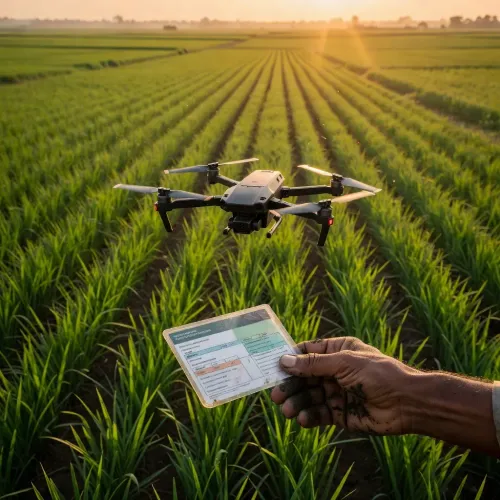
The cards provide farmers with soil nutrient data and crop-specific fertiliser recommendations.
Uttar Pradesh, India's most populous state, is a key implementation geography for the scheme.
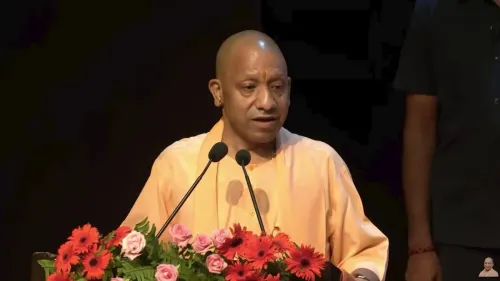
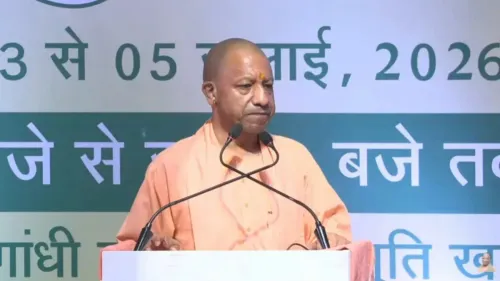
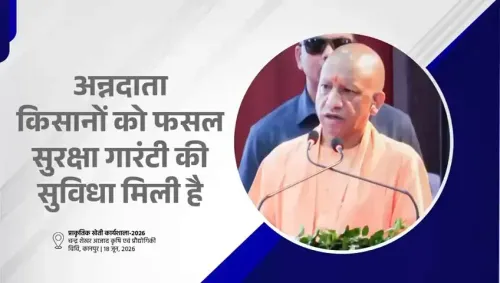
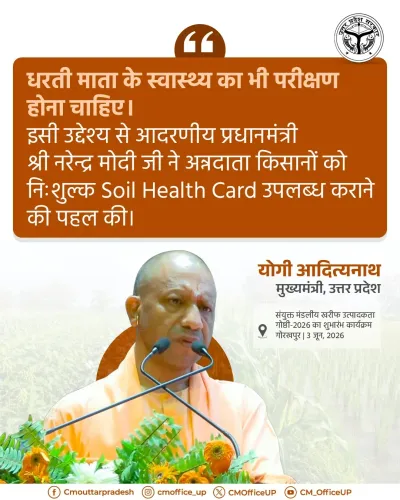
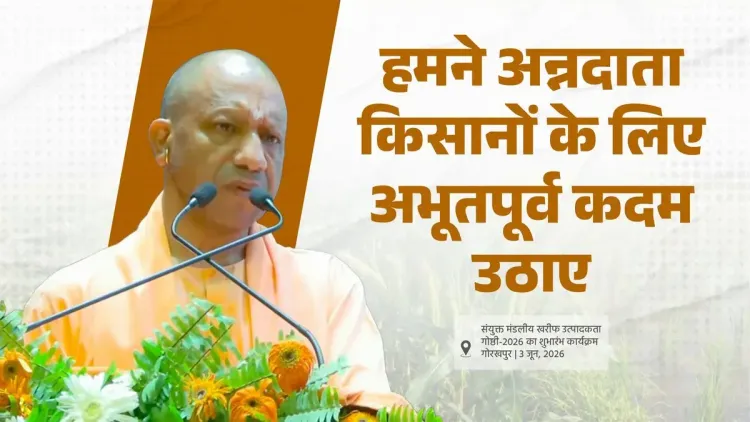
The Chief Minister's Office of Uttar Pradesh on Wednesday, 3 June 2026 amplified a message from Chief Minister Yogi Adityanath endorsing the central government's free Soil Health Card initiative for farmers. The post, shared from Lucknow, framed soil testing as essential to the wellbeing of dharti mata (mother earth) and credited Prime Minister Narendra Modi with steering the programme towards cultivators at no cost.
In the post, the Chief Minister stated, 'The health of mother earth must also be tested. With this very objective, the respected Prime Minister Shri Narendra Modi ji launched the initiative of providing free Soil Health Cards to annadata (food-giver) farmers.' The message was accompanied by a video clip from the Chief Minister's Office handle.
Context
The Soil Health Card Scheme is a central government programme that issues farmers a card detailing the nutrient status of their soil, along with crop-specific recommendations on fertiliser dosage and soil amendments. It was launched as a national mission by the Ministry of Agriculture in February 2015, positioning soil testing as a foundation for productivity gains and reduced input costs.
CM Yogi Adityanath's endorsement situates Uttar Pradesh — India's most populous state and one of its largest agricultural economies — squarely within the central scheme's delivery architecture. The framing of soil as a living entity needing a periodic check-up echoes the scheme's original public-communication strategy.
Policy backdrop
Since 2015, the scheme has moved through successive cycles of sample collection, laboratory testing and card distribution, with state agriculture departments serving as the implementing arm. The cards are intended to guide farmers towards balanced fertiliser use, reducing over-application of urea and improving long-term soil fertility.
Central budgets through the mid-2010s and into the 2020s have repeatedly tied soil mapping to broader missions on sustainable agriculture, organic farming and digital agri-stack initiatives. The programme has often been cited alongside PM-KISAN direct income support and crop insurance as part of a wider farmer-welfare bundle.
Stakeholders and impact
The primary stakeholders are cultivators, particularly small and marginal farmers who lack independent access to private soil testing services. For Uttar Pradesh, with its sugarcane belt in the west, wheat-paddy rotation across the Gangetic plain, and pulses in Bundelkhand, soil-specific advice carries direct implications for yields and fertiliser bills.
State agriculture extension officers, district-level soil testing laboratories and Krishi Vigyan Kendras form the operational chain. Fertiliser retailers and cooperative societies are also affected, since balanced-nutrient recommendations can reshape demand patterns away from heavily subsidised urea towards potassium and micronutrient inputs.
The post's emphasis on the cards being free of cost underscores an affordability message aimed at rural voters, a recurring theme in the state government's agricultural communication.
What's next
Observers will watch for state-level progress reports on the latest round of card distribution in Uttar Pradesh, including coverage across the state's 75 districts and any integration with digital soil maps. The next phase of policy interest lies in linking soil-card data to fertiliser subsidy reforms and precision-agriculture pilots.
For CM Yogi Adityanath's administration, sustained messaging around centrally sponsored farmer schemes signals an intent to keep agrarian welfare at the forefront of the state's public narrative, particularly as cropping decisions for the upcoming kharif season take shape.
Point of View
Not a paid service. By personally invoking dharti mata and annadata, CM Yogi Adityanath ties cultural framing to a technocratic scheme, a recurring template in BJP agricultural messaging. It also signals continued alignment between Lucknow and the Centre on farmer-facing schemes, which remains politically salient ahead of every state and national election cycle. The real test, as always, lies in last-mile delivery and the freshness of the soil data farmers actually receive.
NationPress
19 Sept 2026
Frequently Asked Questions
What is the Soil Health Card scheme?
It is a central government programme that issues farmers a free card detailing their soil's nutrient status and recommending crop-specific fertiliser and soil amendments. It was launched by the Ministry of Agriculture in February 2015.
Is the Soil Health Card free for farmers?
Yes, the Soil Health Card is provided free of cost to farmers under the central government scheme, as reiterated by the Chief Minister's Office of Uttar Pradesh.
Who launched the Soil Health Card scheme in India?
The scheme was launched by Prime Minister Narendra Modi's government through the Ministry of Agriculture in February 2015.
How does the Soil Health Card help farmers?
It helps farmers apply the right balance of nutrients based on actual soil tests, which can reduce fertiliser costs, improve yields and protect long-term soil fertility.
How is Uttar Pradesh implementing the Soil Health Card scheme?
The state government, through its agriculture department, district soil testing laboratories and Krishi Vigyan Kendras, collects samples and distributes cards to farmers across Uttar Pradesh's 75 districts.