Indian Coast Guard holds 28th HNS Spill Review, flags MSC Elsa 3 as turning point
Synopsis
The MSC Elsa 3 disaster — ₹9,531 crore in estimated damages, nine affected Kerala districts, nurdles reaching Sri Lanka — loomed over India's 28th HNS Spill Review. The incident exposed a critical legal void: India's existing oil pollution compensation framework did not cover this type of cargo, and the 2010 HNS Convention that would have applied remains unratified.
Key Takeaways
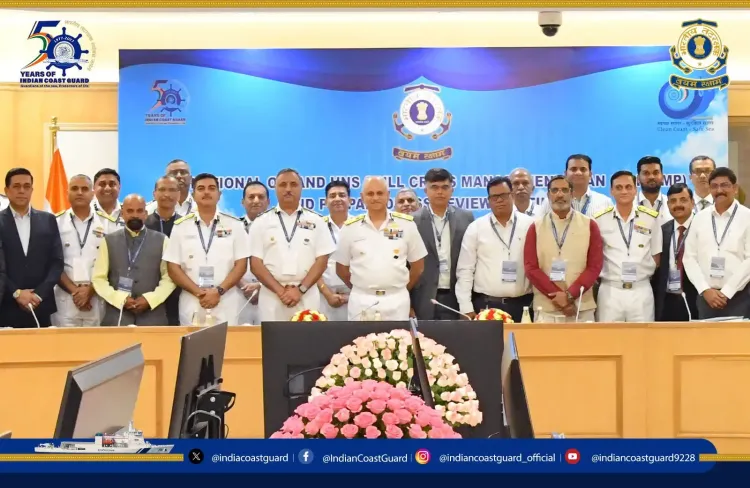
The Indian Coast Guard held the 28th NOH-CMP Preparedness Review in New Delhi on 27 October 2026 , chaired by DG Paramesh Sivamani .
The review drew over 80 representatives from central and state ministries, ports, and the oil industry.
The MSC Elsa 3 sank 38 nautical miles off Kochi on 25 May 2025 , carrying 640 containers including 12 believed to contain calcium carbide; all 24 crew members were rescued.
Plastic nurdles from the wreck spread across nine Kerala districts and reached northern Sri Lanka ; total estimated damages stood at ₹9,531 crore .
India's 1992 oil pollution compensation framework did not cover the incident; the 2010 HNS Convention , which would have applied, is yet to come into force.
The ICG operates four Pollution Response Centres — in Mumbai , Chennai , Port Blair , and Vadinar — under the NOSDCP framework approved in 1993 .
The Indian Coast Guard (ICG) convened the 28th National Oil and Hazardous and Noxious Substances (HNS) Spill Crisis Management Plan (NOH-CMP) and Preparedness Review in New Delhi on Tuesday, 27 October 2026, bringing together more than 80 representatives from central and state ministries, government bodies, major ports, and oil industry stakeholders. The review was chaired by Director General Paramesh Sivamani of the ICG and centred on strengthening India's defensive readiness against oil spills and HNS emergencies within its Exclusive Economic Zone (EEZ).
Why HNS Spills Have Moved to the Forefront
While combating oil spills has long been a core ICG mandate, the rapid growth of India's maritime infrastructure has pushed HNS incidents to the top of the risk register. Director General Sivamani emphasised at the review that integrating globally accepted best practices and cutting-edge response technologies is essential to neutralising environmental hazards effectively.
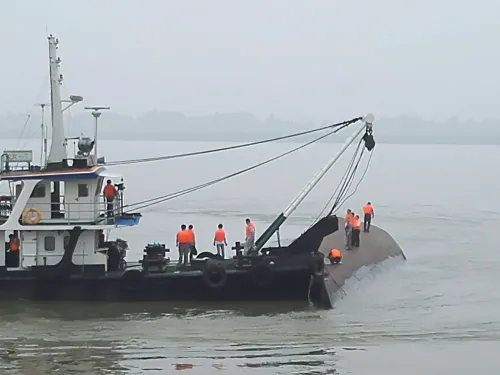
The urgency is underscored by the MSC Elsa 3 disaster. The container vessel sank approximately 38 nautical miles off Kochi, Kerala, on 25 May 2025 — the most consequential HNS incident in recent Indian maritime history. All 24 crew members were safely rescued. The ship was carrying 640 containers, of which 13 held hazardous noxious cargo; 12 of those are believed to have contained calcium carbide, a substance that reacts violently with seawater to produce highly flammable acetylene gas, heat, and calcium hydroxide — each posing serious risks to human health and the marine environment.
Scale of the MSC Elsa 3 Catastrophe
Beyond the chemical hazard, the vessel carried 85 tonnes of diesel, 367 tonnes of furnace oil, and thousands of sacks of raw plastic nurdles — lentil-sized pellets measuring 1–5 mm. Debris and nurdles spread across nine coastal districts in Kerala, including Alappuzha, Kollam, and Thiruvananthapuram, and drifted over 100 kilometres to Kanyakumari and parts of Tamil Nadu. By June, ocean currents had carried them as far as northern Sri Lanka.
The spill triggered a months-long fishing ban, severely impacting coastal fishing communities. Nurdles are particularly insidious: they absorb toxins, degrade into micro- and nano-plastics, and enter the marine food chain through fish and filter feeders. Total estimated damages were pegged at ₹9,531 crore — a figure disputed by the shipping company.
The Legal Gap the Incident Exposed
India's membership of the International Oil Pollution Compensation Fund, 1992, offered little relief: the Elsa 3 was not a tanker carrying oil as primary cargo, meaning pollution damage from the incident falls outside the 1992 Civil Liability and Fund Conventions. The disaster would, however, have been covered by the 2010 HNS Convention — had it been in force. The HNS Convention addresses personal injury claims, fire and explosion events, and incidents involving a wide range of hazardous substances. Once ratified and operational, it would provide compensation for clean-up operations, preventive measures, environmental monitoring, property damage, and economic losses.
India's Existing Response Framework
The ICG has served as the central coordinating authority for marine environment protection since March 1986. The National Oil Spill Disaster Contingency Plan (NOSDCP), drafted by the ICG and approved in 1993, remains the foundational national framework for oil spill preparedness. To operationalise this plan, the ICG has established four Pollution Response Centres — at Mumbai, Chennai, Port Blair, and Vadinar — that serve as frontline hubs for spill containment and response. The ICG responded promptly to the Elsa 3 incident, engaging salvors to recover containers and deploying efforts to minimise pollution from a reported oil slick extending from the vessel.
What Comes Next
The 28th NOH-CMP review is expected to yield updated protocols and inter-agency coordination frameworks. Critically, India's accession to the 2010 HNS Convention remains an unresolved policy priority — one that the Elsa 3 incident has made harder to defer. Coastal communities and industry stakeholders will be watching whether Tuesday's review translates into binding regulatory action or remains procedural.
Point of View
While procedurally significant, does not fix the underlying problem. The 2010 HNS Convention has been pending for over a decade; India's continued non-ratification means the next comparable disaster will again leave coastal communities and fishers without a clear compensation pathway. The ₹9,531 crore damages figure, disputed by the shipping company, underscores how contested these liabilities become in the absence of a treaty framework. Annual preparedness reviews are valuable, but they are not a substitute for closing the legal gap that the Elsa 3 so visibly exposed.
NationPress
28 Oct 2026
Frequently Asked Questions
What is the NOH-CMP Preparedness Review organised by the Indian Coast Guard?
It is an annual national-level review that evaluates India's readiness to respond to oil spills and hazardous and noxious substance (HNS) emergencies within the Exclusive Economic Zone. The 28th edition was held in New Delhi on 27 October 2026, chaired by ICG Director General Paramesh Sivamani, with over 80 stakeholders from ministries, ports, and the oil industry in attendance.
What happened to the MSC Elsa 3 off Kerala?
The container vessel MSC Elsa 3 sank approximately 38 nautical miles off Kochi, Kerala, on 25 May 2025. It was carrying 640 containers — 12 of which are believed to have held calcium carbide — along with 85 tonnes of diesel, 367 tonnes of furnace oil, and raw plastic nurdles. All 24 crew members were rescued, but the spill caused widespread coastal and ecological damage.
Why were the damages from the MSC Elsa 3 not covered by India's oil pollution compensation fund?
India is a member of the International Oil Pollution Compensation Fund, 1992, but that convention applies only to tankers carrying oil as cargo. The Elsa 3 was a container ship, not a tanker, so its HNS-related pollution damage fell outside the 1992 framework. The 2010 HNS Convention, which would have covered the incident, has not yet come into force.
What is the 2010 HNS Convention and why does it matter for India?
The 2010 HNS Convention is an international treaty that would provide a compensation framework for incidents involving hazardous and noxious substances at sea, covering personal injury, fire and explosion, property damage, clean-up costs, and economic losses. Had it been in force at the time of the Elsa 3 sinking, it would have provided a clear legal basis for compensation claims from affected fishing communities and coastal districts.
How far did the plastic nurdle pollution from the MSC Elsa 3 spread?
Nurdles and debris from the vessel spread across nine coastal districts in Kerala — including Alappuzha, Kollam, and Thiruvananthapuram — and drifted over 100 kilometres to Kanyakumari and parts of Tamil Nadu. By June 2025, ocean currents had carried the nurdles as far as northern Sri Lanka. The contamination forced a months-long fishing ban along affected coastlines.