Has the Congress Party Appointed Over 120 Observers for District Committee Selections?
Synopsis
In a bold step to rejuvenate its grassroots structure, the Congress Party has announced the appointment of over 120 observers across six states. This strategic initiative aims to strengthen district-level leadership and ensure transparency in the selection of party officials, reflecting Congress's commitment to rebuilding its influence in key regions.
Key Takeaways
Over 120 observers appointed by Congress.
Aims to revitalize grassroots organization.
Focus on district-level leadership.
Implementation in six key states.
Transparency and inclusivity emphasized in selection process.
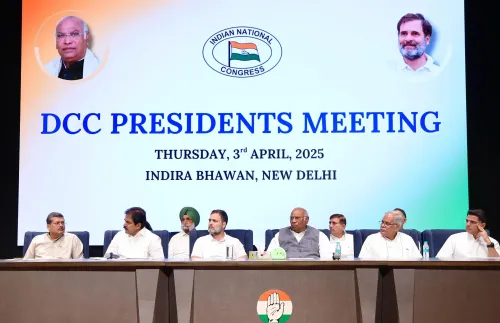
New Delhi, Jan 24 (NationPress) In a strategic initiative to rejuvenate its grassroots network amidst changing political landscapes, the All India Congress Committee (AICC) has disclosed the appointment of more than 120 AICC observers as part of its "Sangathan Srijan Abhiyan" program.
The objective of this organizational effort is to bolster district-level leadership through the election of District Congress Committee (DCC) presidents in six states: Bihar, Uttar Pradesh, Goa, Nagaland, Manipur, and Meghalaya.
In Bihar, known for its intricate caste dynamics and a robust rural voter demographic, the AICC has designated 29 observers. The list includes notable figures such as Bhajanlal Jatav, Ashok Singh, Rajesh Thakur, and others.
Uttar Pradesh, being the nation’s most populous state and a crucial arena in national politics, has been assigned the highest number of observers, with 75 AICC representatives dispersed across its districts.
Appointees from Uttar Pradesh feature prominent names like Dr Amee Yajnik, Kuldeep Indora, Sanjana Jatav, and many others.
In Goa, the Congress has appointed three observers — Dr N. Raghuveera Reddy, Vijay Inder Singla, and Ms Shobha Oza — to enhance the party’s organizational footprint in the coastal area.
Meghalaya will see 10 observers, including Bharatsinh Solanki and Ashok Tanwar, while Manipur will be overseen by nine observers, addressing its ethnic complexities and security issues.
Similarly, Nagaland will have nine observers assigned.
Each observer is tasked with overseeing a specific district and will collaborate with Pradesh Congress Committee (PCC) observers to facilitate and accelerate the DCC president selection process, ensuring transparency and inclusivity in the party’s internal democracy.
The Sangathan Srijan Abhiyan is a part of a broader strategy by Congress to rebuild its grassroots cadre, particularly in regions where recent electoral challenges have revealed the necessity for enhanced leadership and organizational unity.
By deploying experienced party officials, the Congress leadership seeks to tackle local issues, promote unity, and prepare the organization for future Assembly and national elections.
According to party insiders, this initiative will focus on consensus-driven and merit-based selections, potentially transforming the party's organizational strength across these politically diverse territories.
Point of View
The Congress Party's initiative to appoint over 120 observers highlights its strategy to strengthen grassroots leadership in key states. This move reflects an awareness of the need for organizational cohesion following electoral setbacks, and it aims to address local issues while preparing for upcoming elections.
NationPress
27 Sept 2026
Frequently Asked Questions
What is the Sangathan Srijan Abhiyan?
The Sangathan Srijan Abhiyan is an initiative by the All India Congress Committee aimed at revitalizing grassroots organization and strengthening district-level leadership.
How many observers have been appointed by Congress?
The Congress Party has appointed over 120 observers across six states as part of its organizational efforts.
Which states are involved in this initiative?
The states involved are Bihar, Uttar Pradesh, Goa, Nagaland, Manipur, and Meghalaya.
What is the purpose of appointing these observers?
The purpose is to oversee the selection of District Congress Committee presidents and ensure transparency and inclusivity in the party's internal processes.
Who are some of the notable observers appointed?
Notable observers include Dr Amee Yajnik, Bhajanlal Jatav, and Ashok Singh among others.