Are Congress Policies Hurting Party Veterans Who Established Regional Foundations?

Synopsis
In a candid revelation, veteran Congress leader Abdul Mannan highlights the disconnect between party leadership and the common citizen's concerns. His loyalty to the Gandhi family persists despite frustrations over party decisions. This article dives deep into the internal struggles within Congress and the impact on seasoned leaders.
Key Takeaways
Disconnect between leadership and citizens' concerns Challenges faced by experienced leaders within the party Loyalty to the Gandhi family remains strong Need for revitalized focus on pressing issues like unemployment Internal party changes raising concerns among veterans
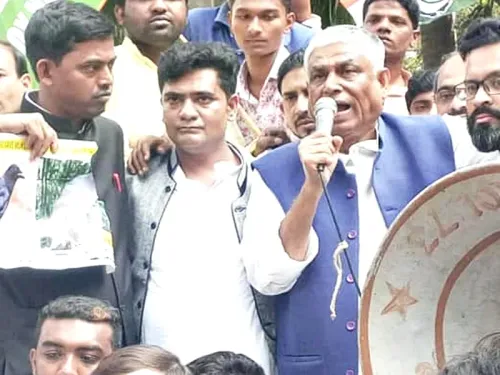
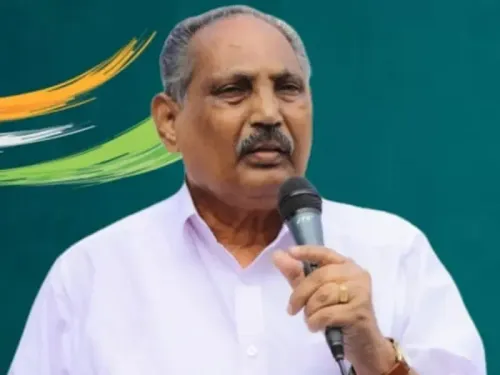
New Delhi, Dec 3 (NationPress) The leadership of the Congress party is focusing on issues that are significantly disconnected from the real concerns of ordinary citizens, inadvertently aiding the ruling party—both in West Bengal and at the Central level—according to a lamentation from a seasoned leader within the state unit. Abdul Mannan, who served as the last Leader of Opposition in the West Bengal Assembly from 2016 to 2021, has expressed his frustration stemming from a series of events where he faced consequences for his staunch opposition to the ruling Trinamool Congress and his personal faith.
Despite these grievances, Mannan remains loyal to the Gandhi family. He stated, "You have to recognize that the Gandhi family still draws crowds that no state leader can match; however, those numbers at rallies do not always convert into votes."
Mannan raised pertinent questions regarding the 'Bharat Jodo Yatra', asking how it resonates with everyday citizens who wonder if the initiative implies that the nation is physically divided. He questioned why the focus isn't on pressing issues such as rising prices and unemployment.
The 78-year-old leader has also voiced concerns over other recent initiatives like the 'Nyay Yatra' and 'Samvidhan Bachao Yatra', criticizing the party's choice of "unknown, inexperienced" individuals to represent it nationally, leading to poor decision-making. Another veteran from Bihar, Shakeel Ahmad, recently stepped down, echoing similar sentiments about party management and leadership appointments.
Ahmad has remarked that experienced leaders often face humiliation within the party, yet he continues to uphold the principles of Congress. Mannan, too, reiterated his commitment to party ideology despite the current circumstances.
He has borne the consequences of his opposition to the Trinamool and the personal challenges of his faith. In an unusual turn, after being nominated for the Rajya Sabha from West Bengal, the Congress party requested Mannan to withdraw his candidacy in March 2012. While the official reasoning cited a lack of sufficient MLAs for his victory, the underlying issue was also due to the alliance with Mamata Banerjee's Trinamool Congress.
Mannan explained that he complied as a "disciplined soldier of Congress" under the directives of his party leadership. Recently, the Congress made a similar move by replacing its Pradesh Congress Committee (PCC) President Adhir Ranjan Chowdhury with Subhankar Sarkar. While Chowdhury has been a consistent adversary to Mamata, Sarkar is perceived as more accommodating.
A confidant of Mannan claimed he was never appointed as PCC chief due to concerns about his religion, fearing accusations of "Muslim appeasement" from the BJP. A former Congress general secretary once suggested that if Mannan were given that position, all Congress members would join the BJP. Mannan chose not to confirm or deny this claim.
He recounted that in 2005, he informed Indira Gandhi, in front of top leaders, that despite SC, ST, and minority communities placing their trust in Congress, no party organization was led by their representatives. He believes that while the Gandhis are receptive to logic, they remain inaccessible due to the mechanisms controlled by others. "The party is at a critical juncture; it is drifting away from the masses and their needs," he lamented. When asked if he would consider new opportunities like many former colleagues, he firmly responded, "I will always be a ‘Congressman’, wherever I go."
Point of View
The internal conflicts within the Congress party reflect a broader issue of disconnect between leadership and grassroots realities. While the party's historical significance remains, its ability to address contemporary challenges is crucial for its survival and relevance in Indian politics.
NationPress
22 Sept 2026
Frequently Asked Questions
What are the main concerns raised by Abdul Mannan?
Abdul Mannan has expressed concerns that Congress leadership is disconnected from the real issues faced by citizens, focusing on rallies rather than pressing concerns like unemployment and inflation.
How does Mannan feel about the Gandhi family?
Despite his criticisms, Mannan expresses loyalty to the Gandhi family, recognizing their ability to draw crowds, although he questions their effectiveness in translating that into votes.
What recent changes have occurred within the Congress party?
Recent changes include the replacement of PCC President Adhir Ranjan Chowdhury with Subhankar Sarkar, a move that has raised eyebrows among party veterans.