Congress faces alliance cracks, internal splits ahead of UP and Punjab polls
Synopsis
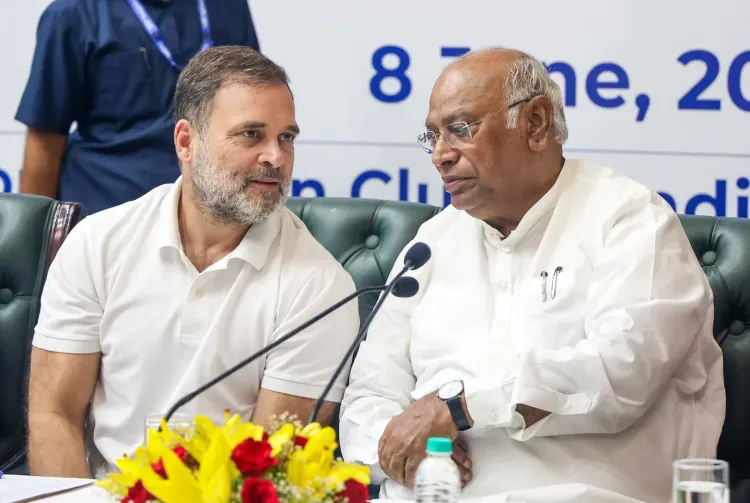
With UP and Punjab Assembly elections approaching, the Congress is simultaneously fighting a seat-share war with ally SP and a full-blown internal revolt in Punjab — a double crisis that echoes the factionalism that cost the party in Madhya Pradesh and Rajasthan. Whether the high command can hold both fronts will define the party's revival prospects.
Key Takeaways
Congress and Samajwadi Party (SP) are locked in a seat-sharing dispute over 403 Uttar Pradesh Assembly seats despite being INDIA bloc partners.
Congress MP Imran Masood alleged the SP has consistently failed to support influential Muslim leaders, sharpening the rift.
Congress state in-charge Rajendra Pal Gautam has demanded an equal seat share; his reported visit to BSP chief Mayawati was read as a pressure tactic against the SP.
In Punjab, the high command's decision to retain Amarinder Singh Raja Warring as PPCC chief has triggered dissent from Charanjit Singh Channi , Sukhjinder Singh Randhawa , and other senior leaders.
AICC General Secretary Bhupesh Baghel is touring Punjab to defuse the crisis after dissident leaders reportedly refused to accept Warring's leadership at a meeting last weekend.
The pattern mirrors earlier factional crises in Madhya Pradesh , Rajasthan , and Karnataka that weakened the party's electoral performance.
The Indian National Congress (INC) is heading into the upcoming Uttar Pradesh and Punjab Assembly elections burdened by twin crises: a fractious seat-sharing standoff with its own INDIA bloc partner in UP and deepening factional warfare within its Punjab unit. The pattern mirrors the internal turbulence that has repeatedly undermined the party in Madhya Pradesh, Rajasthan, and Karnataka in recent election cycles.
UP: Congress and SP at loggerheads over seat share
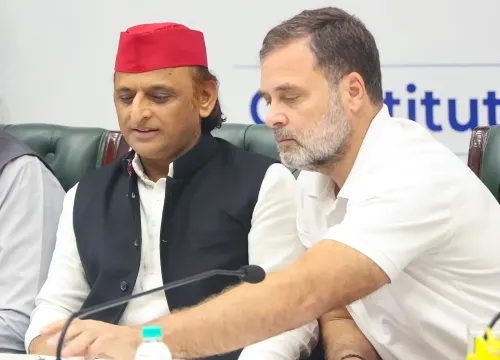
In Uttar Pradesh, where all 403 Assembly seats are at stake, the Congress and the Samajwadi Party (SP) — partners in the INDIA bloc — are engaged in a war of attrition over their respective electoral footprints. Despite the two parties recording an improved combined performance in the 2024 Lok Sabha elections, ground-level negotiations over seat distribution have grown increasingly tense.
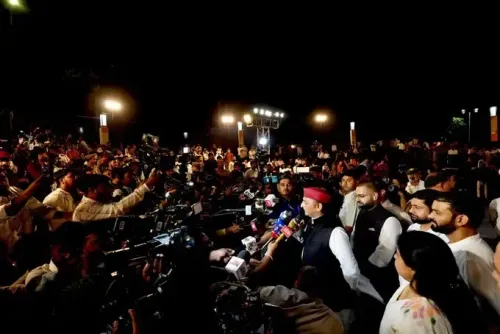
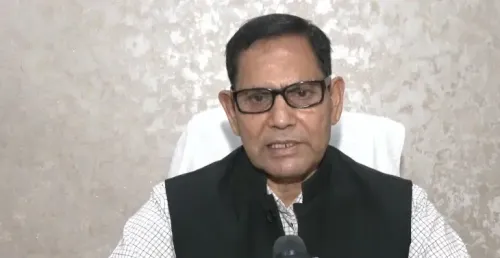
Congress MP from Saharanpur Imran Masood escalated the friction by alleging that the SP has consistently failed to back influential Muslim leaders — a pointed charge given that both parties have long competed for minority community votes. The SP, for its part, has been consolidating its base around chief Akhilesh Yadav's 'PDA' plank — an acronym for 'Pichde' (Backward Classes), Dalits, and 'Alpsankhyak' (Minorities), with Yadav at times substituting 'Aadhi Aabadi' (women) for the 'A' in the formulation.
Newly appointed Congress state in-charge Rajendra Pal Gautam has signalled that the party will seek an equal share of seats, hardening the Congress's negotiating position. His reported visit to the residence of Bahujan Samaj Party (BSP) chief Mayawati was widely read as a pressure tactic in seat-sharing talks with the SP — and as a Dalit outreach move that directly challenges the SP's PDA narrative.
Punjab: High command's Warring decision triggers senior revolt
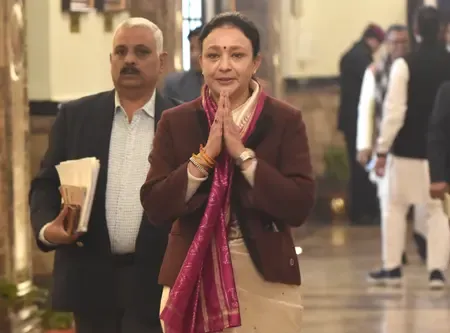
In Punjab, the Congress's internal fault lines have widened following the central leadership's decision to retain Amarinder Singh Raja Warring as Punjab Pradesh Congress Committee (PPCC) chief. The call came after a three-member observer panel — appointed by Congress President Mallikarjun Kharge and led by Ajay Maken, with Meenakshi Natarajan and Bhajan Lal Jatav — submitted its assessment of the state's political and organisational situation to the party leadership.
The panel had been constituted to review Punjab's landscape following the Congress's poor showing in local body elections and conflicting internal surveys over whether Warring should be replaced. The decision to keep him in place reportedly angered Jalandhar MP Charanjit Singh Channi and senior leader Sukhjinder Singh Randhawa, both of whom have expressed dissatisfaction. Several other senior figures are reportedly rallying behind Channi.
At a meeting convened last weekend by AICC General Secretary in-charge of Punjab Bhupesh Baghel, dissident leaders reportedly made clear they would not accept Warring's authority. Baghel is currently touring the state in an effort to contain the crisis.
Punjab's electoral landscape: Opportunity amid disorder
The ruling Aam Aadmi Party (AAP), led by Chief Minister Bhagwant Mann, won several municipal wards in recent local body elections but is facing anti-incumbency sentiment. The Shiromani Akali Dal (SAD) remains weakened after its 2022 rout, with limited urban reach, while the Bharatiya Janata Party (BJP) is pushing to expand its urban footprint. A potential SAD-BJP alliance could consolidate anti-AAP votes, complicating the Congress's calculus. Despite its internal divisions, the Congress could still benefit from anti-incumbency if it presents a united front and leverages its traditional support among Hindus, certain Dalit communities, and sections of the Jat Sikh electorate.
A recurring pattern: Factionalism across state units
The current crises are not aberrations — they reflect a structural pattern. In Madhya Pradesh, factional battles between leaders such as Kamal Nath and Digvijaya Singh have repeatedly surfaced, undermining the party's ability to project unity. In Rajasthan, a prolonged power struggle between Ashok Gehlot and Sachin Pilot at times threatened the stability of the state government before contributing to the party's loss of power. In Karnataka, differences between Siddaramaiah and D.K. Shivakumar have periodically complicated the party's political strategy, even as the Congress holds government there.
These recurring episodes have not only weakened state units but have also eroded public confidence in the party's ability to remain cohesive against the BJP. The high command's repeated interventions to mediate disputes underscore both the persistence of factionalism and the difficulty of balancing regional leadership ambitions with central authority. As the Congress prepares for the next round of electoral battles, its capacity to manage these divisions will be the most consequential test of its organisational recovery.
Point of View
Using a BSP visit as a negotiating lever against the SP is tactically clever but strategically risky: it signals unreliability to a partner the Congress needs more than it admits. In Punjab, the Warring decision illustrates the central leadership's tendency to prioritise organisational control over ground-level feedback, even when internal surveys and local body results are sending clear distress signals. The recurring pattern across MP, Rajasthan, and Karnataka suggests this is not a management problem that can be fixed by sending another observer panel — it is a deeper question about whether the Congress has the internal democratic mechanisms to resolve leadership contests without fracturing every time.
NationPress
12 Oct 2026
Frequently Asked Questions
Why are Congress and SP fighting despite being INDIA bloc allies in Uttar Pradesh?
Both parties are competing for a larger share of the 403 Uttar Pradesh Assembly seats, with Congress demanding equal seat distribution while SP consolidates around its PDA coalition. The friction has been sharpened by Congress MP Imran Masood's allegation that the SP has consistently failed to support influential Muslim leaders, a community both parties depend on electorally.
Who is Rajendra Pal Gautam and what role is he playing in UP?
Rajendra Pal Gautam is the newly appointed Congress state in-charge for Uttar Pradesh. He has signalled that the Congress will seek an equal share of Assembly seats and his reported visit to BSP chief Mayawati's residence has been interpreted as a pressure tactic in seat-sharing negotiations with the SP, as well as a Dalit outreach move.
What triggered the Congress leadership crisis in Punjab?
The crisis was triggered by the central leadership's decision to retain Amarinder Singh Raja Warring as Punjab Pradesh Congress Committee (PPCC) chief, following a review by a three-member observer panel appointed by Congress President Mallikarjun Kharge. The decision upset Jalandhar MP Charanjit Singh Channi, senior leader Sukhjinder Singh Randhawa, and others who had sought a leadership change.
How does the current Congress crisis compare to earlier state-level rifts?
The pattern closely mirrors factional battles in Madhya Pradesh between Kamal Nath and Digvijaya Singh, the Gehlot-Pilot power struggle in Rajasthan that contributed to the party losing government, and ongoing tensions between Siddaramaiah and D.K. Shivakumar in Karnataka. Each episode has weakened state units and eroded public confidence in the party's organisational cohesion.
What is the Congress's path to recovery in Punjab despite internal divisions?
Political observers note that the ruling AAP faces anti-incumbency sentiment and the SAD remains weakened after 2022. If the Congress can present a united front, it could leverage its traditional support base among Hindus, certain Dalit communities, and sections of the Jat Sikh electorate to benefit from voter dissatisfaction with the incumbent government.