Will Karnataka's Internal Strife Undermine Congress's Influence in Southern Alliances?
Synopsis
The ongoing leadership conflict within Congress in Karnataka poses a significant threat to its bargaining power and credibility in southern political alliances. As the party seeks to navigate its internal struggles, the upcoming elections in Tamil Nadu could test the strength of its coalition with the DMK, making the situation critical for Congress's future.
Key Takeaways
Leadership conflict in Karnataka poses risks for Congress.
Internal strife could weaken coalition bargaining power .
DMK remains the dominant force in Tamil Nadu.
Congress's role in the alliance is as a junior partner.
Resolving internal disputes is essential for future elections.
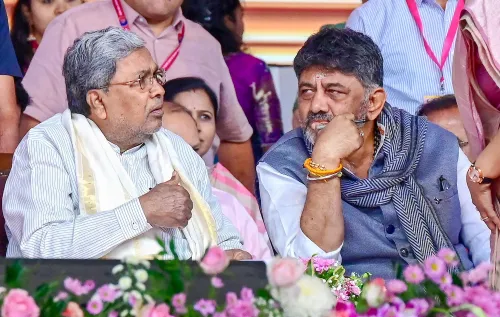
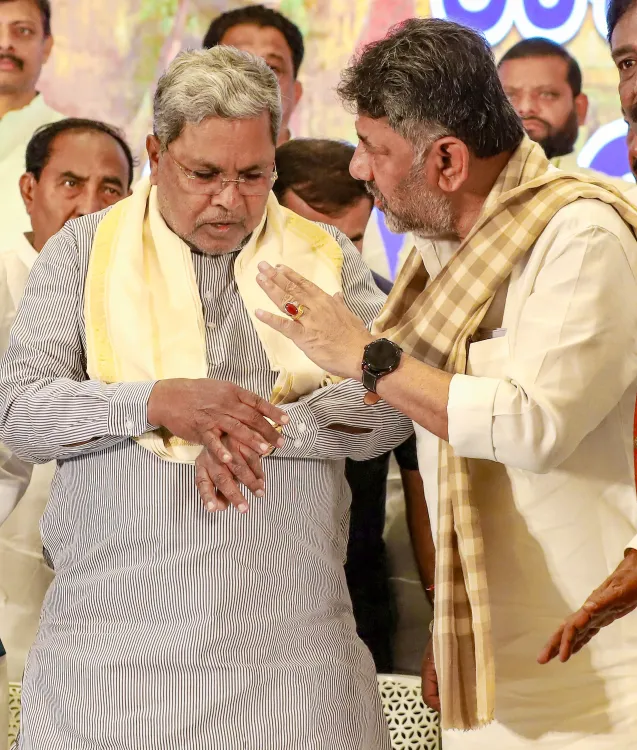
New Delhi, January 15 (NationPress) As the Congress party navigates a leadership conflict in Karnataka between Chief Minister Siddaramaiah and Deputy CM D. K. Shivakumar, it is reportedly considering a power-sharing deal with the Dravida Munnetra Kazhagam (DMK) in Tamil Nadu. This ongoing discord in Karnataka highlights the party's internal struggles, which could diminish Congress's bargaining strength and credibility within southern coalitions.
The long-standing factionalism within Congress extends to states like Rajasthan and Madhya Pradesh, leading to negative repercussions in subsequent elections.
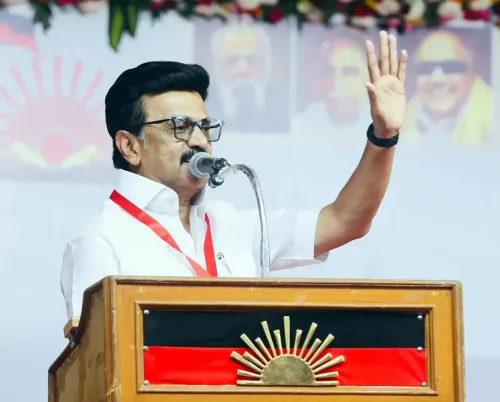
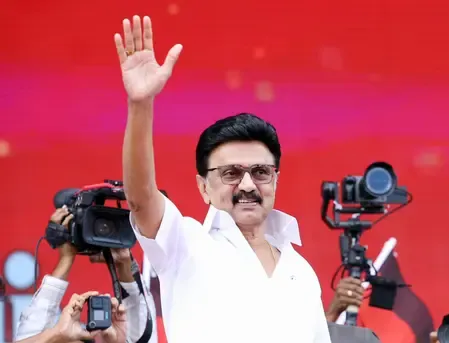
In Tamil Nadu, where elections are anticipated soon, the DMK remains the primary force and the largest component of the ruling Secular Progressive Alliance (SPA). During the 2021 Assembly elections, the M. K. Stalin-led DMK secured 133 seats out of the state’s total 234 Assembly seats, while Congress managed to win just 18 seats. Other coalition partners accounted for the remaining seats, underscoring Congress’s role as a junior partner under DMK's leadership.
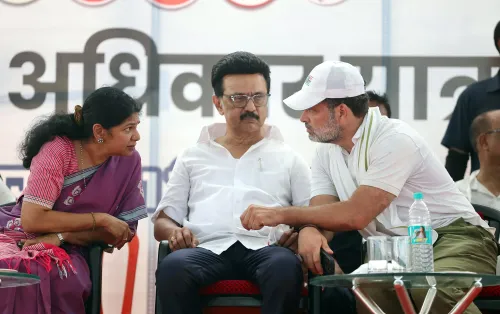
Despite acknowledging its reliance on this coalition, Congress is reportedly advocating for increased representation in government, such as ministerial roles. While Congress currently governs independently in Karnataka, the DMK sets the rules in Tamil Nadu, where the ongoing leadership disputes further complicate Congress's negotiating stance.
The Congress high command encounters a significant challenge in resolving the situation in Bengaluru, where the rivalry between Siddaramaiah and Shivakumar evolves from a proposed 2.5-year rotational agreement for the Chief Minister position.
In 2023, Congress regained power in Karnataka under Siddaramaiah’s leadership, heavily depending on Shivakumar’s organizational capabilities. Siddaramaiah is bolstered by support from minorities, backward classes, and Dalits, while Shivakumar, a Vokkaliga leader, represents one of Karnataka's most prominent agrarian communities. His wealth, business ties, and resource mobilization skills render him a key organizational force within the party. The Congress leadership's attempt to appease both leaders risks alienating them instead.
Both political heavyweights are reportedly seeking clarification from Rahul Gandhi, who appears reluctant to expedite a resolution, reminiscent of past internal issues elsewhere. Congress President Mallikarjun Kharge, a seasoned politician from Karnataka, has been designated to tackle this challenge.
As the Congress central leadership is perceived to be stalling, the ongoing tussle in Bengaluru threatens to disrupt governance, with rumors of a cabinet reshuffle only exacerbating the situation. This internal strife portrays the party as incapable of managing its leaders, thus undermining any potential leverage in Tamil Nadu.
The DMK's dominance secures alliance stability, where even a slight indication of a fracture could destabilize Congress in Tamil Nadu. The DMK is likely to exploit the internal conflict to justify limiting Congress's role rather than allowing its partner to dictate terms.
For future alliances, especially in states preparing for elections, Congress's stability hinges on its ability to project discipline. Any perception of disorder could jeopardize its southern strategy ahead of national elections. Although the turmoil in Karnataka highlights Congress’s factional hurdles, the DMK-led alliance in Tamil Nadu remains structurally solid. However, Congress's credibility in negotiations may suffer if the situation in Karnataka remains unresolved, potentially diminishing its influence in Tamil Nadu's power-sharing discussions.
Point of View
The ongoing leadership struggle within the Congress party highlights its vulnerabilities, particularly in a politically dynamic region like southern India. The ability to maintain cohesion and effectively manage internal disputes will be critical for Congress as it seeks to strengthen its alliances and influence in upcoming elections. An effective resolution to the Karnataka conflict could determine the party's fate in Tamil Nadu and beyond.
NationPress
7 Oct 2026
Frequently Asked Questions
What is the current leadership conflict in Karnataka?
The leadership conflict in Karnataka involves Chief Minister Siddaramaiah and Deputy CM D. K. Shivakumar, creating internal strife within the Congress party that could impact its political alliances.
How could this conflict affect Congress's position in Tamil Nadu?
The ongoing infighting may weaken Congress's bargaining power and credibility in its alliance with the DMK, which is crucial for upcoming elections.
What is the significance of the DMK in Tamil Nadu?
The DMK is the dominant political force in Tamil Nadu, having secured a majority of Assembly seats in the last elections, making Congress a junior partner in their coalition.
What challenges does Congress face in resolving this conflict?
Congress faces challenges in appeasing both Siddaramaiah and Shivakumar while maintaining party unity and effectively negotiating with the DMK.
What are the potential implications for future elections?
The ability of Congress to project discipline and resolve internal conflicts will be crucial for its success in future elections, particularly in southern states.