How Has Cultural Erosion and Extremism Normalised in Bangladesh?

Synopsis
The gradual rise of religious extremism in Bangladesh poses a significant threat to cultural pluralism, undermining decades of shared heritage. This article explores the alarming shift towards intolerance and the urgent need for societal reform to restore harmony and protect minority rights.
Key Takeaways
Religious extremism in Bangladesh has grown gradually through cultural delegitimization.
Historical distortions impact the younger generation's understanding of their identity.
Communal coexistence is deteriorating due to increased hate speech and violence.
Over 2,900 instances of minority persecution reflect systemic failures.
Restoring harmony requires commitment to education and cultural respect.
Dhaka: The emergence of religious extremism in Bangladesh has been a gradual process. It has unfolded over years through historical distortions, cultural undermining, and the systematic substitution of pluralistic values with rigid identity politics.
Throughout the 1990s, students in Bangladesh encountered increasingly twisted historical narratives asserting that Rabindranath Tagore appropriated the melody of the national anthem, that Bengali culture was incompatible with Islam, and that traditional celebrations bore Hindu influences. With limited access to reliable information, these claims often went unchallenged.
As the years progressed, the emphasis shifted from personal beliefs to a collective identity. Bengali celebrations like Pohela Boishakh and Mangal Shobhajatra were recast as threats to Islamic culture, despite the inherent diversity within Islamic traditions across various regions. Cultural expressions such as music, dance, poetry, and folk traditions were branded as sinful. Attacks on Baul communities occurred, shrines were desecrated, and folk gatherings were supplanted by the thriving “Waj” business.
This transformation did not enhance faith; rather, it constricted society.
A populace increasingly distanced from its cultural heritage became uncertain of its identity, making it susceptible to simplistic moral dichotomies of 'halal' and 'haram'. Religion morphed into a tool for control instead of introspection.
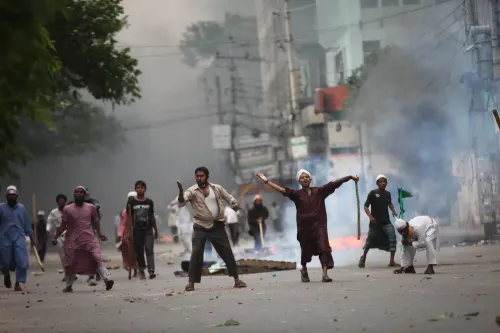
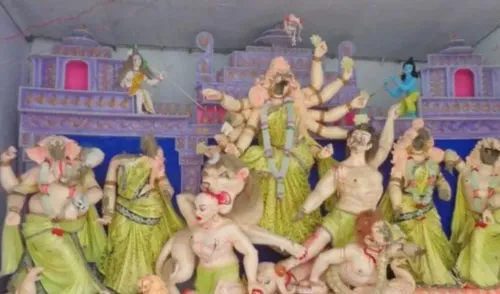
The social ramifications have been profound. The fabric of communal harmony has steadily unraveled. Participation in non-Muslim celebrations was initially discouraged, then condemned. Hate speech against minorities became commonplace, and violent acts were rationalized as reactions to “religious insults.” Temples were attacked, idols destroyed, and families displaced.
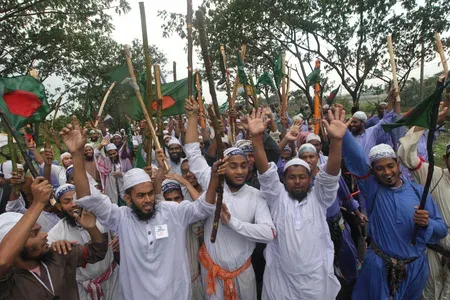
Following the so-called July revolution in 2024, this trend has escalated. Extremist factions have gained visibility and legitimacy, and hate preachers operate with minimal constraints. Minorities, women, cultural practitioners, and dissenters have found themselves increasingly vulnerable.
Over 2,900 reported instances of minority persecution highlight not isolated events but a systemic failure — a failure to uphold pluralism, the rule of law, and equal citizenship.
One particularly alarming incident was the murder of Dipu Chandra Das, who was burned alive following accusations of religious insult last month. The brutality of this act, coupled with the rapid justification of it in public discourse, illustrates how drastically social norms have shifted — from a presumption of innocence to collective punishment.
The most tragic aspect of this shift lies in its contradictions. A faith that advocates compassion is being leveraged to justify cruelty. A religion that is meant to emphasize justice is invoked to excuse injustice. Furthermore, a society that once celebrated its diversity is being transformed into one that fears it.
Extremism doesn't dismantle societies abruptly; it operates slowly — by redefining norms, silencing dissent, narrowing acceptable thoughts, and rewarding conformity over conscience.
If Bangladesh aims to maintain its social cohesion, responses must extend beyond mere policing and prohibition. It requires a commitment to rebuilding trust in education, reviving respect for cultural heritage, safeguarding minority rights, and reaffirming that citizenship is not contingent upon belief.
Pluralism is not a threat to faith; it serves as its ethical bedrock. A society that neglects this risks losing not just its harmony, but its humanity.
(The writer is a political analyst and an independent commentator. The views expressed are personal.)
Point of View
I emphasize the importance of addressing the alarming rise of extremism in Bangladesh. This issue transcends political agendas; it is about preserving the rich tapestry of our society. Our approach must be rooted in national unity, fostering understanding and respect for all cultural identities.
NationPress
26 Sept 2026
Frequently Asked Questions
What factors contributed to the rise of religious extremism in Bangladesh?
The rise of religious extremism in Bangladesh is attributed to years of cultural delegitimization, distortion of history, and the systematic replacement of pluralistic values with rigid identity politics.
How has cultural expression been affected by extremism?
Cultural expressions such as music, dance, and traditional festivals have been labeled sinful, leading to attacks on cultural communities and the suppression of diverse artistic practices.
What are the consequences of the shift towards extremism?
The shift towards extremism has led to the deterioration of communal coexistence, increased hate speech against minorities, and justified violence in the name of religion.
What can be done to combat extremism in Bangladesh?
Combating extremism requires a multifaceted approach, including rebuilding trust in education, restoring respect for cultural heritage, protecting minority rights, and reaffirming that citizenship is not contingent on belief.
Why is pluralism important for society?
Pluralism serves as the ethical foundation of faith and is essential for maintaining social harmony, fostering understanding, and celebrating diversity within society.