Bangladesh minorities face violence, land grabs and Islamist pressure: Report
Synopsis
A report in Eurasia Review warns that minority communities in Bangladesh — Hindus, Buddhists, and Christians — face not random communal violence but an organised pattern of intimidation, land grabs, and displacement allegedly linked to Islamist networks. With minority populations declining sharply over decades and concerns mounting over Jamaat-e-Islami's ideological ties to Pakistan, the report frames this as a strategic risk for South Asia, not just a domestic human-rights issue.
Key Takeaways
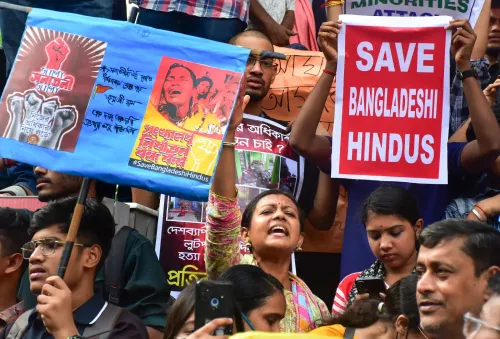
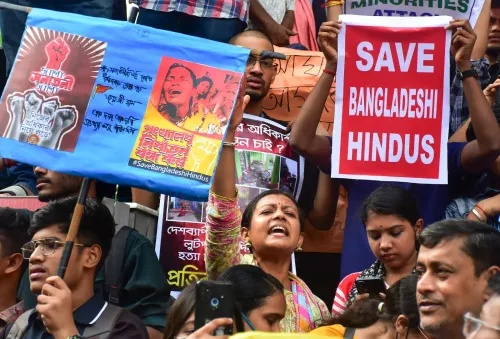
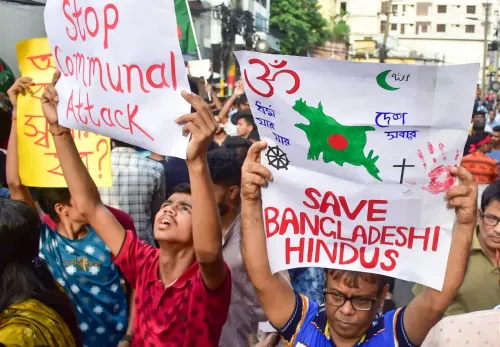
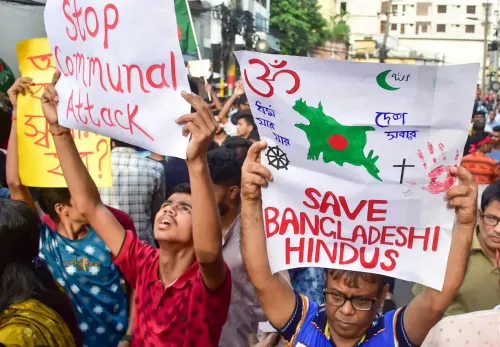
Hindu, Buddhist, and Christian minorities in Bangladesh face ongoing violence, land encroachment, and organised intimidation, according to a Eurasia Review commentary by Ashu Mann .
Communal attacks reportedly intensify during periods of political unrest or following blasphemy-related rumours, creating sustained fear across multiple districts.
Land is identified as a key driver — minority families are allegedly coerced off ancestral property through intimidation and violence.
Bangladesh's minority population, particularly Hindus, has declined sharply over decades, linked to repeated cycles of targeted insecurity and inadequate legal protection.
Jamaat-e-Islami is alleged to have ideological and operational links to Pakistan -backed Islamist networks, raising concerns about deepening radicalisation.
The report frames minority protection in Bangladesh as a South Asia -wide strategic concern, not solely a domestic issue.
Hindu, Buddhist and Christian minority communities in Bangladesh are living under growing fear amid documented incidents of violence, land encroachment, and organised social intimidation allegedly linked to Islamist networks, according to a report that warns religious minorities in several parts of the country face sustained and systematic pressure.
A Pattern Beyond Isolated Incidents
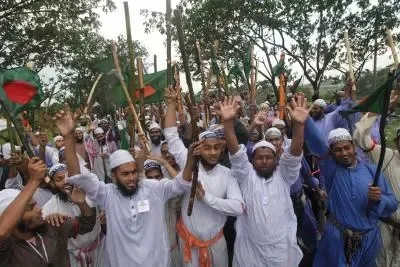
According to a commentary published in Eurasia Review by analyst Ashu Mann, violence against minorities in Bangladesh is not confined to sporadic communal flare-ups. The piece argues it reflects a deeper, more organised pattern of coercion in which homes, shops, temples, and monasteries are repeatedly targeted, leaving residents feeling unsafe and increasingly exposed.
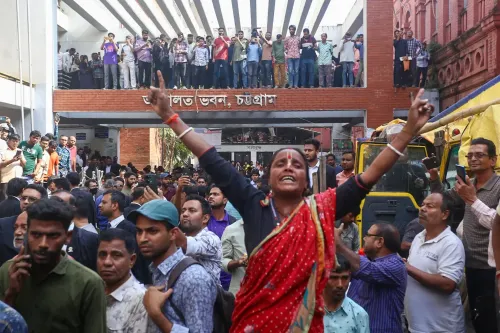
The report notes that such incidents have surfaced across multiple districts over the years, often coinciding with periods of political unrest or following rumours tied to blasphemy allegations or religious tensions — creating what it describes as an atmosphere of persistent fear and uncertainty for minority families.
Land Grab as a Pressure Tactic
A central concern raised in the report is the role of land. Organised intimidation and communal violence are allegedly deployed as pressure tactics to force minority families off ancestral property, which is then occupied or transferred illegally. The commentary describes this as a long-term pattern that has steadily eroded both the economic security and community confidence of minorities across several regions.
Attacks on religious sites — temples and monasteries — are also highlighted as carrying a severe psychological impact beyond physical destruction, reinforcing fears over religious freedom and equal citizenship.
Demographic Decline Linked to Cycles of Insecurity
The report points to a sharp decline in Bangladesh's minority population — particularly Hindus — over the decades. It links this demographic shift to repeated cycles of targeted violence, insecurity, and the absence of adequate legal or institutional safeguards. Citing past communal incidents, the commentary notes that several attacks altered local demographics and strained grassroots social relations, with many families reportedly choosing migration over continued uncertainty.
Jamaat-e-Islami and Regional Security Concerns
The Eurasia Review piece raises concerns over alleged ideological and operational links between Jamaat-e-Islami and Pakistan-backed Islamist networks, warning that such ties could deepen radicalisation and erode Bangladesh's pluralistic traditions. For India, the report frames the issue as not merely a human-rights concern but a strategic one — arguing that the documented hostility of Jamaat-e-Islami toward secular norms and minorities, combined with its longstanding ideological connections to Pakistan, risks making Bangladesh a more permissive environment for extremist networks.
Wider Implications for South Asia
The commentary concludes that the situation extends well beyond Bangladesh's domestic politics, carrying strategic implications for the broader South Asia region. It stresses that protecting minority rights, ensuring accountability, and preserving communal harmony remain essential conditions for long-term peace and regional stability. Whether Bangladesh's current political environment can deliver on those conditions, critics argue, remains an open question.
Point of View
Not an independent field investigation, and that distinction matters when evaluating its claims about organised Islamist coordination. That said, the broad trajectory it describes — a declining minority population, recurring communal violence around political flashpoints, and land-grab patterns — is corroborated by longer-term demographic data and human-rights documentation from multiple sources. The framing of Jamaat-e-Islami's Pakistan links as a regional security threat for India is analytically significant but risks conflating domestic minority protection failures with a cross-border extremism narrative. The harder question mainstream coverage avoids is institutional: why have successive Bangladeshi governments — including secular ones — failed to deliver credible legal safeguards for minorities? Without that accountability lens, the story risks becoming geopolitical commentary rather than a driver of change.
NationPress
23 Sept 2026
Frequently Asked Questions
What does the report say about minority communities in Bangladesh?
The report, published as a commentary in Eurasia Review, says Hindu, Buddhist, and Christian minorities in Bangladesh face an organised pattern of violence, land encroachment, and intimidation allegedly linked to Islamist networks. It warns that vulnerable religious groups continue to live under fear across several districts.
Why is land identified as a central issue in attacks on minorities?
According to the report, organised intimidation and communal violence are allegedly used as pressure tactics to force minority families off ancestral land, which is then occupied or transferred illegally. The commentary describes this as a long-term pattern that has eroded both economic security and community confidence.
How has Bangladesh's minority population changed over the decades?
The report links a sharp decline in Bangladesh's minority population — especially Hindus — to repeated cycles of targeted violence, insecurity, and the absence of adequate legal protections. Many families have reportedly chosen migration over continued uncertainty.
What concerns does the report raise about Jamaat-e-Islami?
The Eurasia Review commentary alleges ideological and operational links between Jamaat-e-Islami and Pakistan-backed Islamist networks, warning this could deepen radicalisation and weaken Bangladesh's pluralistic traditions. It frames these links as a strategic concern for India and the wider South Asia region.
Why does the report say this matters beyond Bangladesh's borders?
The commentary argues that minority persecution in Bangladesh carries wider strategic implications for South Asia, particularly for India. It contends that a more permissive environment for extremist networks in Bangladesh — driven by Jamaat-e-Islami's alleged Pakistan ties — poses risks that extend well beyond a domestic human-rights issue.