824 minority rights violations in Bangladesh in H1 2025: HRCBM report
Synopsis
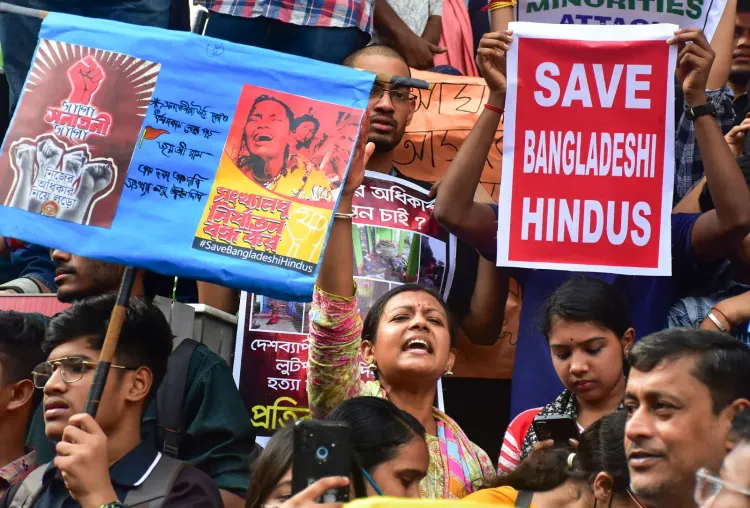
A leading minority rights body has documented 824 rights violations against religious and ethnic minorities across 63 of Bangladesh's 64 districts in just six months — spanning murders, sexual violence, temple attacks, and land grabs. The near-total geographic spread, the HRCBM argues, makes this impossible to dismiss as isolated criminal activity, and points instead to a systemic protection failure.
Key Takeaways
The HRCBM documented 824 incidents of minority rights violations in Bangladesh between January and June 2025 .
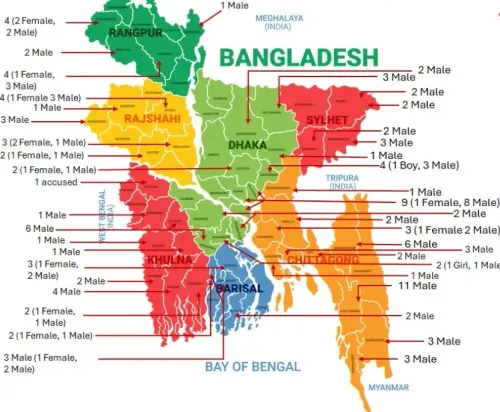
Violations were recorded in 63 of Bangladesh's 64 districts , covering murders, kidnappings, sexual violence, temple attacks, arson, and land grabbing.
41 incidents of rape or sexual violence targeting minority women and girls were documented during the period.
Indigenous communities — including Chakma and Tripura communities in the Chittagong Hill Tracts — faced killings, abductions, and land-related conflict.
The HRCBM has called for an independent national inquiry and a centralised minority-rights incident monitoring mechanism.
The Human Rights Congress for Bangladesh Minorities (HRCBM) on Thursday, 30 July released a report documenting 824 incidents of human-rights violations targeting religious and ethnic minority communities across 63 of Bangladesh's 64 districts in the first six months of 2025. The report, titled The Persecution Continues: Minority Communities Under Sustained Attack in Bangladesh, covers incidents recorded between January and June 2025 and spans murders, kidnappings, sexual violence, temple attacks, land grabbing, arson, and blasphemy-related persecution.
Scale and Geographic Spread
The HRCBM's findings reveal that violence against minorities is neither localised nor episodic. According to the report, property attacks, land grabbing, arson, and looting were documented in 57 districts; kidnapping and physical assault in 55 districts; murders and mysterious deaths in 53 districts; and attacks on temples and religious institutions in 49 districts.
'The geographic breadth, frequency, and recurring nature of these incidents demonstrate that the insecurity facing Bangladesh's minority communities cannot reasonably be characterised as a collection of isolated local disputes or ordinary criminal acts,' the HRCBM stated in its report.
Violence Against Minority Women and Girls
The report highlights a particularly disturbing pattern of gender-based violence. The HRCBM documented 41 incidents of sexual violence, rape, or gang rape during the reporting period, affecting minority women and girls. These cases include rape, attempted rape, sexual harassment, child sexual abuse, abduction-related concerns, and allegations involving coercive marriage or religious conversion.
Indigenous Communities Under Threat
The HRCBM also flagged multiple incidents affecting indigenous and ethnic minority communities — including members of the Chakma, Tripura, and other communities — particularly in the Chittagong Hill Tracts (CHT). Documented violations include killings, abductions, physical assault, threats, political intimidation, and land-related conflict.
'The vulnerability of Indigenous peoples in Bangladesh is shaped not by a single form of discrimination, but by the intersection of ethnic identity, ancestral land rights, and political representation,' the report noted, calling for separate consideration of these cases.
What the Rights Body Is Demanding
The HRCBM has called on the Government of Bangladesh to establish an independent national inquiry into documented violence and persecution affecting religious, ethnic, and indigenous minorities during the reporting period. It has also urged authorities to create a centralised minority-rights incident monitoring mechanism covering killings, suspicious deaths, sexual violence, abductions, temple attacks, land grabbing, arson, looting, extortion, and intimidation.
With similar patterns documented across both rural and urban areas, advocates argue that the scale and distribution of these incidents point to a systemic failure of institutional protection for minority communities in Bangladesh — a concern that is expected to draw renewed international scrutiny.
Point of View
And the one least likely to receive the attention it deserves. When violence follows minority communities from Dhaka to the Chittagong Hill Tracts, from temples to ancestral land, the framing of 'isolated local disputes' collapses entirely. The HRCBM's demand for a centralised monitoring mechanism is the minimum credible response; the harder question is whether Bangladesh's current political environment has the will or the institutional capacity to deliver one. International human-rights bodies watching the post-2024 transition in Dhaka will find little reassurance in these numbers.
NationPress
14 Sept 2026
Frequently Asked Questions
What did the HRCBM report on Bangladesh minorities find?
The Human Rights Congress for Bangladesh Minorities documented 824 incidents of rights violations against religious and ethnic minority communities across 63 of Bangladesh's 64 districts between January and June 2025. Violations included murders, kidnappings, sexual violence, temple attacks, land grabbing, arson, and blasphemy-related persecution.
Which districts in Bangladesh saw the most types of minority violence?
Property attacks, land grabbing, arson, and looting were recorded in 57 districts; kidnapping and physical assault in 55; murders and mysterious deaths in 53; and attacks on temples and religious institutions in 49 districts, according to the HRCBM report.
How many incidents of sexual violence against minority women were documented?
The HRCBM documented 41 incidents of sexual violence, rape, or gang rape targeting minority women and girls during the first half of 2025. Cases also included sexual harassment, child sexual abuse, and allegations of coercive marriage or religious conversion.
Which indigenous communities were affected in Bangladesh?
Members of the Chakma, Tripura, and other indigenous communities — particularly in the Chittagong Hill Tracts — were among those affected, according to the report. Documented violations included killings, abductions, physical assault, threats, and land-related conflict.
What has the HRCBM demanded from the Bangladesh government?
The HRCBM has called on the Government of Bangladesh to establish an independent national inquiry into the documented violence and to create a centralised minority-rights incident monitoring mechanism covering killings, sexual violence, abductions, temple attacks, land grabbing, arson, and intimidation.