Is the Lynching in Bangladesh Unforgivable While Rising Extremism in India is Concerning?
Synopsis
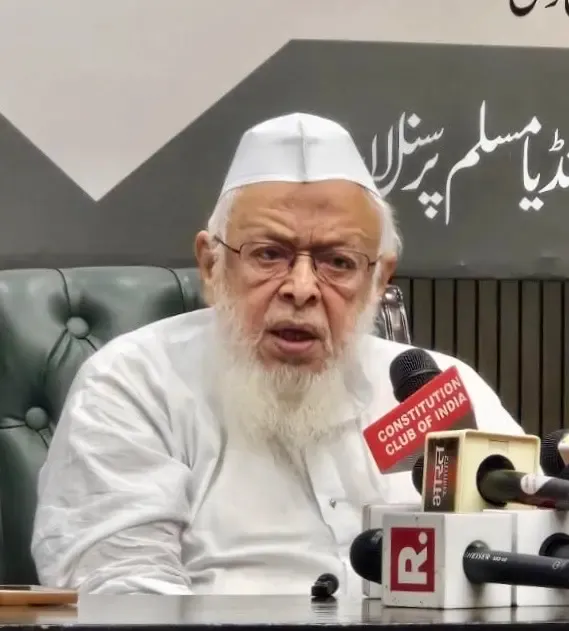
Jamiat Ulama-i-Hind President Arshad Madani has expressed grave concerns over the alarming rise of extremism in India, juxtaposed against the recent brutal events in Bangladesh. He highlights the urgent need for societal introspection on intolerance and violence affecting minorities in both nations.
Key Takeaways
Violent incidents in Bangladesh raise alarms about intolerance.
Rising extremism in India is causing concern among leaders.
Attacks on minorities signify a disturbing trend.
Government's silence on violence is questioned.
Calls for introspection on religious freedom .
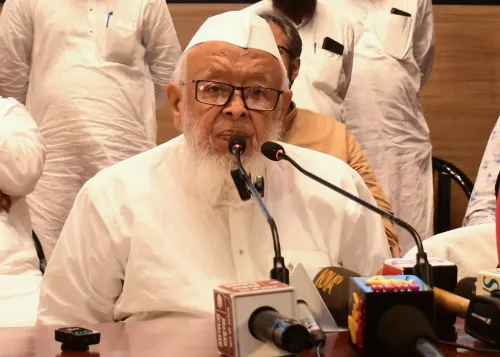
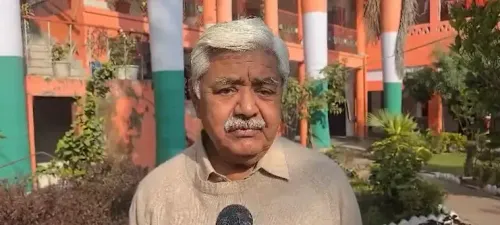
New Delhi, Dec 30 (NationPress) Jamiat Ulama-i-Hind President Arshad Madani stated on Tuesday that the circumstances in Bangladesh are extremely dire and in complete contradiction to the principles of Islam. He also pointed out that India is experiencing a troubling surge in religious extremism and animosity.
In response to recent events in Bangladesh, Madani characterized the situation as deeply troubling and a gross violation of Islamic values.
"What transpired in Bangladesh was horrific. It transcends mere murder and represents the pinnacle of brutality and savagery. Regardless of the level of condemnation, it remains insufficient. Islam unequivocally forbids such actions. Those responsible have not only breached Islamic teachings but have also sullied Islam's reputation. Consequently, they must face the most severe penalties," Madani expressed in a post on X.
While denouncing the violence in Bangladesh, the Jamiat leader voiced significant concern regarding what he labeled the escalating climate of intolerance in India. He stressed that "religious extremism and hatred" are also "eroding" the fabric of the nation.
Commenting on incidents affecting the Christian community, Madani remarked, "The actions of communal factions against the Christian community during Christmas are entirely unjustifiable. This constitutes a direct assault on the religious freedoms guaranteed by the Constitution. Churches faced attacks in multiple locations, and attempts were made to hinder the Christian community from celebrating their festival," he asserted.
He further highlighted a series of violent occurrences from various regions of the country to emphasize his concerns.
Recently, in Bihar's Nalanda, Madani reported that a man was beaten to death.
"Some individuals brutally assaulted a Muslim man selling clothes after inquiring about his name and religion, resulting in his death in the hospital," Madani revealed.
He drew attention to similar incidents elsewhere, stating, "In Kerala, a Dalit youth from Chhattisgarh was killed after being labeled a Bangladeshi. Shortly after, in Odisha, three Muslim laborers from West Bengal were victims of mob lynching, leading to one fatality and two others currently receiving medical treatment."
Criticizing the central government, Madani expressed disappointment over what he termed the official silence regarding these occurrences.
"Unfortunately, the government has not condemned these incidents, nor has any cabinet member made a statement on the matter. The disparity in discussions on TV channels regarding the Bangladesh incident versus the silence on domestic mob lynchings is profoundly regrettable. How should this double standard be interpreted?" he questioned.
He concluded by asserting that the current state of affairs contradicts the fundamental values upon which the nation was established.
"This is certainly not the India envisioned by Mahatma Gandhi, Sheikh-ul-Hind, Motilal Nehru, Maulana Abul Kalam Azad, and our predecessors," Madani stated.
Point of View
We recognize the profound implications of extremism and violence on national unity. The statements from Arshad Madani highlight the urgent need for dialogue and introspection in both India and Bangladesh. We stand firm in advocating for peace, tolerance, and mutual respect among all communities, as envisioned by our nation's founders.
NationPress
26 Sept 2026
Frequently Asked Questions
What did Arshad Madani say about the situation in Bangladesh?
Arshad Madani described the situation in Bangladesh as extremely dire and contrary to Islamic teachings, emphasizing that the brutal events there must be condemned.
How does Madani view the rise of extremism in India?
He expressed serious concern over what he termed a growing climate of intolerance and violence in India, indicating that it is destroying the nation.
What incidents did Madani refer to in India?
Madani referenced several violent incidents affecting minorities, particularly targeting the Christian community and cases of mob lynching involving Muslims.