SP-Congress alliance cracks: Akhilesh backs unity as members join Congress
Synopsis
On the same day SP chief Akhilesh Yadav publicly championed Opposition unity, a batch of his party members defected to Congress in Saharanpur. The contradiction is not just optics — it signals a quiet power struggle within the INDIA bloc over seat-sharing, vote banks, and who leads the anti-BJP charge in Uttar Pradesh ahead of 2027.
Key Takeaways
SP president Akhilesh Yadav reaffirmed alliance commitment on Tuesday, 19 May , saying it is about 'victory, not seats'.
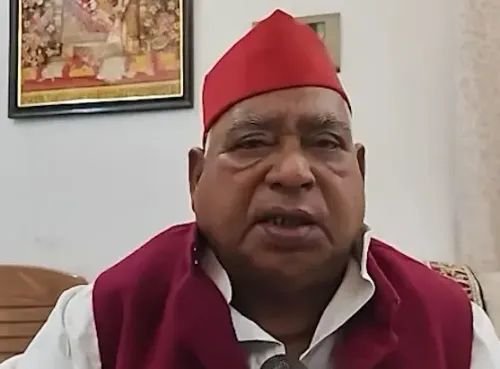
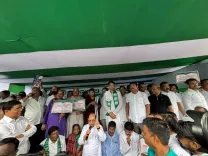
On the same day, several SP members joined the Congress at an event in Saharanpur, Uttar Pradesh .
AICC General Secretary Avinash Pande welcomed the defectors, calling it evidence of growing Congress strength in UP.
Congress has been actively recruiting leaders from SP and BSP under Priyanka Gandhi Vadra's direction.
The defections risk fragmenting the anti-BJP vote, potentially enabling three-way contests that benefit the BJP in 2027 .
SP-Congress seat-sharing talks face fresh complications as Congress builds cadre in SP-dominated constituencies.
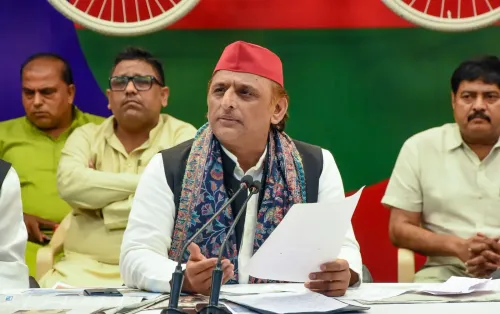
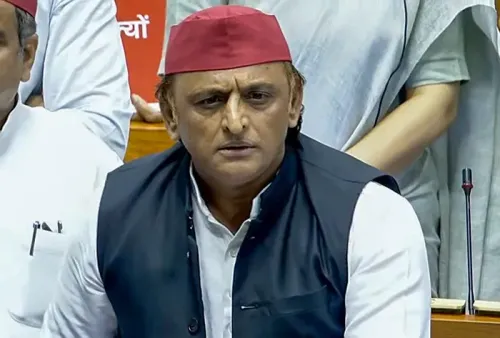
Samajwadi Party (SP) president Akhilesh Yadav on Tuesday, 19 May publicly reaffirmed his commitment to Opposition alliance continuity — even as, on the very same day, a batch of SP members formally joined the Indian National Congress (Congress) at a high-profile event in Saharanpur, Uttar Pradesh. The simultaneous developments have exposed a widening fault line within the INDIA bloc ahead of the 2027 Uttar Pradesh Assembly election.
Akhilesh Yadav's Alliance Remarks
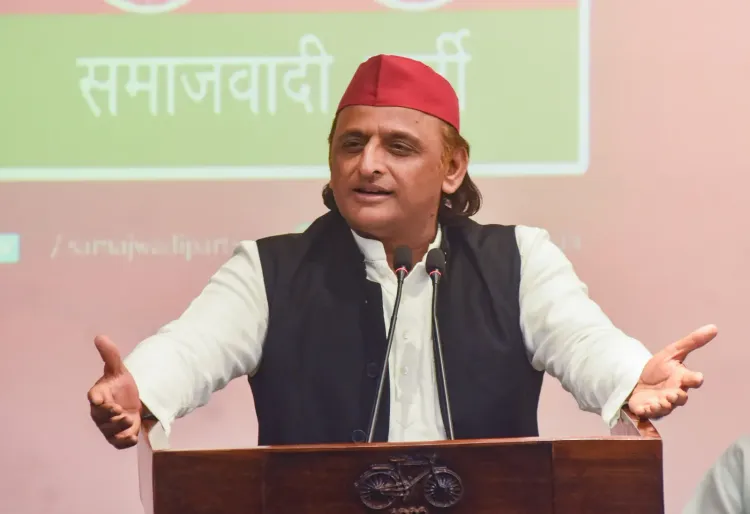
Speaking at a newspaper-organised event on Tuesday, Yadav stressed that the alliance is about 'victory, not seats' — signalling a willingness to compromise on seat-sharing arithmetic in favour of broader Opposition unity. When asked whether he would campaign alongside Congress leader Rahul Gandhi, Yadav said his party has 'vast experience in running alliances' and has 'always ensured that the partners benefited', according to reports. The remarks were widely read as an attempt to project SP as the anchor of any future coalition in the state.
Defections in Saharanpur
The optics, however, were complicated by the same day's events in Saharanpur, where several SP leaders formally crossed over to the Congress. All India Congress Committee (AICC) General Secretary in charge of Uttar Pradesh, Avinash Pande, welcomed the new entrants, saying the development proved that 'people of Uttar Pradesh are looking for a definitive political alternative.' He added that the party's organisational strength was growing every day in the state.
This is not an isolated incident. The Congress, which has been assertively expanding its footprint in UP under the leadership of Priyanka Gandhi Vadra, has been recruiting disgruntled leaders from both the SP and Bahujan Samaj Party (BSP), offering them visibility and a platform to revive stalled political careers.
Why the Timing Matters
Defections are a routine feature of Indian politics, but the timing and scale of Tuesday's crossover carry pointed implications. The SP and Congress had entered a tactical partnership under the INDIA bloc framework, which yielded tangible results in the 2024 Lok Sabha election. That alliance was built on the premise that SP would lead the coalition in UP, drawing on its Yadav and Muslim vote base while Congress contributed to a broader anti-Bharatiya Janata Party (BJP) consolidation.
Notably, the high-profile nature of the Saharanpur defections will likely reshape seat-sharing negotiations. New entrants who carry local vote banks typically expect tickets or local leadership roles — setting up direct clashes with sitting SP leaders who see their ground-level organisation threatened. Congress' strengthened cadre in constituencies traditionally dominated by SP will give it grounds to demand a larger share of seats, undermining SP's bargaining position and potentially triggering protracted negotiations.
The Caste Arithmetic at Stake
The BJP has consolidated power in Uttar Pradesh by stitching together non-Yadav Other Backward Classes (OBCs), upper castes, and sections of Dalits. The Opposition's only credible counter is a broad coalition that bridges caste divides. SP traditionally commands Yadav and Muslim support; Congress seeks to revive its appeal among Brahmins, Dalits, and minorities.
Yadav has repeatedly invoked his 'PDA' framework — an acronym for 'pichhade, dalits, alpsankhyak' (backward, Dalit, and minority communities) — as the ideological spine of his mobilisation strategy. If Congress continues to recruit from SP's support base, it could emerge as a stronger claimant to minority votes, directly cutting into SP's coalition arithmetic. Critics argue this amounts to poaching rather than partnership, eroding the very spirit of the alliance.
What Happens Next
The contradictory signals from Tuesday — alliance rhetoric paired with active defections — risk creating confusion among voters and local party workers. Political analysts warn that if the two parties cannot manage these tensions, the result could be three-way contests in key constituencies, fragmenting the anti-incumbency vote and effectively handing the BJP an advantage in 2027. The success of any SP-Congress arrangement will ultimately hinge on whether both sides can move from competitive recruitment to a credible, unified electoral strategy before the campaign season begins.
Point of View
But it directly undermines the coalition discipline that made the 2024 Lok Sabha partnership work. Akhilesh Yadav's 'victory, not seats' framing is a rhetorical bridge — but rhetoric cannot paper over the fact that Congress is now building cadre in SP strongholds. If both parties enter 2027 without a binding seat-sharing agreement enforced at the district level, the BJP's fragmentation strategy will almost certainly succeed again.
NationPress
23 Sept 2026
Frequently Asked Questions
What happened between SP and Congress in Uttar Pradesh on 19 May?
On 19 May, SP president Akhilesh Yadav publicly reaffirmed his commitment to the Opposition alliance even as several SP members formally joined the Congress at an event in Saharanpur on the same day. The simultaneous developments highlighted growing tensions within the INDIA bloc ahead of the 2027 UP Assembly election.
Why are SP leaders joining Congress?
Several factors are driving the crossovers: Congress has been actively recruiting disgruntled SP and BSP leaders under Priyanka Gandhi Vadra's direction, offering them visibility and a chance to revive stalled careers. Some leaders also feel sidelined by what they perceive as an overly centralised decision-making structure within SP, and are betting on Congress to regain relevance in 2027.
How does this affect the INDIA bloc's prospects in UP 2027?
The defections risk fragmenting the anti-BJP vote. If Congress builds cadre in SP-dominated constituencies, it will demand more seats, complicating negotiations. Without a binding seat-sharing deal, three-way contests could split the anti-incumbency vote and benefit the BJP, which has historically consolidated power through Opposition fragmentation in Uttar Pradesh.
What did Akhilesh Yadav say about the alliance?
Yadav said at a newspaper-organised event on Tuesday that the alliance is about 'victory, not seats', signalling willingness to compromise on seat arithmetic for broader unity. He also said SP has 'vast experience in running alliances' and has 'always ensured that the partners benefited', according to reports.
What is the significance of the 'PDA' strategy Akhilesh Yadav has mentioned?
'PDA' stands for 'pichhade, dalits, alpsankhyak' — backward communities, Dalits, and minorities — and is the coalition of voters SP aims to mobilise against the BJP. If Congress continues to recruit from these communities, it could erode SP's core vote base, weakening the very coalition Yadav is trying to build for 2027.